Tuesday, June 27, 2006

New City Park Opens

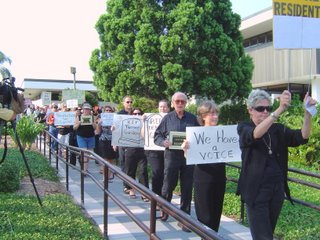
Fredd Atkins Park officially opened on Friday June 23. Many city and county officials, city staff and residents attended this long awaited event.

Sarasota has opened a number of parks in the last couple years and this neighborhood park is certainly a winner. It presents a great gateway into Newtown.

The opening ceremony included a jazz group providing music and speeches by the politicians and city staff.


City neighborhoods were also well represented at the celebration: Amaryllis Park, the City Coalition of Neighborhood Associations, Indian Beach Sapphire Shores, Hudson Bayou, McClellan Park, Cherokee Park, Alta Vista and Laurel Park all had representatives attending. Several members of the Save Our Sarasota group also attended.

City crews, lead by Duane Mountain, worked long hard days the past couple weeks to get the park ready for this opening ceremony. We thank these unsung heroes for all the work they put into this park to make it happen.

Monday, June 26, 2006

Wise Commentary

Article published Jun 23, 2006 in SHT

Eroded beaches reflect years of human interference with nature

A mnemonic device helps one remember something. The image of a sandy pickle is easy to remember, but Sarasota's sandy pickle is something I sometimes wish I could forget. I was reminded of the sandy pickle when I read that Sarasota County commissioners have been contemplating costs of $20 million to nourish four miles of beach on Manasota Key. That's $5 million a mile. Ignoring that final 280 feet in each mile, that's a pricey thousand dollars a foot. But at those prices, with more than 30 miles of Gulf shoreline in Sarasota County, if we ever had to renourish all our beaches every five years, we'd be spending as much as $30 million a year.

What is sad is not the many millions it will cost us to maintain some semblance of beaches around here. The sad part is that they were once free. By "free," I mean it didn't cost us anything and, by "they," I mean perpetual walkable sandy beaches.

Beach erosion is only a problem where human structures are at risk.

Hurricane Charley pummeled Cayo Costa, but no one is calculating how much sand will need to be pumped. The beach changed, but there is still beach. But once we start defending buildings, then the sandy walkable beach can get lost in the fray -- replaced by sea walls or rocks or whatever the current structure-protecting fad is. We've taken what was once a free service, beaches, and increasingly made them into something we have to pay for. Greed, arrogance and ignorance are all part of the story.

A hundred years ago almost no one lived on our barrier islands. Remote, buggy, with few services and no good ways to weather hurricanes, the islands moved in response to natural forces. Probably no one gave long-term consequences much thought when beachfront development started in earnest.

No one was thinking about how much barrier islands squirm around. No one was thinking about rising sea levels. No one was thinking about possibly needing to spend as much as $1 million every 12 days to move sand around. No one was thinking about how efforts to stabilize the shore can increase erosion. No one was thinking about the sea turtles.

But it is not that no one was thinking. They were thinking about how great it would be to live "right on the beach." Thinking about how clueless their predecessors had been for not seeing the incredible opportunities. Thinking about how to get roads and services out there. And thinking about how much money they could make. All this thinking led to decades of decisions -- by investors, former commissioners and engineers -- that enabled people to derail many of the natural processes that had kept the Gulf shoreline sandy. And now, if we want sandy beaches, we are going to have to pay for them.Can Sarasota County afford $30 million a year? Absolutely. That's not so much when the taxable value of the county is closing in on $60 billion. But there are two wrinkles. The first is that beach nourishing is addictive behavior -- once you start it is very difficult to stop. Eventually it will become financially unsustainable -- not because we don't have the money but because of the second reason: the costs in lost opportunity.

Simply put, Sarasota County can afford anything it wants, but it can't afford everything it wants. Dollars spent thwarting or replicating natural processes on the beaches are dollars that can't be spent on other priorities.

The county's coastal agenda, for instance, is not limited to beach issues. Storm water entering bays needs treatment, red tide is capturing more attention and funds, declining fisheries and habitat need attention, recreational access is vanishing, and, despite common sense, opening Midnight Pass remains on the docket.

There are no easy answers to the sandy pickle. That's why it's a pickle. As a recent article stated: Real estate interests and politicians refuse to consider any retreat, which would be the work-with-the-natural-system response. But working against nature ultimately has three costs -- an environmental cost, a social cost and those pesky financial costs. Think Katrina and levees. We're about to find out how much our once-free beaches might end up costing us.

Community leader and activist Jono Miller is a director of the Environmental Studies Program at New College of Florida in Sarasota.

Friday, June 23, 2006

Summer Solstice

Summer Solstice - the longest day in the year; the day when the sun reaches its zenith. A good day to check shadows.

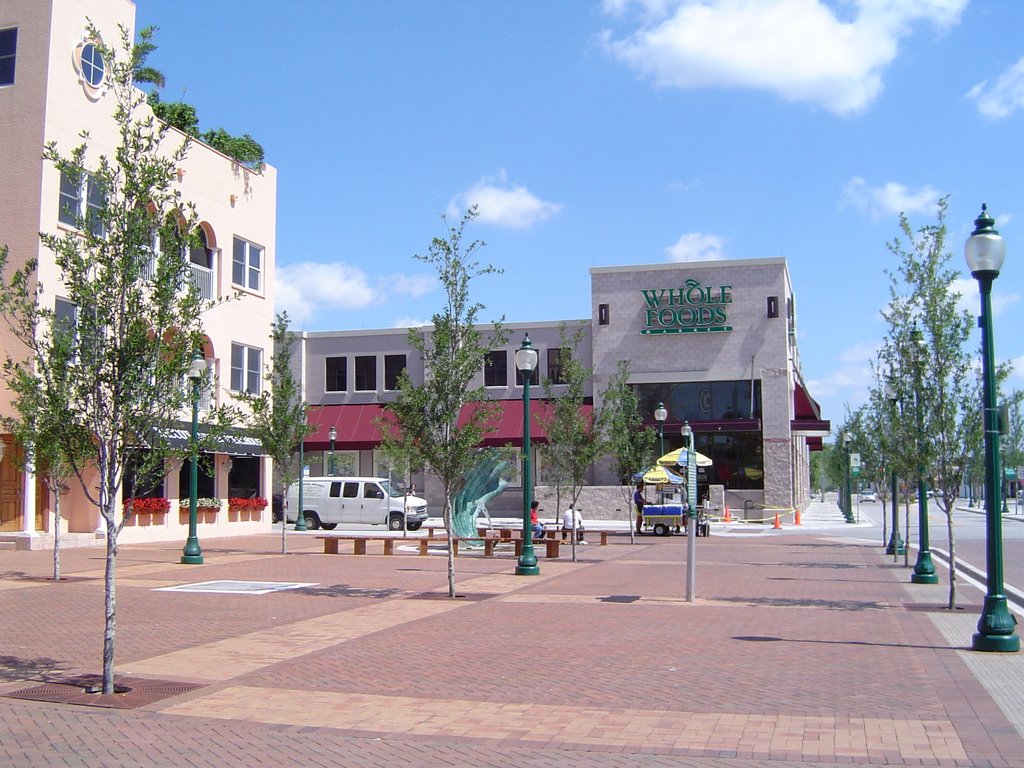
As we see in the first picture the sidewalk next to the tallest part of the Five Points Plaza (north side of building) is still in shadow. It will never see direct sunlight.


Lest you think that the shadow is caused by the awnings, look again. This shot is from a vantage further east where there are no awnings.


And in case you wanted to see where the sun was, when standing in the shadow, it was hidden by the building.

While this may not be very significant - after all, we know that high rise buildings block light, cause wind tunnels, trap heat and magnify noise - there may be a glimmer of good news here.

Maybe these high rises make a more pedestrian friendly space. It is clear that enclosing the sidewalk in an arcade is not required for screening from the sun. For those joggers that have a downtown route, just stick to the south sidewalks of the street, no arcades are required for shade, its always there!

Finally, maybe we should ponder the recent quote of the day: Man stands in his own shadow and wonders why it is dark - Ancient Zen saying.

Thursday, June 22, 2006

As the City Turns

It seems like Sarasota is becoming more urban in subtle as well as not so subtle ways.

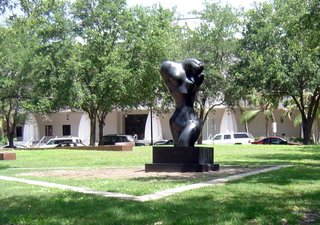
Consider the choice of sculpture that graces our focal point downtown park. We recently removed the joyful sculpture of children playing (Olympic Wannabes by Glenna Goodacre) and replaced it (maybe temporarily?) with a much more contemplative and less approachable piece by Manuel Carbonell called "Torso 2001."

Carbonell says “In my search for the essence of the form and the absence of details, I struggle to give a feeling of strength, monumentality and simplicity to my work.”


Many Sarasotans are struggling with our sense of place as downtown is transformed into towering buildings with diminished open space and loss of greenery. Monumentality describes this change, simplicity does not. We yearn for the essence of place and those details that give us the texture that describe Sarasota.

Wednesday, June 21, 2006

McMansion Supply

The golden age of McMansions may be coming to an end. These oversized homes - characterized by sprawling layouts on small lots, and built in cookie-cutter style by big developers fueled much of the housing boom. But thanks to rising energy and mortgage costs, shrinking families and a growing number of retirement-age baby boomers set on downsizing, there are signs of an emerging glut.

The Ft Lauderdale Sun Sentinel has a story about the over supply of McMansions.
These houses often boast grand, two-story entryways, three-car garages, double-height family rooms and master-bedroom ``suites'' equipped with sitting areas and whirlpool tubs. Developers market the homes under names such as the Grand Michelangelo, Hemingway and Hibiscus - while detractors have dubbed them ``garage mahals,'' ``faux chateaux'' or ``tract castles.''

Sarasota will see the effects of this trend also.

City of Sarasota Charter Review

The City of Sarasota is looking for seven City residents who are willing to serve on the Charter Review Committee from July through mid-October 2006. The Charter Review Committee will study the elected mayor possibility, city commissioner compensation, and other matters the Charter Officials deem appropriate.

You can get an application from the City Clerk’s Office in Room 110 at City Hall, 1565 First Street, or by calling 941-954-4160. Applications are due by June 30 at 5:00 pm.

Tuesday, June 20, 2006

Sarasota School Board Votes to Demolish Historically Significant Buildings

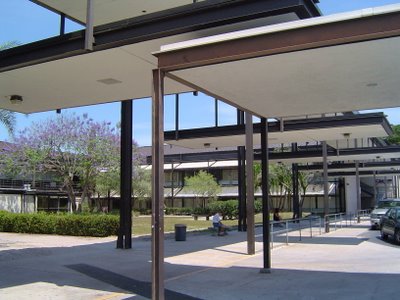
Once again an elected body in Sarasota has chosen to take a narrow view and vote to demolish one of Sarasota's few remaining significant historical structures.

Tonight the Sarasota School Board voted 5-0 to demolish the Riverview school, including the Paul Rudolph designed buildings.

Fourteen members of the community, including architects John Howey, Joe King, Carl Abbott, Guy Peterson and Mark Smith, spoke about the need for saving this building, the belief that the buildings could be incorporated into the new campus design without loss of construction time, without sacrificing student security or costing more money.

It was apparent that the school board did not want to extend any additional time to look at the suggestions made by the Rudolph supporters. The school board wanted to make a decision and put this behind them.

A final decision on the design cannot be made in any case, since the state Dept of Education has not given permission to demolish recently constructed buildings that are "in the way" of the new design.

Monday, June 19, 2006

Voices From the Neighborhood

Sunday’s SHT had a article about the AltaVista Neighborhood and the struggle to keep the unique character that has existed there.

Developers of luxury condos keep looking for land that can be bought for a low price then change the zoning to allow maximum height and density so big profits can be garnered. Neighborhoods lose their character and charm and the developers take home big profits.

This scenario has been playing out all around Sarasota recently - the edge of the Laurel Park neighborhood, Hudson Bayou, Tahiti Park, McClellan Park, Lido Key.

The article says:

Yet whatever change may be ahead, at the very least they [Alta Vista residents] don't want to stare out their windows someday to find their backyards in the shadow of glass and concrete towers." All of us are citizens of the city of Sarasota, too," Kirschner said. "What we're seeing is hopscotch zoning. It isn't right, and it isn't appropriate."

"We're the people who make this city work," Zimmerman, a former radio and weekly newspaper reporter, says to those who joined him in reviving the Alta Vista Neighborhood Association about two years ago. "Why don't we have a say in things?" It's all rather uncharacteristic behavior for a neighborhood that, for more than 80 years, quietly and contentedly kept to itself.

The residents say that, in this battle over Sarasota's future, they are on the front line.

"What has been happening is making us demand respect and a place at the table," said Tracy Topjun, a nurse who bought her home six years ago. "We should have a voice that resonates just as strongly as the developers'."

As these conflicts become more and more prevalent, there isn't much doubt what the end result will be. The voters will make sure their voice is heard.

Our city has a policy requiring developers to conduct a neighborhood workshop prior to applying for a change in land use or zoning. The purpose is to inform the neighbors of the proposal and solicit input that could improve the proposal.

This process can work - recently a developer worked with the Arlington Park Neighborhood on a proposed project on Hyde Park. Neighbors' suggestions concerning trees were worked into the project and everyone was happy. The process works when the developer is a partner in the process, when he wants to be part of the community.

Contrast this scenario with the more typical proposal with the developer announcing his project at the workshop, answering questions minimally or with the comment "I don't know, we'll have to get back to you on that." It quickly becomes obvious that the developer has no intention of working with the neighborhood to understand concerns and then working to find solutions to those concerns. The developer is simply going through the motions.

Instead the developer is quick to cry "NIMBYism" and plead his case to the commissioners - usually behind a closed door.

A new tactic has been used in the School Avenue project: after it became quite clear that the proposal was going to be defeated, at the last minute (2 hours before the commission meeting) a change was made by offering to include affordable housing in the plan. Even though the affordability was undefined and no agreements were in place with potential partners (Sarasota Memorial Hospital and Habitat for Humanity) three commissioner were swayed and the process continues.

When the residents protested in unheard of numbers - Black Monday - the three commissioners refused to listen or reconsider.

Commissioner Shelin commented: "It is unfortunate that the recent claims by several neighborhood associations, the Coalition of City Neighborhood Associations and the "Black Monday" protest at City Hall have not represented the truth of a recent vote by the City Commission. The vote did not approve any of the changes requested by the developer of the School Avenue property, but simply agreed to ask for state review and comment on a piece of the possible changes -- the future land use map."

Perhaps he was not aware of the proffer that included a request for Downtown Core zoning and the 10 story height and 50 units per acre density that accompanied the land use chage request. If the land use change is granted, everyone including the developer, the neighbors and three commissioners expect the zoning to accompany the change. That is what was included in the transmitted document sent to the state for review.

Why would the commissioners ask the state to review the proposed change if the intention was not to grant the change? This seems like throwing something up against a wall to see if it sticks - hardly the kind of policy making process we expect from our elected officials.

The battle for Sarasota's future indeed is here. It is truely unfortunate that many of the commissioners have not listened to the citizens during the last 5 years. A vision for the downtown was agreed upon by everyone; then the changes started lead by the development interests and we are still acceding to their demands. Now that the change is pushing into neighborhoods at an increasing rate, the residents are fighting back. Their voice is loud and it will be heard.

Sunday, June 18, 2006

Should Sarasota Be Like Paris?

Commissioner Bilyeu recently took a trip to France and has commented many times about what he saw in Paris and how Sarasota should consider Paris as a model worth emulating.

One thing about Paris is that their downtown is height limited [see the Urbanism/Architecture heading at Wikipedia]. This contributes significantly to the city's charm:

A building's height was also defined according to the width of the street it lines, and Paris' building code has seen few changes since the mid-19th century to allow for higher constructions. It is for this reason, save for a few 'pointed' examples, that Paris seems an essentially flat city when compared to some of the world's other metropoles.

High buildings are allowed only at the city perimeter. This is what tourists see when they visit.

Recent news stories are indicating Parisians are not too happy with the direction of their city:

For while tourists flock to the capital, the locals are leaving, fed up with the traffic, the pollution, the lack of affordable housing and office space, parks and open spaces. The number of Parisians, currently 2.1 million, is shrinking at more than 1% a year. The city has lost an estimated one in 10 of its jobs over the past 15 years as firms move to cheaper and quieter locations.

"We must absolutely allow all those Parisians who want to stay in their city to stay there. That's why we are making an enormous effort in terms of housing, in terms of places for economic activity and creating green open spaces in terms of quality of life improvements for the 21st century."


This sounds similar to issues that have been raised in Sarasota; no affordable housing, traffic increasing, pollution and skyscrapers blocking light and air. Our economic activity is driven by building housing for the wealthy.

Are we headed toward a city of retirees and wealthy part-time residents with no services? Do we want to be more like Paris?

Thursday, June 15, 2006

Saving Sarasota - One House At A Time


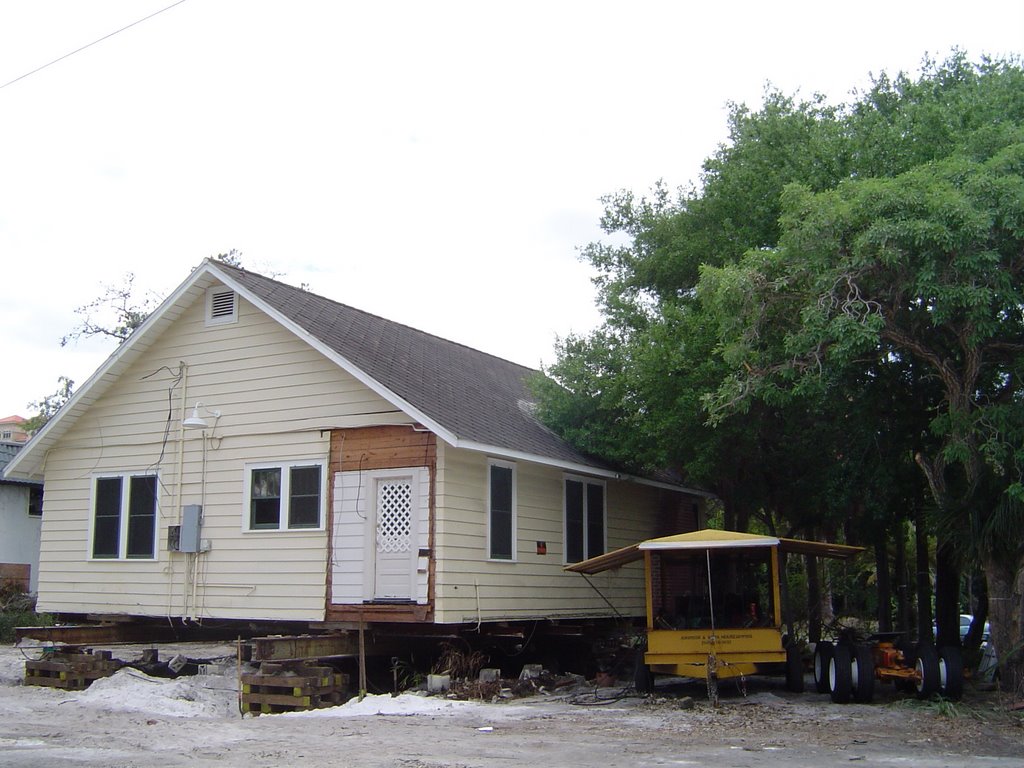
This house - shown on blocks - formerly sat on the corner of the North Trail and 16th Ave.......


it was moved to this empty lot on 12th across from Pioneer Park.....


where it filled the empty lot nicely.

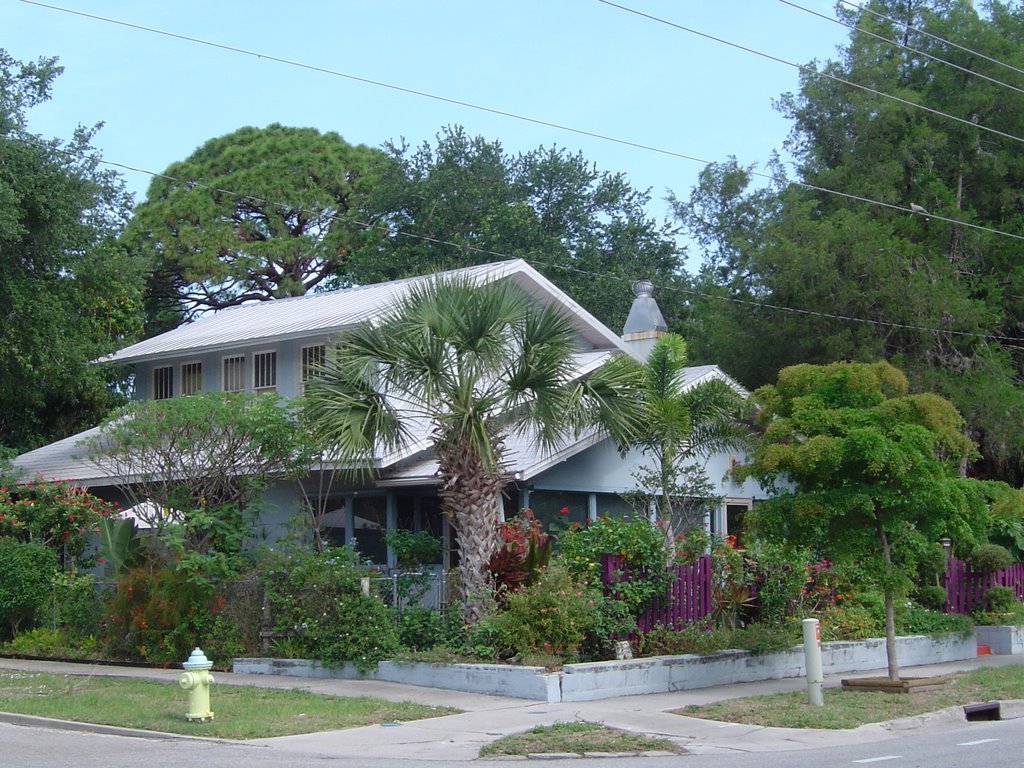
The house now resides next door to this house - the home of Kitty Kelly, its new owner.

Wednesday, June 14, 2006

Can We Save Riverview?

This week's editorial in the Pelican Press.
-----------------------------------------

For history’s sake, Riverview must be saved

Plans to raze the old Paul Rudolph-designed Riverview High School in favor of new buildings have met with serious resistance from the community.

And with good reason.

Those of us who’ve lived here for some time have seen many such buildings – often sharing Riverview’s Sarasota School of Architecture connection – destroyed in the name of “progress.” It seems, especially lately, when some semblance of historical relevance – art, some call it – is on the left side of the scale and “progress” – money, some call it – is on the right, you can bet dollars to cornerstones the scale will lean starboard.

It’s time to put our feet down on the port side. And it may already be too late.

Long ago, before most of the Sarasota School of Architecture homes and buildings were razed and replaced with sun-blocking, view-swallowing monstrosities, Sarasota looked as though it was truly making a name for itself in the annals of modern architecture. The Sarasota School, as it was called, had gained proponents worldwide, and many of its design elements are still being used today in a wide variety of architectural applications.

Riverview High School is one of the few remaining tangible connections to that past – to what Sarasota could have been if the almighty dollar hadn’t supplanted art; if greed hadn’t eclipsed our sense of history, our sense of place.

This community should have enjoyed a lasting, living legacy with its Sarasota School of Architecture. Instead, the School and what it represented are rapidly becoming relics of the past. And remaining structures designed and built in this style are becoming rare as dinosaur bones.

The school district has already paid approximately $1.2 million for an in-depth facilities assessment by the firm 3D/International, or 3DI. Unfortunately – and this is really where they misstepped – the Paul Rudolph-designed structures were left out of the assessment because they were intended to be razed, no discussion necessary. This, despite a 2004 memorandum to Superintendent of Schools Dr. Gary Norris from BMK Architects overviewing its extensive 2002 Long-Range Facilities Review on Riverview High School, which stated: “Plan on replacing all existing buildings on campus ... with the exception of the original Rudolph buildings, which should be rehabilitated.”

Because of this short-sightedness (which often leads to historical structures being destroyed), the school board agreed to pay an additional $30,000 to have the buildings added into the 3DI study after the fact (which includes travel expenses for consultants to do the work that should have been done initially). The school board was scheduled to hear the revised report on June 13.

Regardless of the results – so long as the buildings are not deemed unsafe and beyond repair – every effort should be made to save the Paul Rudolph-designed structures and incorporate them in a forward-thinking manner into the layout, look and feel of the new school.

Then, former and present Riverview staff and alumni would really have something to be proud of, something much more than another paint-by-the-numbers school.

Tuesday, June 13, 2006

The Vision

In the April issue of Sarasota Magazine, Richard Storm wrote an excellent article covering Sarasota's current building boom.

He begins with a description of sleepy Sarasota in the early 50's, touches on the Sarasota School of Architecture and brings us to the Med-Rev zone.

A significant change in how we thought about our cities, towns and suburbs had been happening during the 90's. As Sarasota began thinking about these concepts and how we might change our downtown, the ideas of pedestrian friendly, walkable, human scale and similar concepts were discussed thoroughly in a series of community discussions lead by Andres Duany, a leading practitioner of New Urbanism.

The result was a Downtown Sarasota Master Plan - a vision of the community, by the community and for the community.

As Richard describes the next few years:
We left those sessions ready to work with the appropriate officials to craft codes that would bring the vision to life. Doing so, we believed, would ensure a future Sarasota responding to our needs and dreams. Most crucially, we believed that the financial forces behind future development shared our vision of a place crafted with community well-being in mind, even if that meant the sacrifice of some profit.

Behind the scenes, however, the vision was already beginning to fray and fade. The sound of people rushing to obtain building permits before the adoption of the new plan became deafening. Even prominent business leaders who had participated in the lengthy charrettes and voiced enthusiastic support for the plans joined in the stampede. Buildings unlikely to pass muster under the new codes were submitted in great quantities; many of them were approved; some are now nearing completion. And architects began to have belated second thoughts about design....

Planning authorities caved, and the area, which had been Downtown Edge, was redesignated Downtown Core, putting Burns Court in peril of isolation as a cute zone surrounded by massive towers or, worse still, of being gradually gobbled up and demolished in spite of the historic designations assigned to several of the buildings in the area. So much for the power of pride in a graceful and human solution to the challenge of the contemporary city.

Now, with disputes raging about arcades, building heights, architectural standards and other parts of the plan, we seem to be in a sullen standoff, with much of the public complaining that the process is rushing past them toward an imposed and artificial urban entity. Even when the concern about Main Street arcades was dealt with by the City Commission, removing them from code requirements now with the promise to revisit this potentially interesting aspect later, the atmosphere remained tense and confrontational.

What underlies all of this is the replacement of vision by squabbling, and, alas, the greed that is responsible for many of the bloated and vulgar buildings that have begun to deface downtown, unfriendly buildings that might have been given a human scale had they been part of a functioning master plan. They would have been forced to meet the street in a consistent way, given setbacks to reduce their perceived mass and compelled to contribute to the communal life that characterizes a great city.

The community vision has not been accomplished; we are not even close.

We were warned by Duany that if we didn't act quickly and adopt the new zoning code, designed to put the vision in place, the vision process would have been wasted. Well, as everyone knows, a couple challenges to the code effectively delayed its adoption, then, two years later, the commissioners decided that developers and property owners still hadn't had enough time to make application under the old code so the time was extended. Finally 6 years after the process was begun the code was put in place. Yet even today the code continues to be modified to accommodate each new proposal that is submitted.

The vision has been completely lost. Downtown is literally closing in on us (witness the 1350 Main building) as developers look for ways to get more space to sell: covering the sidewalks with condo covered arcades, and covering streets with retail and condos.

Is it too late to achieve any of the vision? Richard Storm ends his article with "We must bring the vision thing back." Many of us think it may be too late for most of downtown.

Monday, June 12, 2006

Public Servants

The recent series by the Sarasota Herald Tribune concerning public servants and ethics, perks and "bending" the law, reveal much about the difference between "political gain" and "community service".

We read about Senator Mike Bennett's financial dealings with state agencies that fall under his purview as he either heads up or sits on committees that make critical decisions for these agencies.

In Sundays editorial "Bending it like Bennett - Senator and other legislators stretch ethics laws to the limit" the editors conclude:
Bluntly put, if elected officials can't make a living without doing business with the agencies they help oversee, they really ought to get out of politics and focus on making a living full time.

Good advice indeed.

Other local public officials have received scrutiny in the same series of articles.

Sarasota's Commissioner Mary Anne Servian downtown condo deal was the subject of an article and a letter to the editor.

Ideally we would like all our public servants to serve the public's interest. We understand that while this may be somewhat idealistic, it is nice to know that questionable activity will likely get scrutinized by local media.

Our expectation is that the public interest is foremost in the minds of those we elect. The appearance of personal gain should be scrutinized, discussed and clarified. Lingering doubt feeds cynicism and clouds citizen participation. The best communities have strong public servants and highly participative citizens.

Saturday, June 10, 2006

A Walk in the Park - Laurel Park

With the discussion about Selby Five Points Park fresh in everyone's minds, a view of this gem of a park, within walking distance of downtown, might be helpful. If you haven'e walked around Laurel Park, on Laurel Ave., stroll over and enjoy a little "WOW factor".

This park is smaller than Selby Five Points Park yet is a gorgeous bit of green space.


Friday, June 09, 2006

A New Direction?

"I continue to argue that we – the planning staff – needs to have input into these draft agreements before they go to the city commission." -Doug James, the city’s chief planner, explaining his concern about the process of finalizing the Pineapple Square agreements in an email sent to Planning Director Jane Robinson and City Manager Mike McNees earlier this week.

The above is from SRQ’s "Page 1 Daily e-newsletter".

At Wednesdays DRC meeting a number of proposals were reviewed prior to "sign-off" by various city departments. Several applicants were told they needed to change something or submit something, but the process would continue to the next stage when that was done. Others were told that after changes were made the applicant would have to return to the DRC sign-off meeting.

In the middle of the meeting Doug James walked down to the table and said that Pete Schneider and the City Auditor had met with department heads to be sure all understood the process for officially filed petitions. If they go through the DRC and there are changes to be made, it will help if, no matter how minor the changes, they go back through the Clerk with copies sent to the planning staffer in charge of the project who then will distribute copies to all DRC members for review before something goes to the Planning Board. The DRC agreed not to allow short cuts any more.

Many of the city’s practicing land use professionals were in city hall chambers at the time and heard this discussion. When they left the chambers, they gathered in the hall outside and animatedly expressed indignation and opposition to the apparent changes.

Too many changes in development proposals, changes at the last minute, no time to properly address changes - these conditions weigh heavily on our city planning staff. These professionals do not want to hinder the process, yet they understand that we have high standards and the standards must be upheld. Shortcuts lead to poor projects and ultimately to criticism.

The last couple years of explosive growth have been a challenge for all of us. The apparent new direction of the city commissioners and city staff, making sure that a complete and proper analysis has been completed prior to decision making, is a welcome change.

Active Citizens

The following was written by Bill Zoller and published in CONA Comments, the monthly Sarasota County Council of Neighborhood Associations.

Sarasota County is a community of active, involved, citizens. In the county and in each incorporated municipality, citizens serve voluntarily on various advisory boards, and they put in long hours at no pay.

One of the most time-consuming advisory boards is the Planning Commission … be it of the County or of one of the cities. One former long-serving member of the County Planning Commission, Bob Earley, is experiencing health problems, and CONA wishes him the very best in that situation. CONA has appreciated the years of diligent effort that Bob put into his service on the PC…he was always thoughtful and thorough as he addressed each issue that came before the PC. Bob is a perfect example of the reason that we need a planning commission made up of concerned citizens, instead of a "hearing master", as many developers are pressuring the BCC to institute. I surely prefer to take my chances with the likes of Bob Early than with some hearing master!

In addition to the many official advisory boards, there are many neighborhood activists who give endless hours in their quest to safeguard and to improve their neighborhoods. Recently, I attended a monthly meeting of a City of Sarasota neighborhood association whose members are fighting what they see as a major incompatible development scheme at the edge of their neighborhood. So far, their protests and objections seem to have received lip service from a majority the City Commissioners, but the developer has received the ok.

Nevertheless, all across the County, citizens such as these are realizing that they can go beyond a 3-2 vote of a commission if that vote will, in their opinion, lead to the destruction of their neighborhood. Citizens from the City of Sarasota, to Venice, to North Port are beginning to investigate their charters to consider undertaking amendments that would prevent some of the unfortunate decisions that seem to favor the ever-increasing spread of sprawl or the decline of the quality of a community. Perhaps if the BCC and the North Port City Commission will not act to control annexations, the citizens of North Port will find a way to do it themselves.

Poll after poll of the entire Tampa Bay area is indicating that residents are getting "fed up", and as I have reported in this column, are making plans to move to less-fraught areas of the country.

Our own Giovanna Deveny, and her husband, Jim, are now back in the quiet little town of Huntington, W VA. She tells me it is heavenly! Some of us still have a glimmer of hope that we can, working together across a network of citizens who are willing to put forth the effort, change the direction of the "growth un-management" that it seems to me that we have in our area.

One recently-elected Sarasota city commissioner has been complaining that he isn’t paid enough, and wants his salary doubled … he has to go to so many "events" after hours. Pay to go to parties? Perhaps he needs to check with planning commissioners and see how many hours they work … for no pay!

Working together we can make a difference…. Join our efforts!

Save Our Sarasota agrees fully with Bill's comments. We encourage residents to get involved with your community and neighborhood. Find ways to bring your interests and expertise to help build a better community for all. Getting involved will be a great experience - you will learn much about how communities "work" and you will meet a bunch of the best people in town!

Tuesday, June 06, 2006

Are They Listening?

SARASOTA -- The practice of allowing developers to submit last-minute changes to their plans without going through neighbors and city staff has got to stop, the city manager told commissioners on Monday.

The commission, which has quickly approved some of the changes in recent months, took up an unusual motion to stop considering such last-minute plans.

"If this would alleviate some of the fears of the neighbors and citizens of Sarasota, then we need to codify it," said Mayor Fredd "Glossie" Atkins after Monday's meeting.

Neighborhood leaders, who dressed in black last month for a silent protest, were enthusiastic about the motion, which could get voted on at the next commission meeting. They hope there will be no more votes on last-minute developer changes.

... Mayor Atkins said that neighbors are "over-sensitive" to the last-minute issue because of recent events.

[From the Sarasota Herald Tribune]


Sarasota’s Comprehensive Plan says:

It shall be the goal of the City to achieve healthy and livable neighborhoods by:

  • Maximizing opportunities for all citizens to have meaningful involvement in the decisions that affect their neighborhood

Is the current discussion a step in the right direction?

We certainly hope so.

The residents of Sarasota have a long history of being involved in the decisions that affect our quality of life. As Sarasota winds its way through a period of explosive growth, the quality of life that we have enjoyed and expect becomes threatened. Traffic, high rise buildings, limited parking, escalating real estate prices, diminished green space, limiting views and access to the bay and gulf, higher levels of air and water pollution all become constraints to enjoying life in Sarasota. Growth brings these negative effects. Careful planning and listening to citizens is the only way to deal effectively with these negative effects.

Participation by citizens in the government process must be encouraged, not limited.

Monday, June 05, 2006

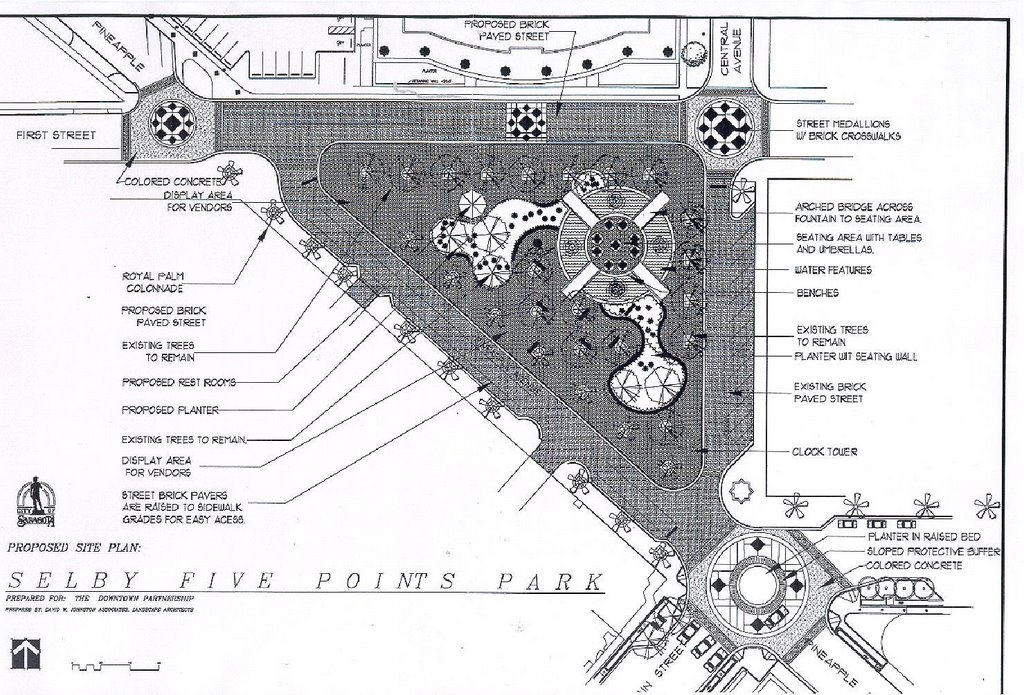
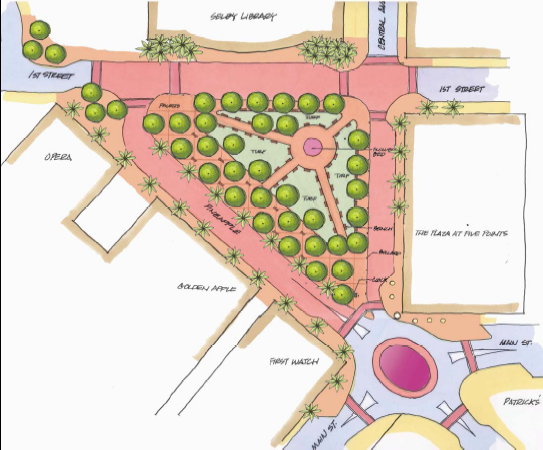
Five Points Park Public Hearing

What: Special City Commission
When: Thursday, June 8
Time: 6 PM
Place: City Hall - 1st Street and Orange

At this public hearing, the Commissioners will decide whether and how to proceed with the potential re-design of Five Points Park, downtown Sarasota's premier green space.

The Planning Staff will present six conceptual sketches that were designed based on input received from the public at a January workshop and through responses to a detailed questionnaire that was distributed to solicit additional citizen suggestions. The planners have conducted a model public process.

The questionnaire results and public comments at two workshops indicated strong consensus that the park should be designed for primarily passive uses with occasional large public events and festivals such as presently occur, and that the green area should be expanded with additional grass and flowers.

The Downtown Partnership has submitted a 7th design as another example of how the park could be designed. It replaces all of the grass with brick pavers and two planting areas. This design has not been reviewed by the public as have the other six. In a letter to the city, the Partnership proposed that a hard surface such as pavers be used rather than grass.

SOS's Steering Committee strongly believes that the park should remain an urban park of grass, flowers and trees and should not become a brick-paved urban plaza. Lemon Plaza, located just one block away, already fulfills the function of a plaza.

A recent Chicago Tribune article stated that many major cities are going to great lengths "to squeeze a little more green space into the hustle of urban life." We strongly urge the Commissioners to be part of this nationwide trend and not allow Five Points Park to be paved over. We believe it should be a lushly landscaped oasis in the midst of all the downtown hardscapes.

We are also asking the Commissioners to continue to solicit public input throughout the process.

You are encouraged to attend this hearing and speak in support of green space.

SOS Steering Committee

Riverview High on Florida Trust for Historic Preservation Most Endangered List

The Florida Trust for Historic Preservation announced their 2006 11 Most Endangered Historic Sites list at the Annual Statewide Preservation Conference, in St. Augustine, Florida, on May 18, 2006.

One of the sites highlighted is our own Riverview High School. Currently threatened with demolition.

Riverview High School, Sarasota – Designed by architect Paul Rudolph in 1957, this jewel of modern architecture characterizes the elements of design that came to be known as the nationally-acclaimed Sarasota School of Architecture. Riverview High School marks a transition in Rudolph’s career and was his largest commission in Florida to date. The school is threatened to be replaced with a new, larger, school.

Friday, June 02, 2006

Needed: A Plan for Affordable Housing

The following was printed in today's Sarasota Herald Tribune:

Neighborhoods seek a citizens task force on affordable housing

The "Black Monday" rally at City Hall initiated by three city neighborhoods turned into an unprecedented gathering of 175 people from 21 city neighborhoods. It is a mistake to dismiss them with the usual labels -- "naysayers, not-in-my-backyard" -- and ignore the substance and extent of citizen dissatisfaction, particularly over lack of input into recent major changes to our city plan.

Every caring, responsible citizen places affordable housing as a top community priority. The neighborhood affected by the School Avenue project, already an area of affordable work-force housing, is actively and enthusiastically collaborating with the Community Housing Trust to bring more affordable units to its neighborhood.

Unbelievably, our city does not have an affordable housing master plan. Such a plan would analyze and develop goals for all affordable housing needs, assess the current stock of affordable housing, identify all city areas where more can be placed, assess infrastructure and traffic impact, and study best practices in other communities. Without a road map to guide them, officials are prone to fast-track piecemeal initiatives benefiting whatever interest group gets first in line.

The generous downtown density bonus, of great monetary benefit to developers, is predicted to generate only 300 affordable units over 10 years. Except for the city property on Palm Avenue and the State-Lemon parking lot, just sold for retail and high-end condos, downtown and the bayfront appear to have negligible affordable housing potential. It is obvious, however, that single-family neighborhoods of year-round residents will be asked to accommodate affordable housing.

And they will, if they respect the city's decision-making process and know they are part of that process. Neighborhoods will have to give until it hurts, but developers also must give until it hurts; 10-percent affordable units, as proposed by the city, does not hurt. As Mayor Fredd Atkins said in voting against the downtown density bonus amendment, "Not enough bang for the buck!"

Neighborhoods want a city leadership that not only requires compromise of them, but sees every sale of city property, change in land use, rezone, street vacation and variance as an opportunity to negotiate affordable housing units. This is not happening.

Our neighborhoods want straight talk. Told that the comprehensive plan amendments Sarasota sent to Tallahassee, after preliminary local approval, mean the city is "simply agreeing to ask for state review and comment on a piece of possible changes," they ask, "When has the state turned down a comprehensive plan amendment and when has a developer not regarded the commission vote on such an amendment as a land-use promise?" Neighborhoods agree with affordable housing experts that inclusivity is a must for success, not "in lieu of" housing separate from primary developments or segregated, stand-alone towers.

Respect for the guidance of the city's Planning Board and professional planning staff is fundamental to the deliberative process. Any substantive change in a project should generate a new staff and Planning Board review and recommendation. Respect for the recommendations of consultants also should be a given, in particular the Duany Plan, developed through a two-year, community-wide visioning process. That plan has been seriously compromised, without community input, a few short months after its approval. Breach of standard procedure, even if "legal" (as we were reminded), breeds mistrust and suspicion.

Neighborhoods have requested establishment of a Citizens Affordable Housing Initiative, a task force that will work to identify affordable housing opportunities and evaluate proposals. Who can better recognize potential infill sites, large and small, and make recommendations for compatibility (another word for respect and compromise) than the citizens themselves? With participation comes buy-in.

Quick fixes are not solutions. Proposals will be embraced, and initiated, by neighborhoods if realized through a sound, deliberative, inclusive process with our leaders utilizing the ideas and energies of citizens to create long-term, positive change.

Written by Gretchen Serrie. She has lived in this community with her family since 1972. Gretchen is a member of Save Our Sarasota.

Wednesday, May 31, 2006

Burns Court

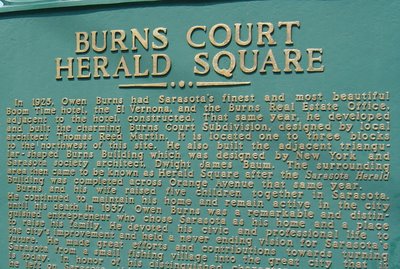
Burns Court is a small section of downtown Sarasota that is a real gem. Located a couple blocks south of Five Points, where Orange and Pineapple converge, it is a walkable, friendly, interesting area that is a visual treat. Historical buildings, neat and trim landscape with trees and "human scale" make this very pedestrian friendly. The unique shops, art cinema and restaurants can keep you engaged for a delightful morning, afternoon or evening.

Denise Kowal, building owner, proprietor and community leader is working to increase Burns Court's visibility and unique character.

A recent project is inlaying decorative mosaics in the sidewalk, giving this area a new twist of character.

Fanciful designs including stars and undersea looking creatures make you look down at the art work.

Denise is part way through her project and has several new sections of sidewalk targeted for the next installment.

Take a walk around and enjoy the offerings in this unique area.

Tuesday, May 30, 2006

Seems Like It's Warmer

Worried about global warming and rising ocean levels?

Here's a site that shows you a map or a satellite view of your street if you assume a given sea level rise - for example 3 meters (sorry, but the site gives only metric units, but a meter is close to 3 ft).

You get to choose the sea level rise you want to check, then see whether you have waterfront property or not.

Technology can do most anything these days.

Saturday, May 27, 2006

Red, White and Blue

This home on Bayshore Rd in Sarasota shows off patriotic colors - look closely to see the red roses around the arbor.

Thursday, May 25, 2006

Habitat for Humanity and the Neighborhood

Recently the Alta Vista Neighborhood sent a protest letter to Habitat for Humanity concerning the process used to join with a developer at the last minute (just 2-3 hours before the commission hearing) and submit a plan that lacked any published notification, analysis or review by the city staff. Their letter part:


It was with great dismay and shock that we were notified at 12 noon this past Monday, April 24, that Mr. Ron Burks’ proposal that we had been studying since July of last year and vigorously defending against since December of 2005, had been dramatically changed due to a last-minute partnership formed between Habitat for Humanity and Mr. Burks’ Quincy Investments. First you have
to be aware of where we come from. We (all) have been made a victim of a STUNT! The dignity of the City Commission, City expert staff, the carefully crafted process put in place by past City Commissioners, the dignity of the City itself has been violated by this stunt . . . which you (unwittingly or not) were a party.


Second, we know where you were "coming from". We understand you were motivated, as we read in the latest issue of Habitat Magazine, by a Study program prepared on your behalf of housing models applicable for housing relief in high density urban environments. The Study focused on problems of the West Coast, not at densities as high as 50 families per acre, but you naturally were motivated when Mr. Burks offered you the opportunity to get in on the ground floor of this late-breaking project.

Without one word or the slightest bit of outreach in consultation to our neighborhood as to why we have been so unanimously opposed to this development, Habitat jumped into the pond with Mr. Burks and proceeded to give more than half of the 15 minute presentation before the City Commission on the new project. From the 3 City Commissioners’ comments on why they voted for the proposal, it was glaringly clear that Habitat was the green seal of approval that carried the day. Beyond this, Mr. Jacobson’s depiction of our members’ 50 x 100’ lots as prehistoric in the "trolly age" and, by implication – "move over to make way for destiny!’ – is simply wrong and another example of the subtle cracks leveled at concerned neighbors.

Needless to say the Alta Vista Neighborhood, as well as many other city neighborhoods were shocked and dismayed at the speed with which this happened. By denying the public the opportunity to fairly review a major proposal (including denying the staff opportunity to review) sends a chilling message to the citizens of Sarasota.

Habitat for Humanity's mission and purpose can be viewed here. The Habitat for Humanity web site gives the following information:

Why Habitat for Humanity Is Needed

Millions of Americans face a housing crisis. In fact, 5.1 million American families have "worst-case" housing needs, forced to pay more than half their income for housing, endure overcrowded conditions and/or live in houses with severe physical deficiencies. While the number of families in poverty is growing, the number of affordable rental units is shrinking, and most families who qualify for government housing assistance aren't receiving any aid.

Worldwide, the need is even greater. Some 2 billion people worldwide live in poverty housing. More than 1 billion live in urban slums, and that figure is expected to double by 2030. Many of these people earn less than US$2 per day.

Housing problems have far-reaching consequences. The high cost of housing leaves low-income families little money for other basic necessities like food, clothing or health care. Substandard housing can endanger the health and safety of its occupants, erode their hope and self-worth, and impair their children's ability to succeed in school.

Habitat for Humanity is changing lives. Working in partnership with low-income families to build decent homes they can afford to buy, Habitat helps to break the cycle of poverty and hopelessness. By the end of 2005, more than 1 million people worldwide will live in decent, affordable Habitat for Humanity houses.

We are not sure how this mission connects with the Sarasota Habitat for Humanity Chapter decision to partner with a developer to build housing for families with income ranges of 60% to 120% of the Median Income for the Sarasota-Manatee area.

Wednesday, May 24, 2006

How Not to Trim a Tree

Sarasota County is in the process of developing a new and tougher tree ordinance.

Part of the new law will require shade trees in parking lots and training for tree trimmers.

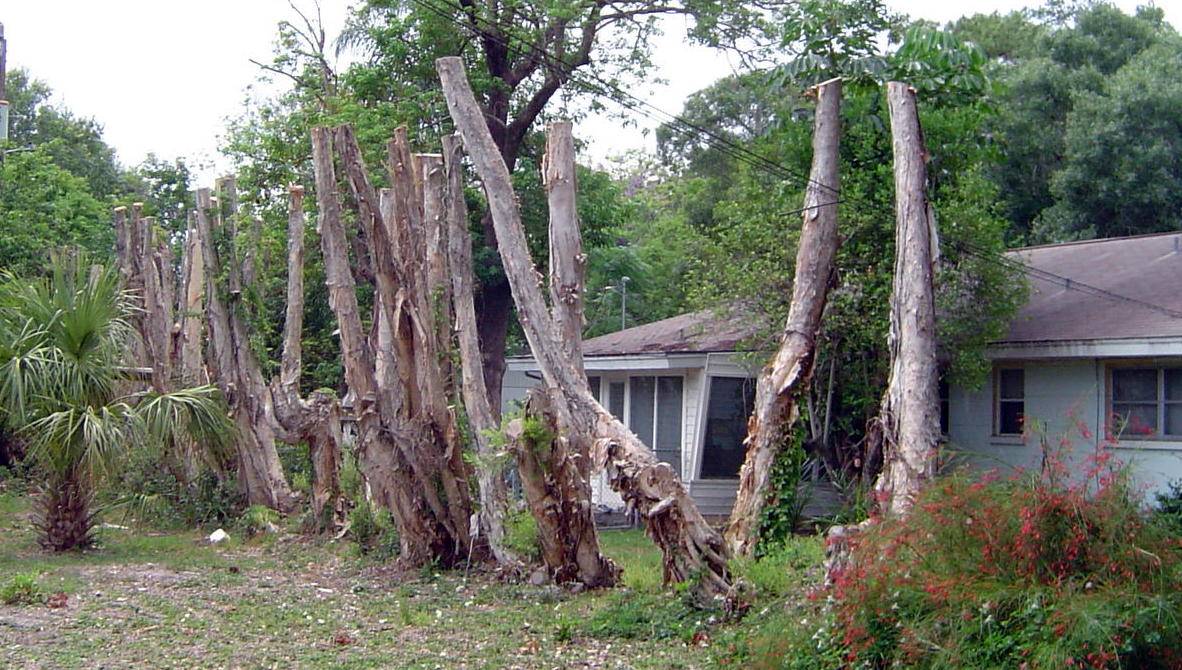
Check the "butcher job" in the picture above. While these are exotic "punk" trees. It still makes you wonder when you see this kind of trimming. Picture was taken today in the city of Sarasota.

According to the SHT:

Commissioners approved Wednesday a "master plan" that called for tougher laws and that found 25 percent of the tree canopy in the unincorporated part of the county has been lost in the past 30 years.That approval included orders to develop a more stringent system of fines for certain harmful methods of tree-trimming.

Commissioners also favored proposals to require parking lots to have shade trees and to possibly develop educational requirements for tree-trimming companies.

County staffers and lawyers were told to develop the new laws and bring them back for possible public hearings.

Commissioner Jon Thaxton complained that most trimming jobs he sees are "butcher jobs." Tree experts say that improper cutting can eventually kill a tree.


This picture shows a "hat racked" Jacaranda - picture taken in Aug 2005 in the city of Sarasota

Tuesday, May 23, 2006

Decision On Parking

Where are the city commissioners taking us on the road to a "vibrant downtown." The SHT editorial in Sunday’s paper indicates that more free parking could disappear as a result of Pineapple Square insistence that they needed dedicated parking for the upscale restaurants they want to bring to downtown Sarasota.


In two city-owned lots in downtown Sarasota, public parking -- nearly 200 spaces' worth -- is free after 6 p.m. But next year, instead of parking there, be prepared to hand over your keys, your car, and an undetermined amount of your cash to a valet service under a developer's control.

If that prospect displeases you, tell the city commissioners. Their 4-1 vote Monday, to hand control of the lots over to Pineapple Square, is the latest in a series of decisions that have put significant public resources toward the big retail/condo project -- without getting many concrete commitments from the developer.

Don’t expect much of a response, though. As we have experienced lately the commissioners are not inclined to listen to anyone with a different view, especially the residents. One city commissioner (Lou Anne Palmer) and city staff had indicated we should wait until the Pineapple Square public parking was open before giving the State St lot to the Isaac group. Four commissioners disagreed and gave the developers control of the lot, for use by a valet service.

We pointed out the untenable situation at Bayfront Park where many parking spaces are unused yet reserved for Marina Jack’s customers. Meanwhile there are no parking spaces available for the public. The decision to let this happen as well as the current decision indicates little regard for the taxpaying public while catering in this case to Marina Jack’s business.

The editorial continues:

The public expects a fair return on its investment, but the commissioners -- in their eagerness to secure Pineapple Square -- have made some questionable decisions in that regard.

The clearest example of that was their decision, months ago, to OK the sale of the city's State Street property to Isaac Group at far under its market value. Last week, further concerns arose. As City Attorney Robert Fournier told them Monday, the developer has not yet finalized a third-party lease that is crucial to the entire project.

Who is making the decisions for Sarasota? The commissioners certainly listen intently to the developers and business interests. When will they listen to public.?

Monday, May 22, 2006

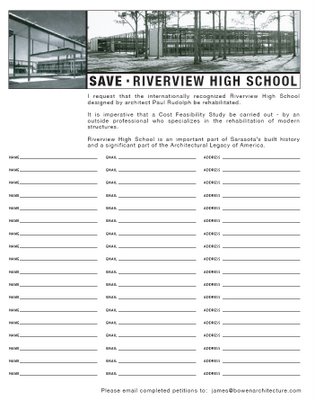
SAVE Riverview Petition

This SAVE Riverview petition can be printed, signed by people and then returned to Sarasota James Bowen at:

Bowen Architecture
513 Central Ave
Sarasota, FL 34236-4965

The petition can be downloaded here.

The petition could also be scanned and e-mailed to James Bowen at james@bowenarchitecture.com

Take the time to print it, sign it, have your colleagues sign it, and return it to James. Your support will help save this building. Thanks!

Also take a look at the new blog site for SAVE Riverview.

Sunday, May 21, 2006

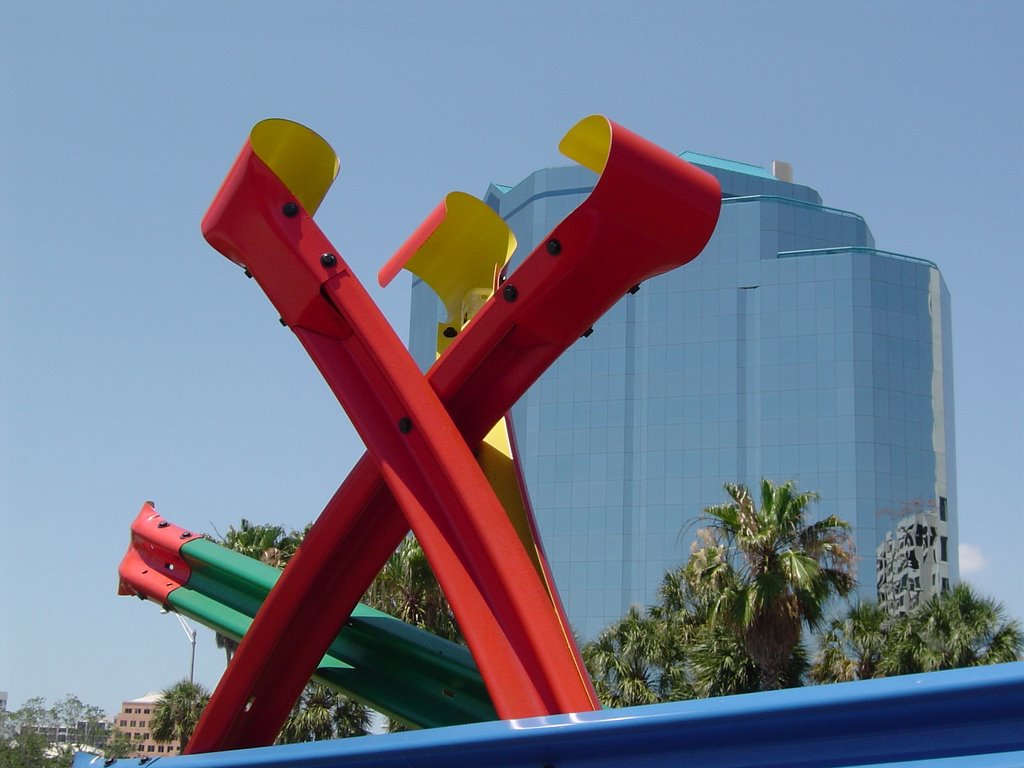
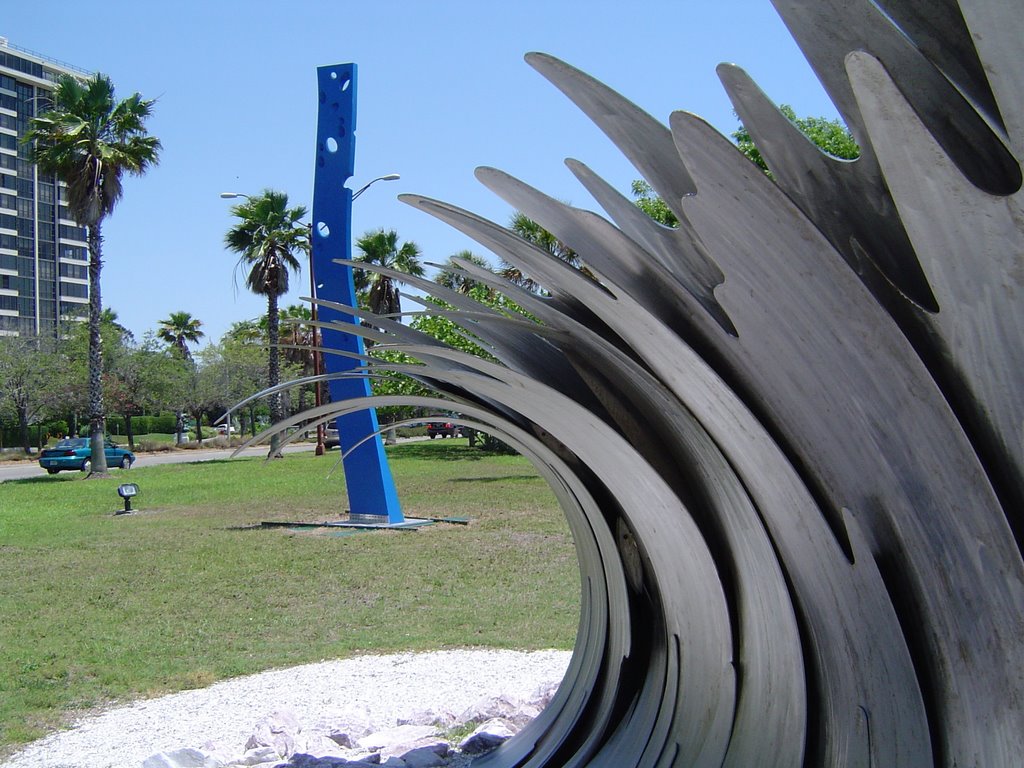
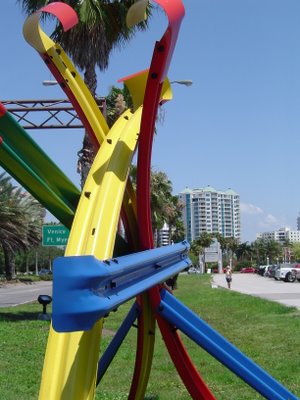
Sarasota's Season of Sculpture 2006

A few pictures from the Season of Sculpture. Treat youself to a walk around this bayfront exhibit if you haven't already. It's great! But hurry, it ends soon.

Here is a link to a picture and description of each sculpture.


Saturday, May 20, 2006

Bird Flu Strikes in Florida

Go ahead. It's OK to laugh.

Thursday, May 18, 2006

A New Plan for Five Points Park

The Downtown Partnership has submitted a new plan for Five Points Park.

Despite the overwhelming majority of city citizen survey results indicating the park should be designed for passive use with grass and trees, the DTP plan shows large areas of hardscape (brick or concrete?) devoted to "vendor area" with the grass area mostly removed. The submitted plan shows a large fountain as well as restrooms.

Apparently the DTP wants to provide another area in downtown to accommodate street fairs and festivals.

At the March 30 meeting to present the survey results, the following was presented:


Clear Majority Views

  • Generally Passive Use -Occasional Events
  • Maintain & Increase Green: Grass, Trees…
  • Brick Pineapple and 1st with no Curbs
  • Remove "Memory Path"
Despite the survey of the people that attended the city sponsored meetings to take public input and present designs based on that input, the DTP chose to present their own design. None of the public respondents that attended the meetings wanted more brick area - other than for walkways across the park. Virtually every respondent indicated that the same or an increased amount of green, grassy area, or flowers was desired.

The DTP has stated that their proposed design was meant to keep the discussion going and to prompt other ideas. Tony Souza, DTP Executive Director has indicated "It is but one example of what could be done with Five Points Park and we would like to have a world class designer engaged to start with the survey results and come up with a plan."

The respondent's preferred design is shown to the left. All the designs presented and discussed can be found here.

Many respondents specifically indicated that only occasional festivals should be held at this park. Instead it should be a relatively quiet, passive, green area.

One block to the east of Five Points Park is the Lemon Mall. This area was specifically designed for festivals and fairs. Downtown doesn’t need two such areas in close proximity. A passive design will bring a much needed green space for all downtown visitors and for those that live there.

Save Our Sarasota does not believe we need more brickscape downtown, especially when it covers green grassy areas enjoyed by everyone.

Wednesday, May 17, 2006

Parking Questions

At the City Managers blog, under the topic of the State Baseball Tournament, a number of posters are asking questions about Monday's latest parking deal give away. This time the commissioners agreed (again) with the developers of Pineapple Square and the DTP to give the First Street lot (across from the City Hall parking lot) to private interests - the Isaac Brothers group. John Simon said this will only work if the lot is in private control.

I guess this means that there is not much need for the public retaining public property and managing it for the public good. Apparently the Isaacs and John Simon now determine what is best for the city.

Recently we have seen many examples of the commissioners not listening to citizens and we concluded that these commissioners believed they knew what is best for the rest of us. Now it turns out that the Isaacs and John Simon apparently know even better what's best for us.

So how well does private control of public parking work?

On Saturday at about 2 PM I took visitors to Bayfront Park to see the Season of Sculpture exhibit. There were no empty parking spaces in the entire bayfront lot (excepting that under Marina Jacks control) and there were at least 20 cars circling around looking for places. I finally parked across 41, near Ringling.

Meanwhile the parking spaces reserved for Marina Jacks were less than half full. In their parking area was an empty flat bed trailer, a car covered with "custom dust cover" and a number of trash bins with trash strewn around. Further, at the south end of this restricted parking area was a saw horse across half of the parking entry way that said "LeBarge Parking Only".

Isn't it nice that the citizens who pay for this park and the parking area are excluded so that a car can be stored long term under a cover, someone can store a trailer there, Marina Jacks has a close by area for trash storage and they don't bother closing the lids or pick up trash blown around, and parkling can now be saved for LeBarge customers. The lease calls for some level of parking for the restaurant. These uses are ridiculous - especially when citizens cannot find parking spots yet many are open behind threatening signs.

We do not need any more private control of public parking! And we do not need a 20 year lease extension with Marina Jack that will give us 42 more years of this nonsense!

Tuesday, May 16, 2006

Naples Development Issues

From Naples News

County rejects change limiting affordable housing
By Gina Edwards

In the face of strong business community opposition, a majority of Collier Commissioners approved a zoning restriction today that critics say will effectively kill any future development of affordable housing in the coastal areas west and south of U.S. 41.

But with Commissioners Jim Coletta and Tom Henning siding with business leaders and affordable housing advocates, the restriction is one vote shy of the supermajority needed to overcome a final state hurdle.

Commissioners Fred Coyle, Donna Fiala and Frank Halas also shot down an affordable housing incentive that would give developers bonus units by right, with all three saying the public shouldn’t be kept from weighing in on affordable housing projects.

Proponents said the incentive is needed to remove red tape for developers and give them some guarantees that they won’t get shot down after a lengthy approval process because of not-in-my-backyard neighborhood opposition.

Commissioners are debating the series of growth management proposals that advocates said could jeopardize the future development of affordable and lower-cost housing in the county.


It is nice to see some of our neighboring government officials listening to their constituents. While the issues are complex, commissioners are elected to listen to all the citizens then weigh the evidence presented.

If they don't even listen, the citizens become angry and alienated. Alienating citizens just brings more grief. After all, citizens choose government representatives to represent the will of the people.

Recall the statement by our Mayor at the May 1 City Commission meeting when 10 neighborhood leaders signed speaker slips to speak to the commissioners. While waving the 10 slips in the air he said in no uncertain terms: "I have 10 slips here. The answer is NO, but you can come up and speak anyway". Nice way to be treated by your elected officials.

Monday, May 15, 2006

Disenfranchised

Black Monday was mourned by 175 residents of Sarasota on Monday night.

These citizens mourned the loss of their voice as the city commissioners no longer listen to the voters who elected them... commissioners who were elected to represent the citizens of Sarasota.

The protest was organized by the Alta Vista and Laurel Park neighborhoods, but many neighborhoods were represented in the protest. Lido Key, St Armands, IBSSA, Bayou Oaks, Hudson Bayou, Central Cocoanut, Tahiti Park, Terrace Gardens, Janie Poe Residents Association, Gillespie Park, Downtown Condo Association and others joined in the protest.

Protesters wore black and many covered their mouths with black tape symbolizing the loss of their voice. After gathering by the Jack Cartlidge sculpture "Nobody's Listening" the protesters marched around city hall carrying protest signs. Commissioner Bilyeu was interviewed by a radio announcer in the midst of sign waving protesters.

The protesters then silently marched into city hall chambers about 5 minutes after the evening session opened, stayed about 25 minutes then silently marched out.


Sunday, May 14, 2006

Riverview in the News

Save Riverview Group Organizes Supporters

With the future of Riverview High School hanging in limbo, a group of architects and preservationists are organizing their cause to convince school board members, parents and students that the 48-year-old Paul Rudolph buildings on campus are worth saving. An initial task force has been meeting with school officials for several weeks, and yesterday about 30 people met to organize a larger community effort to save the buildings. In April, the school board asked for further analysis of the existing buildings and stalled an earlier recommendation to demolish them. That analysis, along with input from the Florida Department of Education, is expected to be presented to the school board in June. “It hasn’t left the station, but the train’s already running,” said architect Guy Peterson of the time-sensitive situation. Members of the task force explained several of their key points for saving the Rudolph buildings. First, they say rehabilitating the buildings would likely reduce the total cost of the project to rebuild Riverview, currently estimated at $90 million. That claim is based on the high cost of construction materials and the likelihood that that a restoration and retrofitting project would qualify for grant money because of the historic status of the buildings.

Architect James Bowen pointed out the international interest in the issue. He said major architecture publications such as Architecture Record have reported the plans to demolish Riverview and that a petition to save the Rudolph buildings is now circulating among architects worldwide. “It’s one of the first really important modern schools around the world,” said architect Carl Abbott. Part of the group’s goal is to bring that knowledge and energy to local residents. Tearing down the historic buildings would be a “black eye” to a community that purports to be a cultural center, several people said.

Rather than destroy the buildings, the group is asking that the school district tie its new buildings into that original campus, which was the first high school built in Sarasota County outside city limits. The buildings allow flexibility and can be adapted to current needs of students by moving internal walls and adding all the latest technologies and amenities of a state-of-the-art facility.

“We have to teach the children that it’s not OK to tear down these buildings,” Abbott said.

[From SRQ Magazine's Page One Newsletter]

Picture shows architects Carl Abbott, James Bowen, and Guy Peterson.

Wanna Buy a House or Condo?

Dont!

The real estate market in Sarasota sucks. So it says in Harold Bubil's latest article, an article that analyzes the recent sales and listings data.
When asked to describe the market, one Realtor said "shucks." Or something that rhymes with that. He called the market's malaise a "perfect storm" -- climbing mortgage rates, investors leaving the market, and long-time owners who don't want to give up their Save Our Homes property-tax protection. It all equals fewer buyers.

According to the numbers, the supply of houses, at the current rate of sales, averaged 21 months for the last 3 months data.

Likewise, the supply of condos is about 18 months.

And the trend is not down.

It certainly looks like buyers have come to their senses (probably mostly speculators that have kept bidding prices up over the last few years) and are sitting tight waiting until prices return to a more reasonable level.

People that buy a home to live in, because this is where they live and work, are a bit more cautious than an "invester" that is looking to make a quick buck on a rising market.

Heck, we may even see some reasonable rentals as the speculators scramble to get or keep some cash flow.

Saturday, May 13, 2006

A Milestone

The first posting of this blog was on March 7 of last year. In mid December, 10 months later, 10,000 "page reads" had been recorded.

In the 5 months since that milestone, another 10,000 page reads have been recorded.

Visits to this site originate from all over the world - I have not kept track, but visitors have come from at least 25-30 (through search engines like Google) different countries.

Locally there are 30-40 returning visitors each day (visitors that have read previous postings).

Thank you to all that check in on what we are saying and to those that participate in the discussion by leaving a comment.

I believe that all of us want to make Sarasota a better place to live and want to retain Sarasota's charm. To be sure, we have different ideas about how to make this happen. But the passion is there.

I look forward to the next 20,000 reader visits!

Friday, May 12, 2006

City Neighborhoods Plan Citizen Protest at City Hall - Monday, May 15, from 5:30 to 6:30 PM

Dear Friends,

Several city neighborhood groups have become concerned by recent City Commission decisions that have gone against the recommendations of the city's planning staff, the vote of the city's Planning Board, and the concerns raised by affected citizens and neighborhood associations.

Additionally, they, and we at SOS, are alarmed by circumvention of due process and public participation in decision making.

These neighborhood associations are planning a silent protest during the first half hour of the City Commission meeting which begins at 6 PM on Monday evening. They are asking concerned citizens to dress in black and meet at 5:30 near the "Nobody's Listening" statue located on the south side of City Hall, at 1565 First Street.

Some members of SOS will be attending and we encourage other interested citizens to also consider participating. The following are examples of recent Commission votes that have generated this protest:

  • Changing Burns Court height limits to 10 stories, at the last minute and without public input, after years of work on our shared community vision---The Duany Plan---that capped heights at 5 stories for buildings next to single-family neighborhoods.

  • Voting to increase the number of units allowed from 162 to 470 units on the old Scotty's property by Payne Park next to single-family neighborhoods. The developer submitted major changes to his proposal just hours before the Commission hearing, leaving city staff, the Planning Board, adjacent neighborhoods - and even Commissioners - with insufficient opportunity to study the terms.

  • Voting to proceed with a plan to quadruple condo densities, from 50 to 200 units per acre along the bayfront and downtown and double them in selected neighborhoods in exchange for only 10% of the units being priced in an "affordable" range. We appreciate your continued participation in our civic activities.

SOS Steering Committee

Protest Gathering

PAYNE PARK NEIGHBORS CALL FOR BLACK MONDAY PROTEST AT SARASOTA’S CITY HALL MAY 15, 5:30 P.M.
MOURNING THE DEATH OF CITIZEN VOICE BEFORE THE CITY COMMISSION

May 12, 2006 - Frustrated by a repeated pattern of votes that completely ignore the guidance of City Planning Staff, unanimous decisions by the City Planning Board, and popular opposition by City neighborhoods, Payne Park neighbors from Alta Vista, Terrace Gardens and Laurel Park neighborhoods will descend upon City Hall Monday evening in black, mourning the death of Citizen voice before the City Commission.

With complete disregard for all concepts of logical growth management; sustainable inclusion of workforce housing in-step with million-dollar condos; traffic, sewage, and environmental management related to these gargantuan projects, our City leaders ignore Citizen surveys and sentiment and just plow ahead with breakneck speed to turn Sarasota into Gotham by the bay.
Kathy Kaminski, a 20-year resident of Terrace Gardens and local health care worker who now faces the prospect of 7 stories of 474 condominiums in her back yard reflects, “I come from Philadelphia. This never happens in Philadelphia. There’s respect for neighborhoods and there are logical transition zones. I never thought I’d see this day in Sarasota. I never thought that I would have to protest our local government.”

At 5:30 p.m. this Monday, Payne Park neighbors, dressed in black, will gather in front of the late, Jack Cartlidge’s “Nobody’s Listening” sculpture at Sarasota’s City Hall for a silent protest lasting thirty minutes. The Citizen mourners will then file into City Hall silently and respectfully take their seats in the Commission chambers for an additional thirty minutes of mourning. All other Sarasota citizens who are equally disturbed by the current direction of our City are encouraged to attend in black as well.

Beyond the protest, the group will press the Commission to include neighborhoods in involved, constructive processes that allow all of us to say ‘yes’ to the future development and progress of our City. We will formally request the Commission to create:

A Citizen’s Workforce Housing Initiative that will be tasked to work with City Planning Staff and the Planning Board to assess needs, create long-term solutions for permanent workforce housing stock, and produce public/private partnerships that build units. The initiative will be focused on

  • smart infill development of housing
  • neighborhood compatibility
  • inclusionary workforce housing

Contact:
Kelly Kirschner
941-928-9978, Kelly@deeproots.org

Kate Lowman,
941-362-9303, lowmancarter@earthlink.net

Thursday, May 11, 2006

Sarasota County Urban Forestry Receives Two Tree City National Awards

The Urban Forestry Division of Public Works has received two national Tree City awards from the National Arbor Day Foundation.

Sarasota County was named a Tree City USA. This is the 15th consecutive year the county has received this award, which recognizes the county's commitment to its community forest. Sarasota was the first county in Florida to receive this award.

The county also received the distinguished Tree City USA Growth Award for demonstrating progress in its community forestry program in six areas: education and public relations; publications; literature distribution; youth education; partnerships; and engineering/forestry coordination.

The Tree City USA program is sponsored by the National Arbor Day Foundation in cooperation with the National Association of State Foresters and the U.S. Department of Agriculture (USDA) Forest Service.

Recent educational outreach efforts by the Urban Forestry Division include a new Web site, www.scgov.net/forestry; teacher workshops; community presentations; and an April 28 daylong Arbor Day celebration that included a series of workshops for students at Pine View School. The division also was recognized for its street tree and neighborhood tree programs, as well as an expanded initiative for progressive street and sidewalk design with treescapes.

The Urban Forestry Division of Public Works is the steward for the urban forest, representing trees found in the wild, in parks, on beaches, in the county rights of way, medians and thoroughfares, along waterways and canopy roads. The division manages about 54,000 trees throughout the county.

For more information about the Urban Forestry Division, contact the Sarasota County Call Center at (941) 861-5000.

Congratulations to those in the Urban Forestry Division for receiving this recognition!

Tuesday, May 09, 2006

SAVE Riverview Community Meeting

Dear readers:

You are probably aware of the Sarasota School Board’s plan to renovate the Riverview High School Campus. The current proposal calls for a phased demolition of essentially the entire campus followed by construction of new buildings.

You are also probably aware of the architectural and historical significance of the Paul Rudolph designed buildings at Riverview - a building that would be demolished under the current plan.

A group of local architects has established a task force to see what could be done to save the main Rudolph building. This group now includes several community members that have this same interest. The group has met twice with the School Superintendent and School Board President looking for a path that could meet the school system’s requirements yet save the Rudolph building.

We are still pursuing options that seem acceptable.

The school system leadership has challenged us to show community support for this objective.

To this end we have scheduled a meeting to tell the community what we have been doing, why we think this is important and to ask for support.

Readers of this blog are likely be supportive of this effort. Thus we would like to ask you to attend the meeting if your schedule permits. Feel free to invite a colleague or someone else you know that might be interested in helping find a way to save this important community building.

The task force includes architects Carl Abbott, James Bowen, Joe King, Guy Peterson and Mark Ramaeker; community members include Mollie Cardamone, Dick Clapp and Janice Green.

We have a meeting scheduled for 8 AM, on Thursday May 11 at the new Sarasota Herald Tribune building (Main St) Community Room. We will be telling our story and looking for you support. Please attend if possible.

Information about the school board proposal and the Rudolph building can be found at these links:
Riverview in the News
Save Riverview Update
SAVE Riverview High School

Thank you and we hope to see you on Thursday!

Monday, May 08, 2006

Affordable Housing

The Naples News has an excellent series about what that community is doing about affordable housing.

A few snippets from this series:

If Collier adopts the ordinance unveiled April 13 to the Affordable Housing Commission, 15 percent of homes in a new development would be affordable. The developer would get a 15 percent increase in the number of units. That means a 50-acre community at four units per acre would increase from 200 units to 230 units. The additional 30 must be affordable.

Collier builders say inclusionary zoning doesn’t work.

“Talk to people in Montgomery County, Md. They all dislike it,” Zichella said.

Montgomery County, a bedroom community of Washington, D.C., was the first in the nation to adopt inclusionary zoning in 1974. Just like Naples, its firefighters, teachers and nurses couldn’t afford to live in the high-priced community.

Since the 12.5 percent affordable housing requirement was adopted, it has produced 11,000 affordable units, said Scott Minton, executive director of the Housing Opportunities Commission in Rockville, Md.

The ordinance was controversial at the time. Now, developers like Nanci Porten, of the Maryland National Capital Building Industry, say otherwise.

“It works,” said Porten, who added that the details are what make or break it.

Incentives determine whether developers will build affordable homes or take their business elsewhere. In Davidson, N.C., where affordable housing has been required for three years, officials are matter-of-fact about the developer impact.

“It’s the price of admission,” said Kris Krider, city planning director, who said that some builders left after the ordinance was adopted but new ones arrived.

-----------

Efforts to solve Collier County’s affordable housing crisis have stalled in the past year because county commissioners have resisted sacrificing their most sacred political cow — adequate roads.

“I voted for a road, not against affordable housing,” Commissioner Donna Fiala said of her February vote against an affordable housing development off Collier Boulevard.

Roads are at the center of the affordable housing debate between Collier commissioners and developers who are clamoring for regulatory and fee relief.

Developers say Collier’s checkbook-style traffic management system, which aims to make sure roads can handle new development before it occurs, is the state’s toughest. Collier’s building industry has gone to court to fight the county’s impact fees on new development, which are among the highest in Florida.

Commissioners are expected in May to finish a round of impact fee hikes that will raise the fees on a 2,000-square-foot home from $17,000 to $29,000. Such steep fees are enough to put housing out of reach for teachers, firefighters and sheriff’s deputies, builders say.

Impact fees, regulatory costs, zoning policies to restrict new development — all of these tangle up the debate over affordable housing and all have brought Collier commissioners and the building industry to a political standoff.

It’s not just affordable housing that’s on hold.

Commissioners Fred Coyle and Fiala formed a voting bloc to create a de facto halt to all new development approvals. Four of the five commissioners must vote for a rezoning approval.

Both believe Collier’s building industry lobbied behind the scenes last year for state growth management legislation that undermines the county’s 2-year-old traffic management system to make sure new development can’t go forward on clogged roads.

Al Zichella, president of the 1,500-member Collier Building Industry Association, denies it.

Now, Coyle says he won’t approve rezonings until he knows whether the Legislature will restore Collier’s authority to impose stricter development rules than the state’s.

The stalemate is hitting developers where it hurts. Land broker Ross McIntosh said he lost a $20 million deal in recent months because of the uncertainty of zoning.

--------------

A speculative real estate bubble hasn’t burst in Naples, but it’s brushing against a sharp pin.

How much a market correction may ease Naples’ affordable housing crisis is still unclear. The uncertainty adds another layer to leaders’ murky task of assessing workers’ housing needs.

“It’s like trying to grab air,” housing industry analyst Mike Timmerman, of Hanley Wood Market Intelligence, said of assessing the affordable housing need. “All we know is there is a demand.”

Could the market slide back to prices that middle-income workers here can afford? Real estate industry watchers believe a market correction will help affordability.

Fundamentally, though, there’s a shortage of worker housing in Naples — a market best known as a luxurious winter playground for CEOs, a place that saw a $25 million beachfront estate fly off the market in 2005 in less than a week.

No easy answers but even Naples is looking hard. It seems that the commissioners are trying their best to make development pay for the added cost (of roads, etc) and that inclusionary zoning will be a key part of a community solution even though developers oppose it.

Other parts of the series discuss inclusionary zoning in California where many communities are relying on this tool:

The March median home price in northern Santa Barbara County was $461,700 while median income was $65,000. Countywide, median home prices are $750,000, up $137,000 from 2005. The county is among 107 California communities with inclusionary zoning. It mandates, depending on the part of the county, that 20 to 30 percent of homes be affordable to people making a certain percentage of the median income. Developers are required to build 5 percent of homes for very-low income, 5 percent for low-income, 10 percent for moderate-income and 10 percent for work force housing. However, in 10 years, inclusionary zoning produced only 263 affordable units. Officials say the developer’s opt-out fee was too low. In November 2004, the opt-out fees increased to $80,000 for the very-low income home, $110,000 for low-income, $183,000 for the moderate income and $423,000 for the work force home. The county added the incentive of one additional market-rate home for each moderate- and work force home. Now, 450 affordable homes are under construction and another 245 are coming later this year.

Aspen, CO is mentioned as having a 50% inclusionary zoning requirement.

All this makes our "10% affordable units give you a 400% density bonus" formula look like developer dream come true.

Sunday, May 07, 2006

Recent Riverview High Pictures

These are current pictures of the Paul Rudolph designed building at Riverview High School. While changes have been made to the original building, the basic design remains true.

More pictures can be seen here.