Lou Ann, [Commissioner Lou Ann Palmer]
I commend you for sticking to your guns on having this huge project [Pineapple Square] reviewed by the CRA Advisory Board. It is truly the right thing to do, and it is unfortunate that your fellow Commissioners did not see fit to follow your lead.
I think in the end their decision will backfire.
As for the project itself, I have followed it closely, and there are numerous unanswered questions. While the project appears to be a very nice one, there are serious economic ramifications which need to be studied closely,with a detailed Economic Impact Analysis, certified Appraisals and Valuations of the Lemon/State Street site, the street vacation, infrastructure needs, etc.
I trust that you will see that these items are looked into. In addition, the size and extent of this proposal could have a serious impact on the overall quality of life for the City. You know how I feel about parking garages and creating more spaces for more cars. We have had several discussions on this, and I truly feel that it is the entirely wrong approach.
More people downtown, yes, but NOT more cars!!!
As an aside, I have an even greater concern for the continuous lack of Affordable/Workforce Housing both in the City and the County, leading us to becoming an "elitist" community, soon approaching no housing availability,both purchase and rental, for our service workers, and others less fortunate.
Sorry that I got a little lengthy with this, but again, thanks for hanging in there on the CRA Advisory Board issue.
All the best.
Joe Barbetta
Sunday, September 18, 2005


About "Save Our Sarasota™"
Occasionally we need to remind everyone (including ourselves) about our mission:
Our mission is to be a constructive and positive voice for the preservation and enhancement of Sarasota. Our goals are to preserve, enhance, and promote:
Our mission is to be a constructive and positive voice for the preservation and enhancement of Sarasota. Our goals are to preserve, enhance, and promote:
- Sarasota's uniqueness
- Sarasota's ecological, cultural, and historic legacies and distinguished institutions
- Urbanization that respects pedestrian scale and activities
- Ecologically sensitive urban design
- Economically responsible urban development
- Integrity of public management
- Current and new passive and active public places for human enjoyment, responsive to local characteristics (climate, vegetation, landscape, marinescape)
- Affordable housing and necessary support amenities
- Locally owned businesses and affordable commercial space
- New businesses that respond to Sarasota's uniqueness and priorities.
"Never doubt that a small group of thoughtful, committed citizens can change the world. Indeed, it is the only thing that ever has."
Margaret Mead, American Anthropoligist (1901-1978)
Saturday, September 17, 2005
A Letter From Home
From time to time we receive letters from people and we post them on this blog. Here is a recent letter:
Dear Mayor and Commissioners,
Please reconsider your decision to change the zoning in downtown Sarasota (Burns Court).
Please keep the 5 story cap on buildings.
I have lived and worked indowntown Sarasota for over eleven years, and though I welcome change, I feel you are destroying our pretty, little city. The noise and congestion are becoming overwhelming.
Most people come to this area for the sea, sun, and beautiful weather. With all the large, tall buildings going up, eventually you will block out the sun, blue skies, and fresh air. I'm afraid the congestion will become so bad that people will stop coming downtown, taking away business from myself and the small businesses I have come to love.
With Sarasota and Manatee counties growing outward as rapidly as they are, why would anyone want to drive into this city, fight traffic and parking problems, when they can get what they need right around the corner from their house. The people who live in the downtown district are not the only people who patronize this district. Please take in account everyone in both counties when reconsidering your decision.
Mr. Bilyeu - I voted for you because you came to my front door and asked me for my vote. (I still have your green/blue/white magnet on my refrigerator.) You told me you would work hard and do great things for me and this city.You are not keeping up your end of the bargain. If this new zoning stays in place and the out-of-control growth of this city continues, you will not have my vote again.
We don't need another New York or another Miami. What we need is our charming, small, personal, little Sarasota.
Thank you for your time,
Sarasota resident
Dear Mayor and Commissioners,
Please reconsider your decision to change the zoning in downtown Sarasota (Burns Court).
Please keep the 5 story cap on buildings.
I have lived and worked indowntown Sarasota for over eleven years, and though I welcome change, I feel you are destroying our pretty, little city. The noise and congestion are becoming overwhelming.
Most people come to this area for the sea, sun, and beautiful weather. With all the large, tall buildings going up, eventually you will block out the sun, blue skies, and fresh air. I'm afraid the congestion will become so bad that people will stop coming downtown, taking away business from myself and the small businesses I have come to love.
With Sarasota and Manatee counties growing outward as rapidly as they are, why would anyone want to drive into this city, fight traffic and parking problems, when they can get what they need right around the corner from their house. The people who live in the downtown district are not the only people who patronize this district. Please take in account everyone in both counties when reconsidering your decision.
Mr. Bilyeu - I voted for you because you came to my front door and asked me for my vote. (I still have your green/blue/white magnet on my refrigerator.) You told me you would work hard and do great things for me and this city.You are not keeping up your end of the bargain. If this new zoning stays in place and the out-of-control growth of this city continues, you will not have my vote again.
We don't need another New York or another Miami. What we need is our charming, small, personal, little Sarasota.
Thank you for your time,
Sarasota resident
Commissioner Shelins Responds
Below is City Commissioner Ken Shelin's response to Save Our Sarasota's recent Open Letter to him:
---------------------------
Janice,
I value your support and ideas and I apologize for not responding to you sooner. I was out of town part of this past week trying to help a client on the east coast in major regulatory trouble.
As you know, I have been involved in the downtown code development and rezoning almost from the beginning, first as a member of the City Planning Board and now as a member of the City Commission. This process has been a very public process from the beginning to the end. It has been challenged both in court and during public hearings. The process for it has been debated openly and often and the rezoning delay just this year resulted from a need to amend the city code to assure we could do the rezoning legislatively and legally instead of property by property. Elaborate matrixes were developed at every stage documenting the staff, Planning Board, Commission and public comments on the code itself as well as the areas to be rezoned as the process moved along. The Commission has been responsive to concerns about the rezoning and in the case of Rosemary District we have delayed the rezoning in order to deal with major issues there. I hope that doesn't last long because it leaves Rosemary in limbo. In Gillespie Park, individual property owners came to us and wanted to expedite the process for their individual properties and we did that.
You have been successful in business because you have been responsive to your customers' needs. And you know that while you have unique and special knowledge about your business, in the end, the customers needs must be satisfied and those needs will vary from customer to customer. It is the same with government. We have many constituencies and a balance must be struck amongst them. I have been especially sensitive to Laurel Park. I supported its current zoning which de-intensifies land use in it and will likely lead to gradually decreasing density there over time. I also instigated the buffer adjacent to it to protect it. But, I must point out that this neighborhood has led the way in rejuvenating itself while being surrounded by C-CBD zoning for about 30 years, the most intense zoning in terms of use, height and density in the city. The recent downzoning in Burns Court would not logically lead to a conclusion that Laurel Park is at risk from the zoning there.
As you point out, the city is changing and as I said throughout my campaign, Sarasota is becoming a compact and cosmopolitan city. And I think it is especially important to manage that change carefully. To that end I have supported downzoning of Burns Court and that is what we have done. The City Commission, as I've said, has an obligation to take into account the views and needs of all its constituencies and the property owners in Burns Court have made their views known through many months of public hearings. They have asked for continuing the use of C-CBD which we can't do because of the adoption of the downtown master plan and code. They've asked for Downtown Bayfront which is clearly inconsistent with the new code, Duany's transect theory, and our desire to downzone the area. But, they have vested interests in Burns Court and their own properties just as property owners in Laurel Park, Gillepsie Park and elsewhere in the city. And we have an obligation to be responsive to them. We have struck a balance, in my view, between the desires of the neighborhoods adjacent to and outside Burns Court and those of Burns Court. As for Burns Court itself, it has had C-CBD zoning for over 30 years allowing for 18 story buildings throughout it. That zoning did not result in the construction of 18 story buildings or the degradation of the essential character of the area. Downzoning of the area does not logically lead me to a conclusion that Burns Court will be placed at increased risk - downzoning should decrease the risk.
As for the voting result and the way in which the vote took place, there had been multiple occasions when the City Attorney had publicly advised us on how the process would work and that changes could be made to the staff recommendation. In fact, the City Attorney had advised us that if we felt changes were desired they would more easily be made before the vote than after. We had had multiple public discussions about Burns Court including public presentations during public hearings that took a different view than the staff recommendation. As you know, we don't have to accept the staff recommendation. And the public often encourages both the Planning Board and the Commission not to do just that when they disagree with it.
My hope is that we can understand and accept differences of opinion. There is seldom a right way or a wrong way in matters such as these. It isn't helpful to demonize people or their motives in these discussions. I know and accept that differences in perspective create differences in beliefs, but I also strongly believe, as I know you do, that we all have a right to be heard and to expect our government to be responsive to us regardless of who we are.
I hope we can continue to work together discussing our differences along the way as they might occur.
Ken Shelin
---------------------------
Janice,
I value your support and ideas and I apologize for not responding to you sooner. I was out of town part of this past week trying to help a client on the east coast in major regulatory trouble.
As you know, I have been involved in the downtown code development and rezoning almost from the beginning, first as a member of the City Planning Board and now as a member of the City Commission. This process has been a very public process from the beginning to the end. It has been challenged both in court and during public hearings. The process for it has been debated openly and often and the rezoning delay just this year resulted from a need to amend the city code to assure we could do the rezoning legislatively and legally instead of property by property. Elaborate matrixes were developed at every stage documenting the staff, Planning Board, Commission and public comments on the code itself as well as the areas to be rezoned as the process moved along. The Commission has been responsive to concerns about the rezoning and in the case of Rosemary District we have delayed the rezoning in order to deal with major issues there. I hope that doesn't last long because it leaves Rosemary in limbo. In Gillespie Park, individual property owners came to us and wanted to expedite the process for their individual properties and we did that.
You have been successful in business because you have been responsive to your customers' needs. And you know that while you have unique and special knowledge about your business, in the end, the customers needs must be satisfied and those needs will vary from customer to customer. It is the same with government. We have many constituencies and a balance must be struck amongst them. I have been especially sensitive to Laurel Park. I supported its current zoning which de-intensifies land use in it and will likely lead to gradually decreasing density there over time. I also instigated the buffer adjacent to it to protect it. But, I must point out that this neighborhood has led the way in rejuvenating itself while being surrounded by C-CBD zoning for about 30 years, the most intense zoning in terms of use, height and density in the city. The recent downzoning in Burns Court would not logically lead to a conclusion that Laurel Park is at risk from the zoning there.
As you point out, the city is changing and as I said throughout my campaign, Sarasota is becoming a compact and cosmopolitan city. And I think it is especially important to manage that change carefully. To that end I have supported downzoning of Burns Court and that is what we have done. The City Commission, as I've said, has an obligation to take into account the views and needs of all its constituencies and the property owners in Burns Court have made their views known through many months of public hearings. They have asked for continuing the use of C-CBD which we can't do because of the adoption of the downtown master plan and code. They've asked for Downtown Bayfront which is clearly inconsistent with the new code, Duany's transect theory, and our desire to downzone the area. But, they have vested interests in Burns Court and their own properties just as property owners in Laurel Park, Gillepsie Park and elsewhere in the city. And we have an obligation to be responsive to them. We have struck a balance, in my view, between the desires of the neighborhoods adjacent to and outside Burns Court and those of Burns Court. As for Burns Court itself, it has had C-CBD zoning for over 30 years allowing for 18 story buildings throughout it. That zoning did not result in the construction of 18 story buildings or the degradation of the essential character of the area. Downzoning of the area does not logically lead me to a conclusion that Burns Court will be placed at increased risk - downzoning should decrease the risk.
As for the voting result and the way in which the vote took place, there had been multiple occasions when the City Attorney had publicly advised us on how the process would work and that changes could be made to the staff recommendation. In fact, the City Attorney had advised us that if we felt changes were desired they would more easily be made before the vote than after. We had had multiple public discussions about Burns Court including public presentations during public hearings that took a different view than the staff recommendation. As you know, we don't have to accept the staff recommendation. And the public often encourages both the Planning Board and the Commission not to do just that when they disagree with it.
My hope is that we can understand and accept differences of opinion. There is seldom a right way or a wrong way in matters such as these. It isn't helpful to demonize people or their motives in these discussions. I know and accept that differences in perspective create differences in beliefs, but I also strongly believe, as I know you do, that we all have a right to be heard and to expect our government to be responsive to us regardless of who we are.
I hope we can continue to work together discussing our differences along the way as they might occur.
Ken Shelin
Friday, September 16, 2005
A Signal of Apathy
"LIDO KEY — Sandra Danu stood in the heat outside Mote Marine Laboratory early Wednesday hoisting signs about threats facing the Gulf of Mexico and the people living along its rim.
“Are you satisfied now?” one read.
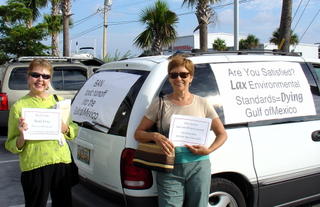
The sign was aimed at the high-level elected officials she expected to attend the Gulf of Mexico Alliance workshop, but only state and local agency staff showed up, said Danu, who was there representing the environmental group Save Our Sarasota.
Danu wanted to know if the officials were satisfied with a dying Gulf of Mexico, one threatened by red tide, declining fish stocks and dying sea turtles and marine mammals.
“We’re trying to have this message resonate up to the highest level where these meetings were initiated,” Danu said.
It couldn’t resonate at the local level."
That's because none (that's right none) of our local leaders attended. Read the entire story in the SHT.
The SHT also commented twice in editorials about this meeting. One commented on the health crisis and the need for funding to look for answers.
The other commented on the obvious lack of local leaders:
That sends a signal of apathy."
We all know that everyone here wants a healthy Gulf and Bay and we all realize their significance to our economy, commissioners included.
We would like to know why no commissioners, city or county attended this important event. We would welcome their comments.
“Are you satisfied now?” one read.
The sign was aimed at the high-level elected officials she expected to attend the Gulf of Mexico Alliance workshop, but only state and local agency staff showed up, said Danu, who was there representing the environmental group Save Our Sarasota.
Danu wanted to know if the officials were satisfied with a dying Gulf of Mexico, one threatened by red tide, declining fish stocks and dying sea turtles and marine mammals.
“We’re trying to have this message resonate up to the highest level where these meetings were initiated,” Danu said.
It couldn’t resonate at the local level."
That's because none (that's right none) of our local leaders attended. Read the entire story in the SHT.
The SHT also commented twice in editorials about this meeting. One commented on the health crisis and the need for funding to look for answers.
The other commented on the obvious lack of local leaders:
"The workshop's waterfront venue overlooked Sarasota Bay and downtown Sarasota. What it lacked was representation by elected officials of the city and county governments.
That sends a signal of apathy."
We all know that everyone here wants a healthy Gulf and Bay and we all realize their significance to our economy, commissioners included.
We would like to know why no commissioners, city or county attended this important event. We would welcome their comments.
Where Is He Headed?
We hear from a good source that City Manager Mike McNees is in the top three on a candidate list for a city manager position in Colorado.
Tuesday, September 13, 2005
Where Are We Headed?
City leaders want to take meetings on the road says the headline in a story in today's SHT
"The public seems to have a fractured view of us," Servian said.
The working people of Sarasota, "the silent majority," often lack opportunities to participate in local government and so they feel disconnected from it, the commissioners said. Often, elected officials find themselves hearing only the views of activists and special interests.
"We don't realize it's a minority (viewpoint) because we don't seek other points of view," Commissioner Ken Shelin said.
Well guess what? We do think the commission is fractured. Too many mis-steps recently have lead too many people to say "What is going on here? What is happening to Sarasota?"
If the commissioners truly believe it is a minority saying these things, they really do need to hit the road and talk to the constituents. You don't need to have regular meetings, you do need to visit the neighborhoods and ask how we think you are performing. Ask about downtown. Ask about affordable housing. Ask about following the processes that have been established to develop a vision that everyone buys into and how this vision is being implemented, try to convince us that the threat of lawsuits is not shaping our city.
There is lots to talk about.
We would also like to comment on Mike McNees' quote: City Manager Michael McNees told the commissioners Monday. "There is a sense in the outlying areas that they have been left out."
If you think we are in the "outlying area" you need to do some real soul searching. We are every bit a part of the city as downtown. As a matter of fact we "outliers" make up the majority, both in residents and voters. You might want to find out what we think about the city and how it is being run. Maybe the "in crowd" can learn something.
"The public seems to have a fractured view of us," Servian said.
The working people of Sarasota, "the silent majority," often lack opportunities to participate in local government and so they feel disconnected from it, the commissioners said. Often, elected officials find themselves hearing only the views of activists and special interests.
"We don't realize it's a minority (viewpoint) because we don't seek other points of view," Commissioner Ken Shelin said.
Well guess what? We do think the commission is fractured. Too many mis-steps recently have lead too many people to say "What is going on here? What is happening to Sarasota?"
If the commissioners truly believe it is a minority saying these things, they really do need to hit the road and talk to the constituents. You don't need to have regular meetings, you do need to visit the neighborhoods and ask how we think you are performing. Ask about downtown. Ask about affordable housing. Ask about following the processes that have been established to develop a vision that everyone buys into and how this vision is being implemented, try to convince us that the threat of lawsuits is not shaping our city.
There is lots to talk about.
We would also like to comment on Mike McNees' quote: City Manager Michael McNees told the commissioners Monday. "There is a sense in the outlying areas that they have been left out."
If you think we are in the "outlying area" you need to do some real soul searching. We are every bit a part of the city as downtown. As a matter of fact we "outliers" make up the majority, both in residents and voters. You might want to find out what we think about the city and how it is being run. Maybe the "in crowd" can learn something.
Campus Crusading
Today, many academic institutions are partnering with cities, consulting with neighborhoods, forming citizen advisory groups, and embracing mixed-use developments that blur the edges of campus rather than impose hard boundaries.
It's a case of enlightened self-interest. Corporations and department stores can leave cities with ease, but universities aren't portable. They realize that their fortunes are tied to their immediate environs and to cities as a whole. And they fear they'll lose the race for students and faculty if they can't provide safe, attractive settings in which to live and learn.
"Increasingly, students want it all," says Michael Beyard, a senior resident fellow at the Urban Land Institute in Washington, D.C. "They want a top education, but also a top environment. This becomes even more important in a hyper-competitive market.''
This commentary comes from a recently published article in a planning publication.
How does it relate to Sarasota?
Well hold on to your hat. We are about to see an explosion of campus related activity here in Sarasota.
The Ringling School of Art and Design is in the midst of updating their Campus Master Plan as well as an ambitious building and land acquisition plan.
New College is just starting to update their Campus Master Plan. They intend to nearly double their student population and this will require more dorms and class rooms.
USF-Sarasota is in the midst of a building program - just across the border in Manatee County at the Crosley Estate site. USF is also starting to work on their own Campus Master Plan.
New College and USF shared a campus until recently. Now that each has its own campus they both need to have a Master Plan in order to compete for funding.
But there is more.
These schools, along with the city, county, Museum and the airport are close to hiring a consultant to start a process that promises to identify needed elements of an "Educational and Cultural Corridor". This would focus on the North Trail from Bowles Creek (Manatee County) to 10th St in Sarasota. The concept is to formulate a plan to revitalize the North Trail and connect to the cultural, educational and historic resources along this corridor. A renewal of the 1990's Gateway 2000 project that fizzled.
The schools are concerned about the North Trail image as well as the safety of their students and employees. New College also is looking for significant neighborhood input as they try to become more a part of the immediate neighborhood.
Charrettes for the New College Campus Master Plan start this month. The Educational and Cultural Corridor process could start later this fall. Hopefully lots of people will get involved and we will be taken for an enlightened ride.
We will post updates from time to time for those interested.
It's a case of enlightened self-interest. Corporations and department stores can leave cities with ease, but universities aren't portable. They realize that their fortunes are tied to their immediate environs and to cities as a whole. And they fear they'll lose the race for students and faculty if they can't provide safe, attractive settings in which to live and learn.
"Increasingly, students want it all," says Michael Beyard, a senior resident fellow at the Urban Land Institute in Washington, D.C. "They want a top education, but also a top environment. This becomes even more important in a hyper-competitive market.''
This commentary comes from a recently published article in a planning publication.
How does it relate to Sarasota?
Well hold on to your hat. We are about to see an explosion of campus related activity here in Sarasota.
The Ringling School of Art and Design is in the midst of updating their Campus Master Plan as well as an ambitious building and land acquisition plan.
New College is just starting to update their Campus Master Plan. They intend to nearly double their student population and this will require more dorms and class rooms.
USF-Sarasota is in the midst of a building program - just across the border in Manatee County at the Crosley Estate site. USF is also starting to work on their own Campus Master Plan.
New College and USF shared a campus until recently. Now that each has its own campus they both need to have a Master Plan in order to compete for funding.
But there is more.
These schools, along with the city, county, Museum and the airport are close to hiring a consultant to start a process that promises to identify needed elements of an "Educational and Cultural Corridor". This would focus on the North Trail from Bowles Creek (Manatee County) to 10th St in Sarasota. The concept is to formulate a plan to revitalize the North Trail and connect to the cultural, educational and historic resources along this corridor. A renewal of the 1990's Gateway 2000 project that fizzled.
The schools are concerned about the North Trail image as well as the safety of their students and employees. New College also is looking for significant neighborhood input as they try to become more a part of the immediate neighborhood.
Charrettes for the New College Campus Master Plan start this month. The Educational and Cultural Corridor process could start later this fall. Hopefully lots of people will get involved and we will be taken for an enlightened ride.
We will post updates from time to time for those interested.
Monday, September 12, 2005
Advice From the Best
Commissioners, how about some advice from the longest running elected Mayor in the country (especially when you think about becoming an elected mayor yourself)?
"Wisdom, civic pride, and unparalleled experience have helped Joe Riley turn Charleston, SC, into one of America's finest cities."
You cannot overstate the importance of strategic planning of a city. Just as no corporation could compete without a good strategic business plan, no city can begin to achieve its potential without a wise strategic plan that the leadership adheres to. Cities are the ultimate civic creations – they belong to citizens, it’s public realm. It influences the experiences of everyone who touches it every moment of every day.
(Editor’s note: cities are the public realm, they belong to the citizens, if you want to build here, do it our way. And yes, you must follow a wise strategic plan.)
I think what’s happened – and I’m not speaking about L.A. or any city; I’m speaking about America – is we developed rapidly in the 20th century in metropolitan areas, and the notion of civic planning was lost. It was private rather than civic planning, because a landowner would buy a tract of land and then say, "Well, let’s develop it this way." Well, the ownership of land is sacrosanct and the ability to profit from wise ownership and development of land is very important, but if it is to be a permanent part of the ultimate civic gesture, a city, then it should be pursuant to a civic vision, a community vision.
(Editor’s note: not private planning, private vision but civic planning, civic vision community vision!)
It has to be a vision. And it’s not a vision imposed. A good plan is a plan that represents the collective vision of the citizens. And that happens in many ways. That happens from hearings and from various methods of input. You’re simply not a technical or necessarily a specific solution here. You’re seeking a broader vision, and within that broader vision a plan is developed. But if it’s just mediating between competing interests then that’s more of a status quo achievement rather than a visionary achievement
(Editor’s note: It’s not an imposed vision. Your job is not to mediate between competing interests. Your job is to develop and put into place the community vision. If we want status quo, we don’t need you.)
And when the citizens are involved, you encourage people to think about the future: What are the highest aspirations we can have for our neighborhood or our community? What do we love about where we live? What do we want more of? What do we not like so much about where we live? What facets of the physical development – our infrastructure or other development that are less than excellent that we would repair or improve? And so you need a great planning director and then, obviously, the political support. But it’s not self-imposed – you’re not looking for a planning director who’s going to say, "Ah ha! I know the vision for Charleston or Columbus or Los Angeles or Seattle." But rather, "I, working with the elected officials and working with and engaging the community, can help shape that vision and then help recommend the tools and the processes to put it into place."
(Editor’s note: One more time: engage the community, help shape the vision and use good processes to put it in place.)
Excellent advice from an excellent mayor.
"Wisdom, civic pride, and unparalleled experience have helped Joe Riley turn Charleston, SC, into one of America's finest cities."
You cannot overstate the importance of strategic planning of a city. Just as no corporation could compete without a good strategic business plan, no city can begin to achieve its potential without a wise strategic plan that the leadership adheres to. Cities are the ultimate civic creations – they belong to citizens, it’s public realm. It influences the experiences of everyone who touches it every moment of every day.
(Editor’s note: cities are the public realm, they belong to the citizens, if you want to build here, do it our way. And yes, you must follow a wise strategic plan.)
I think what’s happened – and I’m not speaking about L.A. or any city; I’m speaking about America – is we developed rapidly in the 20th century in metropolitan areas, and the notion of civic planning was lost. It was private rather than civic planning, because a landowner would buy a tract of land and then say, "Well, let’s develop it this way." Well, the ownership of land is sacrosanct and the ability to profit from wise ownership and development of land is very important, but if it is to be a permanent part of the ultimate civic gesture, a city, then it should be pursuant to a civic vision, a community vision.
(Editor’s note: not private planning, private vision but civic planning, civic vision community vision!)
It has to be a vision. And it’s not a vision imposed. A good plan is a plan that represents the collective vision of the citizens. And that happens in many ways. That happens from hearings and from various methods of input. You’re simply not a technical or necessarily a specific solution here. You’re seeking a broader vision, and within that broader vision a plan is developed. But if it’s just mediating between competing interests then that’s more of a status quo achievement rather than a visionary achievement
(Editor’s note: It’s not an imposed vision. Your job is not to mediate between competing interests. Your job is to develop and put into place the community vision. If we want status quo, we don’t need you.)
And when the citizens are involved, you encourage people to think about the future: What are the highest aspirations we can have for our neighborhood or our community? What do we love about where we live? What do we want more of? What do we not like so much about where we live? What facets of the physical development – our infrastructure or other development that are less than excellent that we would repair or improve? And so you need a great planning director and then, obviously, the political support. But it’s not self-imposed – you’re not looking for a planning director who’s going to say, "Ah ha! I know the vision for Charleston or Columbus or Los Angeles or Seattle." But rather, "I, working with the elected officials and working with and engaging the community, can help shape that vision and then help recommend the tools and the processes to put it into place."
(Editor’s note: One more time: engage the community, help shape the vision and use good processes to put it in place.)
Excellent advice from an excellent mayor.
Open Letter to City Commissioner Shelin
An Open Letter to City Commissioner Ken Shelin
This letter is written on behalf of a great many city residents who voted for you in the most recent election because you were going to put "process" back into city government. We believe your motion and leadership in rezoning historic Burns Court to Downtown Core was an abrogation of those campaign promises.
An entire community understood there was to be a study of Burns Court zoning and more public input and discussion, after which that area would be readdressed. No one dreamed that on a second reading the zoning would be changed, least of all your supporters, who know you champion "process."
As you would be first to remind us, process is not what is strictly legal/allowed. It is procedures that ensure deliberative, considered, fact-based public decision-making. What happened Wednesday circumvented that process with what looks to a stunned community like a backroom political solution to a complex issue.
We understand that, in part, you were reflecting the concerns of the City attorney as to possible exposure to lawsuits. However, following the process for review that we believed you had put in place would not have jeopardized your legal position. Indeed, two commissioners with much longer tenure on the commission than yours were not worried enough about potential lawsuits to follow your lead, and voted against your proposed changes. They had the courage to follow process. Further, we want to tell you emphatically that many of us would support our taxpayer dollars being used to fight lawsuits that protect our right to make this a great city.
We are told no matter what anyone does, Sarasota is becoming a "city." We know that. But the issue is whether it becomes a "good city," a "great city," or merely "a city." That decision rests with the commissioners. To date, we see only a "city" rising. We want something better.
We have heard too often of the venerable John Nolen’s vision for Burns Court in his 1924 city master plan. However, in that same document he cautioned, "A good plan is one that does not attempt to bind the city too far into the future." If Nolen were here for wise counsel, we believe he would ask you to consult with your current planners. Mr. Duany recommended Downtown Edge for Burns Court with buffers for abutting neighborhoods. The city planning department has consistently supported that recommendation. How could all of that study and process be overturned on a second reading?
If you truly have a sense of the pulse of this community, you will know that voters are close to the point where, as in the movie Network, they threw open their windows and screamed "I’m sick and tired of this and I’m not going to take it any more!"
So, Ken, what we are asking you is, in the interest of process, and respect for those who elected you, to bring this issue back to the table and ask for rescission. We ask this with trust and hope that the Ken Shelin we spoke with on the campaign trail is the Ken Shelin who serves us at the commission table today, tomorrow, and into the future.
Sunday, September 11, 2005
Here And There
You might wander over to Joe Moraca's Blog . He's got some interesting comments about Walkable Neighborhoods.
Meanwhile at the City Managers Blog things are getting hotter. He writes:
Is it just me, or is it getting a little warm in here? First, I have to say we're getting pretty close to that civility line, attacks on employees or commissioners aren't really welcome. If there are personnel issues to be dealt with, I will certainly do so in the proper channels, of which a public blog is not one.
Allow me to make a suggestion to Mike - put some nice pictures on your blog, it will give it some diversity and make it more interesting! Maybe something like:
Check the Suncoast Blog for some news and "bright" commentary you might not normally see. Several people (including this writer) are contributing to this blog.
Another of Joe's blogs, Sarasota Neighborhoods, has some great neighborhood pictures and commentary. A friendly place to visit.
And there's the IBSSA Blog - an interesting commentary about one neighborhood in our fair city. West of the trail you know - it must be good.
There is lots of interesting commentary and graphics about life and politics in Sarasota. Check us out.
Saturday, September 10, 2005
Sudden Sourness
Vinegar indeed!
We couldn't agree more with the SHT editorial Friday concerning the stupefying decision made by a majority of the City Commissioners (Shelin, Atkins, Bilyeu) concerning the Burns Square zoning. After months of discussion, negotiations, resident and neighborhood input and commitment, suddenly three commissioners throw out all the hard work of hundreds of people and reverse the course.
Absolutely astounding.
Commissioner Shelin campaigned on the issue of "process ". Many of us believed his message that the commission at that time had drifted away from an inclusive process - listening to all points of view and making deliberative decisions, in the open, and looking for the best solution for the entire city. He promised to bring process back to the table. However there was no open and inclusive process this time - just the old fashioned back room, arm twisting that favors a few at the expense of many. We are sorely disappointed.
It's also surprising that Commissioner Atkins would support this rapid change in direction. He has always listened to arguments and input made by the public. He admonishes people at times saying "you only show up when you are against something, when are you going to be "for" something, and how about helping in my neighborhood?" Many people gave input on Burns Square. The input was overwhelmingly in favor of preserving the current unique nature of this neighborhood and that the way to accomplish this was to use the downtown edge zoning or look at a specific zoning that what help preserve the character yet listen to the property owners. Commissioner Atkins probably knows best that helping one neighborhood is the best way to get help when you need it. We'd like to think Commissioner Atkins would consider all of Sarasota neighborhoods and not just one small square when making far reaching decisions.
Commissioner Bilyeu has recently brought some persuasive insight to the table. His questions about the Orange Dolphin parking deal were critical. On this issue we think that the long term future of downtown Sarasota requires diversity and uniqueness. Replacing unique sections of our downtown with yet another 10 story condo hardly helps retain the charm we have.
Time after time we hear about a threat of a law suit. We must stop being afraid every time a lawyer says "I will sue". The people of Sarasota have a vision for their downtown. We elect representatives to achieve that vision. Sometimes that requires sticking to the task and not bending to special interests and their threats. We need to follow the processes we have established and if a special interest group threatens to sue, we should say OK and settle the issue in court. Many of us would readily agree to invest our tax dollars in defending the vision we have for a great city. Caving in to the pressure of special interests makes them wealthy and us poor - poor in the sense that we have a bland city, just another city, nothing to celebrate.
We do applaud the efforts of Commissioners Palmer and Servian. They understand the need to find a way through the Burns Square issue that preserves the downtown vision.
These are difficult and far reaching decisions. We must make the right decision. We have said before that making quick decisions (like the reversal on this issue by the other three commissioners) is not the way to run a city. We need better thinking than that. Special interest groups should have their say, but when their interest does not coincide with the community interest they should not be allowed to trump years of input, negotiation and commitment. This was a wrong decision and we hope reconsideration is in our near future.
Otherwise we might as well keep pouring the vinegar. A truly sour taste in Sarasota.
We couldn't agree more with the SHT editorial Friday concerning the stupefying decision made by a majority of the City Commissioners (Shelin, Atkins, Bilyeu) concerning the Burns Square zoning. After months of discussion, negotiations, resident and neighborhood input and commitment, suddenly three commissioners throw out all the hard work of hundreds of people and reverse the course.
Absolutely astounding.
Commissioner Shelin campaigned on the issue of "process ". Many of us believed his message that the commission at that time had drifted away from an inclusive process - listening to all points of view and making deliberative decisions, in the open, and looking for the best solution for the entire city. He promised to bring process back to the table. However there was no open and inclusive process this time - just the old fashioned back room, arm twisting that favors a few at the expense of many. We are sorely disappointed.
It's also surprising that Commissioner Atkins would support this rapid change in direction. He has always listened to arguments and input made by the public. He admonishes people at times saying "you only show up when you are against something, when are you going to be "for" something, and how about helping in my neighborhood?" Many people gave input on Burns Square. The input was overwhelmingly in favor of preserving the current unique nature of this neighborhood and that the way to accomplish this was to use the downtown edge zoning or look at a specific zoning that what help preserve the character yet listen to the property owners. Commissioner Atkins probably knows best that helping one neighborhood is the best way to get help when you need it. We'd like to think Commissioner Atkins would consider all of Sarasota neighborhoods and not just one small square when making far reaching decisions.
Commissioner Bilyeu has recently brought some persuasive insight to the table. His questions about the Orange Dolphin parking deal were critical. On this issue we think that the long term future of downtown Sarasota requires diversity and uniqueness. Replacing unique sections of our downtown with yet another 10 story condo hardly helps retain the charm we have.
Time after time we hear about a threat of a law suit. We must stop being afraid every time a lawyer says "I will sue". The people of Sarasota have a vision for their downtown. We elect representatives to achieve that vision. Sometimes that requires sticking to the task and not bending to special interests and their threats. We need to follow the processes we have established and if a special interest group threatens to sue, we should say OK and settle the issue in court. Many of us would readily agree to invest our tax dollars in defending the vision we have for a great city. Caving in to the pressure of special interests makes them wealthy and us poor - poor in the sense that we have a bland city, just another city, nothing to celebrate.
We do applaud the efforts of Commissioners Palmer and Servian. They understand the need to find a way through the Burns Square issue that preserves the downtown vision.
These are difficult and far reaching decisions. We must make the right decision. We have said before that making quick decisions (like the reversal on this issue by the other three commissioners) is not the way to run a city. We need better thinking than that. Special interest groups should have their say, but when their interest does not coincide with the community interest they should not be allowed to trump years of input, negotiation and commitment. This was a wrong decision and we hope reconsideration is in our near future.
Otherwise we might as well keep pouring the vinegar. A truly sour taste in Sarasota.
Wednesday, September 07, 2005
Pineapple Decision Made, Previously
It was apparent that the commissioners had their mind made up about the Pineapple Square proposal before the meeting Tuesday night and before any public input had been taken. They also decided there was no need to have the CRA Advisory Board give them any advice.
No advice from the public (except just before a quick vote to accept the Planning Staff recommendation to start a negotiation process with the Isaac Group), and similarly no advice from the CRA Advisory Board.
The commission did take the advice of John Simon that they did not need to run this by the CRA Advisory Board since no TIF dollars were involved. Of course he wants CRA district land (State St parking lot).
Lou Ann Palmer objected strenuously to not taking the advice of the CRA Advisory Board, but commissioners Servian, Shelin and Billyeu were against this.
John Simon also presented his case that competitive forces required quick action with no delay, and even threw in hurricane Katrina as a factor that would drive up construction costs, so the faster he is allowed to start the better.
While Save Our Sarasota does not think Pineapple Square is a bad project, we are concerned about the rapid pace of the approval process. We have submitted a list of questions we think need to be answered about this proposal, but with limited public input opportunities we think these will likely be brushed aside. If the project is truely good for Sarasota, slowing down to consider the full impact and to make sure design and compatabllity issues are addressed, is important to the entire community.
No advice from the public (except just before a quick vote to accept the Planning Staff recommendation to start a negotiation process with the Isaac Group), and similarly no advice from the CRA Advisory Board.
The commission did take the advice of John Simon that they did not need to run this by the CRA Advisory Board since no TIF dollars were involved. Of course he wants CRA district land (State St parking lot).
Lou Ann Palmer objected strenuously to not taking the advice of the CRA Advisory Board, but commissioners Servian, Shelin and Billyeu were against this.
John Simon also presented his case that competitive forces required quick action with no delay, and even threw in hurricane Katrina as a factor that would drive up construction costs, so the faster he is allowed to start the better.
While Save Our Sarasota does not think Pineapple Square is a bad project, we are concerned about the rapid pace of the approval process. We have submitted a list of questions we think need to be answered about this proposal, but with limited public input opportunities we think these will likely be brushed aside. If the project is truely good for Sarasota, slowing down to consider the full impact and to make sure design and compatabllity issues are addressed, is important to the entire community.
Tuesday, September 06, 2005
Pineapple Square Decision Time? - or - Has the Decision Already Been Made?
In response to our questions about Pineapple Square, Dale Parks sent the following:
Hi Richard,
Your questions are very valid, and I commend your group for taking the time to articulate them. Process in my opinion, continues to suffer in the "hurry up, this deal may not last" mentality. The Isaacs have never presented their proposed development to the CRA Advisory Board, and I believe the process- as you've pointed out- needs to include input such as this prior to the City Commission committing City land- and most assuredly- City TIF dollars to a deal such as this. Certain Commissioners have already expressed their opinions that their minds are made up- including the issue of vacating a section of State Street. This in my opinion is deplorable, I hope better minds prevail. City Staff and their Developer partners should not be driving this car.
Dale Parks
We too have cautioned against hasty decisions. Our City is blessed to have many well informed residents that serve in various capacities on boards and organizations whose primary goal is to improve our quality of life. We must take advantage of all the input available.
Recent examples of pushing forward in response to developers claims of "time is of the essence" and "if we don't get this property all could be lost" have shown the pitfalls of a "fast-forward" mentality.
Even Abrahmson and Associates, the consultant the City hired to review this proposal says: “further evaluation and negotiation” are needed before that step is taken, despite the developer saying the parcel is essential for his project to go forward.
Apparently planning staff has made up their mind and wishes to move forward - as the Pelican Press noted : city planning staff is asking the commission to give 60 days to negotiate a development agreement – technically called a “term sheet” – with John Simon of Isaac Group Holdings, the developer.
We strongly believe that the City Commissioners needs to proceed with caution and understand all the issues and ramifications before doing another "fast-forward" with the Pineapple Square decision.
Hi Richard,
Your questions are very valid, and I commend your group for taking the time to articulate them. Process in my opinion, continues to suffer in the "hurry up, this deal may not last" mentality. The Isaacs have never presented their proposed development to the CRA Advisory Board, and I believe the process- as you've pointed out- needs to include input such as this prior to the City Commission committing City land- and most assuredly- City TIF dollars to a deal such as this. Certain Commissioners have already expressed their opinions that their minds are made up- including the issue of vacating a section of State Street. This in my opinion is deplorable, I hope better minds prevail. City Staff and their Developer partners should not be driving this car.
Dale Parks
We too have cautioned against hasty decisions. Our City is blessed to have many well informed residents that serve in various capacities on boards and organizations whose primary goal is to improve our quality of life. We must take advantage of all the input available.
Recent examples of pushing forward in response to developers claims of "time is of the essence" and "if we don't get this property all could be lost" have shown the pitfalls of a "fast-forward" mentality.
Even Abrahmson and Associates, the consultant the City hired to review this proposal says: “further evaluation and negotiation” are needed before that step is taken, despite the developer saying the parcel is essential for his project to go forward.
Apparently planning staff has made up their mind and wishes to move forward - as the Pelican Press noted : city planning staff is asking the commission to give 60 days to negotiate a development agreement – technically called a “term sheet” – with John Simon of Isaac Group Holdings, the developer.
We strongly believe that the City Commissioners needs to proceed with caution and understand all the issues and ramifications before doing another "fast-forward" with the Pineapple Square decision.
Monday, September 05, 2005
Model Improvement
A "model improvement" in understanding downtown Sarasota, at least from a visual perspective may come from a recent series in the Chicago Sun Times concerning changes in downtown Chicago.
When we look for information on the City web page we find this:
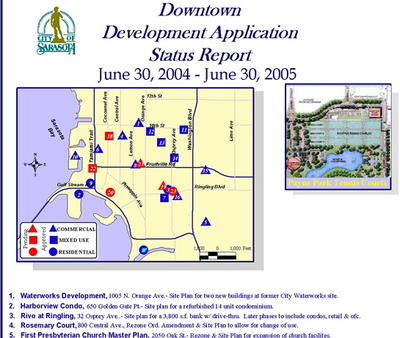
When we look for information on the City web page we find this:
No other sources give a good visual depiction of what downtown currently looks like or what is proposed. Something like the graphics published by the Sun Times would go a long way toward helping all of us visualize the changes occurring.
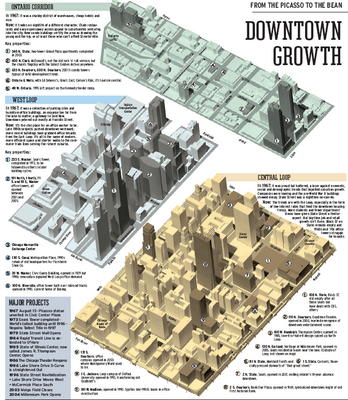
There seems to be much resistance from the City to allow the CRA Advisory Board member, who was specifically selected because of his design expertise, to actually comment on design. What we get to see are the fantasy drawings supplied by the developers which are specifically produced to give a visualization that does not correspond to reality.
It would serve Sarasota well if someone (the City, the media?) would provide realistic visualizations, understandable by all.
The next step would be actual 3- dimensional models, built to scale.
Sunday, September 04, 2005
More Pineapple Square Questions
Save Our Sarasota has had conversations with John Simon, the project manager for the Pineapple Square project, city planning staff associated with this project, city commissioners and various community groups and individuals.These conversations have led to a number of questions that we feel must be answered as this significant downtown proposal is considered. This change will alter the character of downtown for years to come. We must be sure this is the direction the community wants to go.
This is the second in a series that comments and asks questions about this proposed project. The first set of questions was posted on Sep 1.
Height, Stepbacks, Arcades: The views of the building show step-backs on Pineapple but not on Lemon. Why?
The concept shown by Mr Simon showed Pineapple Square at 11 stories in height. What is the rational for asking for this added height and how can it be justified? Do we really want to tamper with the new downtown rezone even before it goes into effect?
Would arcades be allowed at this project, which already is very massive? Shade trees would be problematic if arcades are allowed. Giving away air rights above arcades is also problematic.
Would a wind tunnel be created in the walk way through the building?
Traffic: What would be the traffic patterns for people driving to Pineapple Square? From I-75 they would take Fruitville west to downtown. Which street would cars use to access the parking lot and how would this work? Lemon seems to be the natural street to use. This would be problematic. What are the localized traffic implications of this plan? How would people coming to Pineapple Square from either direction on the US 41 access the parking lot?
Is the alley on the northern edge of the building capable of allowing cars to go to and from the parking area while a truck is pulling into or out of the loading space? Would the businesses on Main Street that rely on servicing from this alley still have adequate space? How would the new loading docks and parking affect access to the existing businesses? It appears there would be a major increase in vehicles using this alley. Could all of the uses be handled?
Unique retail: This project would contain a large percentage of chain retail. If uniqueness, character, and quality are lost, downtown Sarasota becomes just another mall. How does this project encourage and enhance Sarasota’s current high percentage of unique and local businesses?
Seasonal economy: Given the current seasonality issues of Sarasota’s economy, would adding more upscale downtown condos and shopping help or hurt the metropolitan area economy? Specifically, would we lose more of the current, local businesses? Would this make it difficult to achieve the retail requirements for the mid section of Main?
This is the second in a series that comments and asks questions about this proposed project. The first set of questions was posted on Sep 1.
Height, Stepbacks, Arcades: The views of the building show step-backs on Pineapple but not on Lemon. Why?
The concept shown by Mr Simon showed Pineapple Square at 11 stories in height. What is the rational for asking for this added height and how can it be justified? Do we really want to tamper with the new downtown rezone even before it goes into effect?
Would arcades be allowed at this project, which already is very massive? Shade trees would be problematic if arcades are allowed. Giving away air rights above arcades is also problematic.
Would a wind tunnel be created in the walk way through the building?
Traffic: What would be the traffic patterns for people driving to Pineapple Square? From I-75 they would take Fruitville west to downtown. Which street would cars use to access the parking lot and how would this work? Lemon seems to be the natural street to use. This would be problematic. What are the localized traffic implications of this plan? How would people coming to Pineapple Square from either direction on the US 41 access the parking lot?
Is the alley on the northern edge of the building capable of allowing cars to go to and from the parking area while a truck is pulling into or out of the loading space? Would the businesses on Main Street that rely on servicing from this alley still have adequate space? How would the new loading docks and parking affect access to the existing businesses? It appears there would be a major increase in vehicles using this alley. Could all of the uses be handled?
Unique retail: This project would contain a large percentage of chain retail. If uniqueness, character, and quality are lost, downtown Sarasota becomes just another mall. How does this project encourage and enhance Sarasota’s current high percentage of unique and local businesses?
Seasonal economy: Given the current seasonality issues of Sarasota’s economy, would adding more upscale downtown condos and shopping help or hurt the metropolitan area economy? Specifically, would we lose more of the current, local businesses? Would this make it difficult to achieve the retail requirements for the mid section of Main?
Saturday, September 03, 2005
Can the Magic of Harry Save Downtown?
A letter to the editor from developer Harry Rosenblum (Harry Plotter?) claims to have the answer for the Burns Square "neighborhood." According to Rosenblum, Burns Square will be saved if the city allows 10 story buildings with 50 units per acre density instead of the agreed upon (DTE zoning) 5 story height limit with 25 units per acre density.
He would have us believe that: "DTE (Down Town Edge) codes will force development limitations on owners that will effectively eliminate the magic of demographic diversity. Burns Square will either stagnate or become an exclusive enclave for the wealthy."
He continues: "If Burns Square is to continue its destiny as an artistic, diverse in-town neighborhood, the commissioners must increase density, find intelligent answers to parking and allow the entrepreneurial spirit of the private sector to create an exciting and diverse urban environment."
Wow! Quite a statement from a developer.
During the downtown building boom of the last couple years, all the condos built, have been and continue to be targeted at incomes much higher than the typical Sarasota working resident can afford. This includes working artists. His "concern" for artist and diversity is not supported by reality.
We are also concerned with diversity in the downtown area. We need to find ways for people of all income levels, ages, skills and interests to live (hint: affordable) as well as visit downtown. We have commented on this many times in previous posts. Only with a truly diverse mix of people will downtown become lively. Now we have a lively downtown at lunch time when workers, visitors and people that live near downtown populate the sidewalks. When evening arrives, only the restaurants and bars show signs of life, except for the occasional Friday night art walk.
Then there is the Saturday Farmers Market. This draws a truly diverse group and it is very lively with social as well as commercial activity. A great model to emulate.
Andres Duany indicated that the Burns Court area as well as Laurel Park were perfect "walk to town" neighborhoods and should not be changed. We believe he was right.
We just can’t figure out how another 10 story building with high priced condos will help the artists or the "magic of demographic diversity". A true bit of magic would be to find a way to develop affordable housing in and near downtown. How about it Harry?
He would have us believe that: "DTE (Down Town Edge) codes will force development limitations on owners that will effectively eliminate the magic of demographic diversity. Burns Square will either stagnate or become an exclusive enclave for the wealthy."
He continues: "If Burns Square is to continue its destiny as an artistic, diverse in-town neighborhood, the commissioners must increase density, find intelligent answers to parking and allow the entrepreneurial spirit of the private sector to create an exciting and diverse urban environment."
Wow! Quite a statement from a developer.
During the downtown building boom of the last couple years, all the condos built, have been and continue to be targeted at incomes much higher than the typical Sarasota working resident can afford. This includes working artists. His "concern" for artist and diversity is not supported by reality.
We are also concerned with diversity in the downtown area. We need to find ways for people of all income levels, ages, skills and interests to live (hint: affordable) as well as visit downtown. We have commented on this many times in previous posts. Only with a truly diverse mix of people will downtown become lively. Now we have a lively downtown at lunch time when workers, visitors and people that live near downtown populate the sidewalks. When evening arrives, only the restaurants and bars show signs of life, except for the occasional Friday night art walk.
Then there is the Saturday Farmers Market. This draws a truly diverse group and it is very lively with social as well as commercial activity. A great model to emulate.
Andres Duany indicated that the Burns Court area as well as Laurel Park were perfect "walk to town" neighborhoods and should not be changed. We believe he was right.
We just can’t figure out how another 10 story building with high priced condos will help the artists or the "magic of demographic diversity". A true bit of magic would be to find a way to develop affordable housing in and near downtown. How about it Harry?
Letter to Jane Robinson, Director Planning & Redevelopment
Dear Jane Robinson:
Save Our Sarasota believes the city should be giving more attention to the design of the NEW Sarasota.
Many of us decided to move to Sarasota, because it is the City of the Arts in Florida. It is architecture that makes this statement in the most visible way.
For years, neither expediency nor financial considerations were the overriding focus of building projects. Design and creative expression were important elements, making for Sarasota's rich and proud architectural history. We now see projects nearing completion in our downtown where this is obviously not the case.
The Advisory Board of the Community Redevelopment Agency (CRA) was established to permit citizens to review plans for development in this most critical area of downtown. The Advisory Board was set up to represent the public interest in the use of tax funds. The composition of its board, as mandated by the CRA Resolution, includes a planning or design person, as well as persons from other disciplines, thus creating a public advisory board with the expertise to comment on any plan that comes before it.
This important board should be reviewing in depth all significant projects that are to be built in our downtown. We note how very often their input is not being solicited.
And we strongly urge the City of Sarasota to not only encourage, but require, professional design input from its CRA Advisory Board. Mr. Dale Parks, who currently sits on that Board is highly qualified to fulfill that role.
Sincerely,
Janice Green, Chair
Save Our Sarasota
Editor's note: This letter was recently sent to Jane Robinson.
Save Our Sarasota believes the city should be giving more attention to the design of the NEW Sarasota.
Many of us decided to move to Sarasota, because it is the City of the Arts in Florida. It is architecture that makes this statement in the most visible way.
For years, neither expediency nor financial considerations were the overriding focus of building projects. Design and creative expression were important elements, making for Sarasota's rich and proud architectural history. We now see projects nearing completion in our downtown where this is obviously not the case.
The Advisory Board of the Community Redevelopment Agency (CRA) was established to permit citizens to review plans for development in this most critical area of downtown. The Advisory Board was set up to represent the public interest in the use of tax funds. The composition of its board, as mandated by the CRA Resolution, includes a planning or design person, as well as persons from other disciplines, thus creating a public advisory board with the expertise to comment on any plan that comes before it.
This important board should be reviewing in depth all significant projects that are to be built in our downtown. We note how very often their input is not being solicited.
And we strongly urge the City of Sarasota to not only encourage, but require, professional design input from its CRA Advisory Board. Mr. Dale Parks, who currently sits on that Board is highly qualified to fulfill that role.
Sincerely,
Janice Green, Chair
Save Our Sarasota
Editor's note: This letter was recently sent to Jane Robinson.
Friday, September 02, 2005
More on McNees
S-2, a local, business related e-mail newsletter comments today about McNees' new blog:
McNees blogs back: He’s tired of being called “defensive” when he tries to respond to criticism. He’s tired of people forming opinions about the city based on what they read in daily newspaper columns. He’s tired of the rampant confusion in the community about so many issues he deals with every day. So Sarasota city manager Mike McNees has a new platform – a blog. McNees intends to use the blog to explain issues from the city’s perspective and to engage in open, civil dialogue with anyone who cares to comment on the blog. Good for McNees; good for the community. Read the new blog here: srqcm.blogspot.com.
Maybe the real question is why does all this controversy and confusion exist? Are the issues real or just perception? If it is perception, and not reality, then communication must be the answer. Any and all attempts to improve communication are welcomed. That, of course begs the question, if the issues are only perception how did we get to the point where now find ourselves? Can McNees find a way to convince his critics with his new attempts at better communication and will these changes improve city teamwork and give us the good government we all expect?
Today's editorial in the SHT asks some important questions. We would like to see McNees respond to these questions either in the newspaper or on his blog or both. The editorial specifically comments on the most recent flap over a memo that was "essentially dictated" by McNees, but sent by the deputy City Manager. The memo concerned the on-going attempt to re-zone a small parcel in downtown Sarasota.
This editorial speaks about McNees' "lapse in good management style", his memo "appears to undermine the planning staff's attempt to carry out principles long supported by the City Commission, which in 2001 approved the downtown master plan", and the "memo and the response by Planning Director Jane Robinson reveal disturbing signs of tension and misunderstanding between the city manager and the department."
This issues are real and not just perception.
McNees blogs back: He’s tired of being called “defensive” when he tries to respond to criticism. He’s tired of people forming opinions about the city based on what they read in daily newspaper columns. He’s tired of the rampant confusion in the community about so many issues he deals with every day. So Sarasota city manager Mike McNees has a new platform – a blog. McNees intends to use the blog to explain issues from the city’s perspective and to engage in open, civil dialogue with anyone who cares to comment on the blog. Good for McNees; good for the community. Read the new blog here: srqcm.blogspot.com.
Maybe the real question is why does all this controversy and confusion exist? Are the issues real or just perception? If it is perception, and not reality, then communication must be the answer. Any and all attempts to improve communication are welcomed. That, of course begs the question, if the issues are only perception how did we get to the point where now find ourselves? Can McNees find a way to convince his critics with his new attempts at better communication and will these changes improve city teamwork and give us the good government we all expect?
Today's editorial in the SHT asks some important questions. We would like to see McNees respond to these questions either in the newspaper or on his blog or both. The editorial specifically comments on the most recent flap over a memo that was "essentially dictated" by McNees, but sent by the deputy City Manager. The memo concerned the on-going attempt to re-zone a small parcel in downtown Sarasota.
This editorial speaks about McNees' "lapse in good management style", his memo "appears to undermine the planning staff's attempt to carry out principles long supported by the City Commission, which in 2001 approved the downtown master plan", and the "memo and the response by Planning Director Jane Robinson reveal disturbing signs of tension and misunderstanding between the city manager and the department."
This issues are real and not just perception.
Thursday, September 01, 2005
Pineapple Square Questions
Save Our Sarasota has had conversations with John Simon, the project manager for the Pineapple Square project, city planning staff associated with this project, city commissioners and various community groups and individuals.
These conversations have led to a number of questions that we feel must be answered as this significant downtown proposal is considered. This change will alter the character of downtown for years to come. We must be sure this is the direction the community wants to go.
Over the next few days we will post our questions. We hope that these will be considered carefully.
Parking: An article by Mike Saewitz in the 8/24/05 Sarasota Herald-Tribune tells about a recent parking study showing a 17,781 parking space supply in downtown Sarasota, and reports that if all sections of downtown were to experience peak parking times at once 10,900 parking spaces would be taken. That leaves a surplus of almost 7,000 parking spaces. It appears the parking "problem" may not be real, only perceived as a result of the construction and infrastructure work currently being done all over the downtown area.
We understand that future parking needs may not be covered at this point in time, but until the Parking Master Plan is publicly discussed, how can we make major decisions without this critical step?
Will decisions on the State/Lemon lot be made in the context of a completed parking study and plan and will the withdrawal of the Plaza Verdi and Orange Dolphin sites from play allow for creative new parking strategies? And, as part of this larger strategizing, where does public transit enter the equation?
Mr. Simon has suggested that the Pineapple Square employees would not park in the Pineapple Square garage, but "somewhere else" downtown…wherever they could find a spot. Employee parking in the Pineapple Square garage would be controlled by not opening the lot until 10 AM, after employees had reported to work. Since many retail employees work only part time, and they would be coming to work at all hours of the day, would a 10 AM opening time really prevent employees from using parking garage. Is this acceptable to our service employees? Is this a viable strategy for our downtown parking, which undoubtedly should be based upon more concrete planning?
Value of City assets: What is the currently appraised value of the State Street lot? What is the current cost of a parking space in a parking garage?
If the city wants 350 parking places as the "price" for the State Street lot, is the deal that the developers would provide 350 public spaces in the Pineapple Square building in return for the State Street lot? Where does the 600 spaces number come from? Apparently if the city wants more than 350 spaces, the developers would provide them at $15K per space. Where does the $15K number come from? What evidence do we have that this is the construction cost?
Pineapple Square developers would provide three floors of air space to the city in return for the parking lot. What is the parking potential at State Street compared to the 350 spot proposal? What is the square footage of ten stories on the State Street potential parking lot vs. the square footage given in exchange by Pineapple Square?
Apparently the Isaacs Group needs parking for other downtown building projects, suggesting they would create parking at the State Street site that would be private and reserved for their residential units. This seems to indicate that this site is suitable for parking, even though Mr. Simon argues it is "inefficient". Is it really inefficient in that it is larger than the Orange Dolphin lot the city was considering purchasing a month ago?
How much public parking on the streets would be lost due to this project? What would be the net gain in spaces?
Is this the best site for added downtown parking, especially 350 to 600 spaces?
What is the value of the street vacation? What would the city get in return for vacating the State Street block? How wide would the "breezeway" be? Would it be the same as the current street width? If not, why not? Who would maintain this space? How would the loss of this street segment affect traffic circulation? What is the value of the air rights above this street?
Why is the church parking lot leased and not purchased? Why should the city give outright title to its land and only get a lease on the space it gets in return?
These conversations have led to a number of questions that we feel must be answered as this significant downtown proposal is considered. This change will alter the character of downtown for years to come. We must be sure this is the direction the community wants to go.
Over the next few days we will post our questions. We hope that these will be considered carefully.
Parking: An article by Mike Saewitz in the 8/24/05 Sarasota Herald-Tribune tells about a recent parking study showing a 17,781 parking space supply in downtown Sarasota, and reports that if all sections of downtown were to experience peak parking times at once 10,900 parking spaces would be taken. That leaves a surplus of almost 7,000 parking spaces. It appears the parking "problem" may not be real, only perceived as a result of the construction and infrastructure work currently being done all over the downtown area.
We understand that future parking needs may not be covered at this point in time, but until the Parking Master Plan is publicly discussed, how can we make major decisions without this critical step?
Will decisions on the State/Lemon lot be made in the context of a completed parking study and plan and will the withdrawal of the Plaza Verdi and Orange Dolphin sites from play allow for creative new parking strategies? And, as part of this larger strategizing, where does public transit enter the equation?
Mr. Simon has suggested that the Pineapple Square employees would not park in the Pineapple Square garage, but "somewhere else" downtown…wherever they could find a spot. Employee parking in the Pineapple Square garage would be controlled by not opening the lot until 10 AM, after employees had reported to work. Since many retail employees work only part time, and they would be coming to work at all hours of the day, would a 10 AM opening time really prevent employees from using parking garage. Is this acceptable to our service employees? Is this a viable strategy for our downtown parking, which undoubtedly should be based upon more concrete planning?
Value of City assets: What is the currently appraised value of the State Street lot? What is the current cost of a parking space in a parking garage?
If the city wants 350 parking places as the "price" for the State Street lot, is the deal that the developers would provide 350 public spaces in the Pineapple Square building in return for the State Street lot? Where does the 600 spaces number come from? Apparently if the city wants more than 350 spaces, the developers would provide them at $15K per space. Where does the $15K number come from? What evidence do we have that this is the construction cost?
Pineapple Square developers would provide three floors of air space to the city in return for the parking lot. What is the parking potential at State Street compared to the 350 spot proposal? What is the square footage of ten stories on the State Street potential parking lot vs. the square footage given in exchange by Pineapple Square?
Apparently the Isaacs Group needs parking for other downtown building projects, suggesting they would create parking at the State Street site that would be private and reserved for their residential units. This seems to indicate that this site is suitable for parking, even though Mr. Simon argues it is "inefficient". Is it really inefficient in that it is larger than the Orange Dolphin lot the city was considering purchasing a month ago?
How much public parking on the streets would be lost due to this project? What would be the net gain in spaces?
Is this the best site for added downtown parking, especially 350 to 600 spaces?
What is the value of the street vacation? What would the city get in return for vacating the State Street block? How wide would the "breezeway" be? Would it be the same as the current street width? If not, why not? Who would maintain this space? How would the loss of this street segment affect traffic circulation? What is the value of the air rights above this street?
Why is the church parking lot leased and not purchased? Why should the city give outright title to its land and only get a lease on the space it gets in return?
Communications Are Important
Mike McNees has started a blog!
As our City Manager works to achieve a better image in terms of communications, he has chosen blogging as a tool. I notice that he has 9 comments on the first posting.
Mike indicates he will discuss and comment on questions and issues and may even make daily comments. We hope he keeps it up (it can be a little time consuming) and as one person commented: Great idea and hope it is used constructively and it will not become "fluff."
Hang in there Mike.
As our City Manager works to achieve a better image in terms of communications, he has chosen blogging as a tool. I notice that he has 9 comments on the first posting.
Mike indicates he will discuss and comment on questions and issues and may even make daily comments. We hope he keeps it up (it can be a little time consuming) and as one person commented: Great idea and hope it is used constructively and it will not become "fluff."
Hang in there Mike.
Wednesday, August 31, 2005
Pineapple Square Decision Time?
We keep hearing that the city may be ready to move forward with the Pineapple Square decision. We also hear that the CRA Advisory Board has given no input.
We hope Tuesday’s commission meeting is exploratory in nature and doesn’t give the "full speed ahead" signal without doing all the homework. The commission has been stung twice recently by the perceived need to go forward with limited information. Both the Plaza Verdi and Orange Dolphin proposals have resulted in harsh reactions and calls for the city manager to resign. As we noted yesterday, if the reasoning for a decision is not clearly communicated, troubled waters lay ahead. The residents of Sarasota have much higher expectations than a slick selling job on yet another high end condo/retail proposal.
The Duany Plan observes that experience with other cities of similar size and circumstances indicates that large scale retail is not likely to be a financially feasible option for downtown Sarasota, though this retail "may be desirable to anchor different sectors of Main Street." The plan strongly urges a well-designed, in depth retail study of downtown be made. Has this been done and will the results of the study be an important element in the upcoming decision making process?
Does the city’s retail plan call for Pineapple Avenue to be downtown Sarasota’s focal point? What of our theater district and bustling downtown restaurants and shops that have contributed so faithfully to the revitalization and vibrancy of downtown? Perhaps they deserve a large parking garage on Palm Avenue to serve their patrons, with some retail as part of the mix and, if possible, some affordable units. As one of the Palm Avenue business owners asked, in a letter to the editor recently, "Do we really need more high end condos?" He then suggested Sarasota take care of and appreciate those already here as it also looks to the future and encourages new arrivals.
If this were a private sector only development, the free market would take care of questions of risk/competition, etc. But when public assets are to be expended, such as in the Pineapple Square proposal, which requires significant public land and dollars and the vacation of a public street, how does the commission ascertain these assets will be used to support the highest and best public use, benefit as large a constituency as possible, and that risk will be at a minimum?
We hope Tuesday’s commission meeting is exploratory in nature and doesn’t give the "full speed ahead" signal without doing all the homework. The commission has been stung twice recently by the perceived need to go forward with limited information. Both the Plaza Verdi and Orange Dolphin proposals have resulted in harsh reactions and calls for the city manager to resign. As we noted yesterday, if the reasoning for a decision is not clearly communicated, troubled waters lay ahead. The residents of Sarasota have much higher expectations than a slick selling job on yet another high end condo/retail proposal.
The Duany Plan observes that experience with other cities of similar size and circumstances indicates that large scale retail is not likely to be a financially feasible option for downtown Sarasota, though this retail "may be desirable to anchor different sectors of Main Street." The plan strongly urges a well-designed, in depth retail study of downtown be made. Has this been done and will the results of the study be an important element in the upcoming decision making process?
Does the city’s retail plan call for Pineapple Avenue to be downtown Sarasota’s focal point? What of our theater district and bustling downtown restaurants and shops that have contributed so faithfully to the revitalization and vibrancy of downtown? Perhaps they deserve a large parking garage on Palm Avenue to serve their patrons, with some retail as part of the mix and, if possible, some affordable units. As one of the Palm Avenue business owners asked, in a letter to the editor recently, "Do we really need more high end condos?" He then suggested Sarasota take care of and appreciate those already here as it also looks to the future and encourages new arrivals.
If this were a private sector only development, the free market would take care of questions of risk/competition, etc. But when public assets are to be expended, such as in the Pineapple Square proposal, which requires significant public land and dollars and the vacation of a public street, how does the commission ascertain these assets will be used to support the highest and best public use, benefit as large a constituency as possible, and that risk will be at a minimum?
Tuesday, August 30, 2005
The Heat is Rising
Recent headlines:
Bilyeu pledges to continue efforts to unseat McNees
Compromised city manager signals need for change
The clash over McNees
Question of McNees' departure has not been put to rest
McNees botched message to planners
Commissioners back out of costly garage deal
More warts sprout on Burns Court deal
There has been lots of news stories and columns recently about communication or maybe more accurately mis-communication. The common element is our City Manager, Mike McNees. He has managed to remain at the center of attention ever since the "quicky" announcement about the Orange Dolphin deal and the subsequent CRA vote to seal the deal - which later fell through.
Because of that incident, the focus of the public eye shifted again on McNees’ communications ability. With two commissioners publicly saying it is time for a change, the split commission is likely headed for some rough times. The questioning from columnists, editorial calls for a change and the news stories have brought more attention and resulted in strained relationships. This makes for a tough work environment in City Hall these days.
All of this comes at a time when two very critical issues about the future of downtown Sarasota are to be discussed: what to do about the "Plaza Verdi" site and what to do with the Pineapple Square proposal. With a gun shy City Manager and Commission, and strained relationships, if there isn’t community buy-in on these proposals, the heat will just get higher and higher. It may even spill over to some of the commissioners.
We would urge the commissioners to take a deep breath, slow down and thoroughly look at these proposals before jumping to a decision - particularly the Pineapple Square proposal. This has some of the very same pitfalls that the Orange Dolphin deal had. A developer/owner is telling the city that time is of the essence and that they must act rapidly because competition is knocking at the door. We would urge a deliberative look at the options. For example, what are the options for the State Street parking lot, other than as part of the Pineapple Square proposal? Why not issue the RFP to solicit ideas from other potential developers. Jumping to a quick conclusion on the Pineapple Square proposal could prove to create quite a few hot seats.
Community buy-in without communication will be tough. If another quick decision is made, there will be many more questions. The prudent path is to ask all the right questions, make sure the community is behind you, then make a deliberative decision that is best for the entire community for the long term.
Communication of every aspect of these decisions is critical.
Bilyeu pledges to continue efforts to unseat McNees
Compromised city manager signals need for change
The clash over McNees
Question of McNees' departure has not been put to rest
McNees botched message to planners
Commissioners back out of costly garage deal
More warts sprout on Burns Court deal
There has been lots of news stories and columns recently about communication or maybe more accurately mis-communication. The common element is our City Manager, Mike McNees. He has managed to remain at the center of attention ever since the "quicky" announcement about the Orange Dolphin deal and the subsequent CRA vote to seal the deal - which later fell through.
Because of that incident, the focus of the public eye shifted again on McNees’ communications ability. With two commissioners publicly saying it is time for a change, the split commission is likely headed for some rough times. The questioning from columnists, editorial calls for a change and the news stories have brought more attention and resulted in strained relationships. This makes for a tough work environment in City Hall these days.
All of this comes at a time when two very critical issues about the future of downtown Sarasota are to be discussed: what to do about the "Plaza Verdi" site and what to do with the Pineapple Square proposal. With a gun shy City Manager and Commission, and strained relationships, if there isn’t community buy-in on these proposals, the heat will just get higher and higher. It may even spill over to some of the commissioners.
We would urge the commissioners to take a deep breath, slow down and thoroughly look at these proposals before jumping to a decision - particularly the Pineapple Square proposal. This has some of the very same pitfalls that the Orange Dolphin deal had. A developer/owner is telling the city that time is of the essence and that they must act rapidly because competition is knocking at the door. We would urge a deliberative look at the options. For example, what are the options for the State Street parking lot, other than as part of the Pineapple Square proposal? Why not issue the RFP to solicit ideas from other potential developers. Jumping to a quick conclusion on the Pineapple Square proposal could prove to create quite a few hot seats.
Community buy-in without communication will be tough. If another quick decision is made, there will be many more questions. The prudent path is to ask all the right questions, make sure the community is behind you, then make a deliberative decision that is best for the entire community for the long term.
Communication of every aspect of these decisions is critical.
Sunday, August 28, 2005
A Blast From the Past
Check this story published in the St Pete Times 3 1/2 years ago.
A few teasers:
SARASOTA -- Michael McNees, the lanky new city manager in Sarasota, has almost mastered the Boy Scout pledge of the city's myriad virtues.
"We in Sarasota feel like we've got a unique mix of urban amenities, particularly cultural amenities, natural resources, beaches that rank among the best in the world, an active, engaged populace, a thriving business community," says McNees, now entering his third month on the job. "Did I forget to mention the educational system?"
That is about as tidy a summary as you will find of the criteria Money magazine cited this month when, for the second year running, it picked Sarasota as the Best Small City in America. The magazine's editors said they were looking for "areas that have avoided urban sprawl and overcrowding, where city fathers have put a premium on green space, culture and having an accessible city center."
Unlike Tampa's downtown, for example, Sarasota's is more than just the physical center of the city. It defines the city's personality. Walking the district reveals clues to the city's identity that are lost driving.
Like the tiny sign on U.S. 301 pointing the way to the Towles Court artists colony.
Keep walking west and you enter Laurel Park, one of a handful of small and healthy neighborhoods that ring the downtown. The houses aren't grand. Most of them are single-story bungalows, but they are occupied. Along with small downtown businesses, neighborhoods such as these were the first casualties of the explosive growth in the suburbs. Duany, the town planner who likes to promote walkable, mixed-use neighborhoods, was reportedly dumbstruck to find so much to work with in Sarasota.
"He thought it was a fluke," says Thorning Little, an architect who is chairman of the city's Historic Preservation Board.
Money magazine cited Burns Court as one of the city's best neighborhoods to live in, though in truth half of the structures are occupied by small businesses, restaurants, art galleries and the like. Duany cited the short street as an architectural precedent that should be emulated in any new construction.
It's the little things, the decisions made block by block, resident by resident, that make Sarasota work.
Was that the good old days, back before the mad dash for 18 stories and the actual and threatened suits as we pursued a better Sarasota? It is an interesting perspective, even looking back a few short years.
A few teasers:
SARASOTA -- Michael McNees, the lanky new city manager in Sarasota, has almost mastered the Boy Scout pledge of the city's myriad virtues.
"We in Sarasota feel like we've got a unique mix of urban amenities, particularly cultural amenities, natural resources, beaches that rank among the best in the world, an active, engaged populace, a thriving business community," says McNees, now entering his third month on the job. "Did I forget to mention the educational system?"
That is about as tidy a summary as you will find of the criteria Money magazine cited this month when, for the second year running, it picked Sarasota as the Best Small City in America. The magazine's editors said they were looking for "areas that have avoided urban sprawl and overcrowding, where city fathers have put a premium on green space, culture and having an accessible city center."
Unlike Tampa's downtown, for example, Sarasota's is more than just the physical center of the city. It defines the city's personality. Walking the district reveals clues to the city's identity that are lost driving.
Like the tiny sign on U.S. 301 pointing the way to the Towles Court artists colony.
Keep walking west and you enter Laurel Park, one of a handful of small and healthy neighborhoods that ring the downtown. The houses aren't grand. Most of them are single-story bungalows, but they are occupied. Along with small downtown businesses, neighborhoods such as these were the first casualties of the explosive growth in the suburbs. Duany, the town planner who likes to promote walkable, mixed-use neighborhoods, was reportedly dumbstruck to find so much to work with in Sarasota.
"He thought it was a fluke," says Thorning Little, an architect who is chairman of the city's Historic Preservation Board.
Money magazine cited Burns Court as one of the city's best neighborhoods to live in, though in truth half of the structures are occupied by small businesses, restaurants, art galleries and the like. Duany cited the short street as an architectural precedent that should be emulated in any new construction.
It's the little things, the decisions made block by block, resident by resident, that make Sarasota work.
Was that the good old days, back before the mad dash for 18 stories and the actual and threatened suits as we pursued a better Sarasota? It is an interesting perspective, even looking back a few short years.
Friday, August 26, 2005
Design Matters
Here's a comment from the Aug 25 entry at Cool Town Studios, an organization whose goal is to help build an urban infill projects that serves as both a model and anchor for future surrounding development designed to attract creative, entrepreneurial markets that significantly increase quality of life and local economic development.
'Been there, done that' doesn't always fly.
Ever walk into a neighborhood that people rave about, then wonder what all the fuss was about? At the same time, wonder why there are so many beautiful neighborhoods that people rarely talk about?
When a person gushes about their neighborhood, they'll often mention the great restaurants, hangouts and entertainment, that it's affordable, walkable and convenient, and that they like the people. It's a bit rare for them to say how well designed the architecture, parks and streets are, yet that's mostly all that visitors to their neighborhood will experience.
So... if such a great neighborhood doesn't have well-designed streets, buildings and public places, which is the case nine times out of ten, it elicits that 'been there done that' response from visitors. The unfortunate result? Developers and city officials will think the well-designed places don't need much character (ie chains, corporate housing and offices), and that the places with unique character don't need good design.
There are some excellent thoughts here as we continue implementation of our Downtown Master Plan. To create a memorable place, we need to consider design. We need to consider design of the entire place, including streets, public space, buildings and streetscape. We want Sarasota to build on its unique character, its unique sense of place. A memorable Sarasota would serve us well.
Dale Parks has raised the issue of including design in the CRA Advisory Board review of proposed projects. We believe he has raised some good questions that need to be addressed. Dale is a member of the CRA Advisory Board and he fills a position designated for an individual involved in planning or design. Design needs to be considered as we review the proposals for downtown Sarasota. We need independent, knowledgeable review in order to get the best end result. A memorable Sarasota is an excellent end result.
'Been there, done that' doesn't always fly.
Ever walk into a neighborhood that people rave about, then wonder what all the fuss was about? At the same time, wonder why there are so many beautiful neighborhoods that people rarely talk about?
When a person gushes about their neighborhood, they'll often mention the great restaurants, hangouts and entertainment, that it's affordable, walkable and convenient, and that they like the people. It's a bit rare for them to say how well designed the architecture, parks and streets are, yet that's mostly all that visitors to their neighborhood will experience.
So... if such a great neighborhood doesn't have well-designed streets, buildings and public places, which is the case nine times out of ten, it elicits that 'been there done that' response from visitors. The unfortunate result? Developers and city officials will think the well-designed places don't need much character (ie chains, corporate housing and offices), and that the places with unique character don't need good design.
There are some excellent thoughts here as we continue implementation of our Downtown Master Plan. To create a memorable place, we need to consider design. We need to consider design of the entire place, including streets, public space, buildings and streetscape. We want Sarasota to build on its unique character, its unique sense of place. A memorable Sarasota would serve us well.
Dale Parks has raised the issue of including design in the CRA Advisory Board review of proposed projects. We believe he has raised some good questions that need to be addressed. Dale is a member of the CRA Advisory Board and he fills a position designated for an individual involved in planning or design. Design needs to be considered as we review the proposals for downtown Sarasota. We need independent, knowledgeable review in order to get the best end result. A memorable Sarasota is an excellent end result.
Planning and Exit Ramps
In case you missed Bill Zoller's excellent comments in today's SHT, we reprint it here with his blessing:
Editor:
In the article on the I-75 problems in today's paper, the reporters state: "By their very nature, exit ramps promote commercial and residential growth." This is not correct. By their nature, exit ramps get cars on and off the interstate... that is all they are designed to do. The nature of the planning around these interchanges promotes or discourages or controls growth. In 1976, two government publications addressed these issues: the "1976 Report on National Growth and Development: The changing Issues for National Growth" and "The Growth Shapers: The Land Use Impacts of Infrastructure Investments". Both of these Federal Government documents detailed the experience of communities around the country where interstates already existed (we did not yet have I-75), and they spoke of the need to limit development around the interchanges because of the induced sprawl, congestion, and lowering of air quality that had been found to result.
Unfortunately for us, we seemed oblivious to this experience and information, and we designed what we now have.... our own terrible planning has brought us to this point. It is not the "growth" that has done it... it is our planning (or lack thereof) for the growth. As Pogo said long ago, "We have met the enemy, and he is us".
Our bad planning continues even now. Recently, the BCC ignored its own Comprehensive Plan and voted to change the MEC designation at the University Parkway interchange to commercial, to allow an immense retail development (SIPOC). Amazingly, the Economic Development Council (EDC), which had championed the need for MEC land, remained strangely silent as the BCC removed what was, potentially, one of the EDC's prime MEC parcels. It was one with a direct link to the airport and to Lakewood Ranch via University Parkway. One has to wonder whether the EDC, which is under the financial thumb of the county administration, somehow lacked the courage to fight for this MEC designation. Kevin Connelly's recent letter regarding this issue should cause the EDC to hide their heads in shame. Someone recently said to me that a meeting of the EDC felt like a county staff meeting.
In any event, there is nothing mysterious or surprising in the situation at the interchanges. We have, through poor planning and greed, created these situations. I mention greed, because several BCC members were chirping with great enthusiasm about the sales tax dollars that the SIPOC development would bring. We seem to allow these considerations to blind us to the greater reality of the destruction we are causing down the "road", long after the sales tax dollars have proved sorely inadequate in paying for the costs that the development has created. To repeat: we planned for the situation that we have.
Sincerely yours,
William C. Zoller
6375 McKown Road
Sarasota
371-4600
Editor:
In the article on the I-75 problems in today's paper, the reporters state: "By their very nature, exit ramps promote commercial and residential growth." This is not correct. By their nature, exit ramps get cars on and off the interstate... that is all they are designed to do. The nature of the planning around these interchanges promotes or discourages or controls growth. In 1976, two government publications addressed these issues: the "1976 Report on National Growth and Development: The changing Issues for National Growth" and "The Growth Shapers: The Land Use Impacts of Infrastructure Investments". Both of these Federal Government documents detailed the experience of communities around the country where interstates already existed (we did not yet have I-75), and they spoke of the need to limit development around the interchanges because of the induced sprawl, congestion, and lowering of air quality that had been found to result.
Unfortunately for us, we seemed oblivious to this experience and information, and we designed what we now have.... our own terrible planning has brought us to this point. It is not the "growth" that has done it... it is our planning (or lack thereof) for the growth. As Pogo said long ago, "We have met the enemy, and he is us".
Our bad planning continues even now. Recently, the BCC ignored its own Comprehensive Plan and voted to change the MEC designation at the University Parkway interchange to commercial, to allow an immense retail development (SIPOC). Amazingly, the Economic Development Council (EDC), which had championed the need for MEC land, remained strangely silent as the BCC removed what was, potentially, one of the EDC's prime MEC parcels. It was one with a direct link to the airport and to Lakewood Ranch via University Parkway. One has to wonder whether the EDC, which is under the financial thumb of the county administration, somehow lacked the courage to fight for this MEC designation. Kevin Connelly's recent letter regarding this issue should cause the EDC to hide their heads in shame. Someone recently said to me that a meeting of the EDC felt like a county staff meeting.
In any event, there is nothing mysterious or surprising in the situation at the interchanges. We have, through poor planning and greed, created these situations. I mention greed, because several BCC members were chirping with great enthusiasm about the sales tax dollars that the SIPOC development would bring. We seem to allow these considerations to blind us to the greater reality of the destruction we are causing down the "road", long after the sales tax dollars have proved sorely inadequate in paying for the costs that the development has created. To repeat: we planned for the situation that we have.
Sincerely yours,
William C. Zoller
6375 McKown Road
Sarasota
371-4600
Thursday, August 25, 2005
On the Way to Mixed Use
As we travel down the road to "mixed use", especially in downtown Sarasota, we sometimes find arguments that say traditional mixed use is not enough to achieve a lively, pedestrian friendly, livable community.
Consider the recent Washington Post article: 'Mixed-Use Districts' Often Get Mixed Reviews.
Public space, experts say, is crucial, so that people will go to the communities for leisurely activities, bringing life into a development. Public transit is another good way to bring in visitors.
"You have to cast a pretty critical eye on some and ask, 'Is this something more than a reconfigured shopping center? Is there something like real public space there, where people can do something even if they weren't shopping there?' " said Chuck Bohl, a professor at the University of Miami School of Architecture.
As we continue with the downtown master plan implementation, it seems that a lot of attention has been paid to the condo part of the equation and we agree that getting people to live downtown is a crucial part of success. However, if the condos are all high priced, basically a second home for the wealthy traveler, are we creating a "dead zone" in terms of seasonal population. Apparently no one knows the answer to this question.
We keep hearing that affordable housing does not make sense downtown because of the high price of land, yet the city puts a high priority on finding ways to convert public land to parking garages. Parking garages, even those surrounded by retail frontage will be dead zones - look at the Whole Foods parking garage.
Public space, especially inviting public space, has a chance to become a lively space that people will frequent. Shade trees, benches, fountains or the like will draw more people than the lonely hot dog vendor currently hanging out at the Lemon St public space north of Mattison's. The hot dog guy, some decidedly non-shade worthy Hi-Rise oaks and no other features make this another dead zone, unless an event is held there.
Next on the horizon may be Pineapple Square - basically a mall situated in downtown Sarasota. The "breezeway" element is the only open space, but it is designed to serve the retail customers, not the leisure visitor to downtown. There is no real public space around this development and nothing in our plans show how this key element of a livable downtown would be incorporated into this part of the city. It seems that people intent on going there will drive up to the included parking lot, meander through the stores there, go back to their cars and go home. Not much activity or inviting public space is planned around the development to engage them in "lively city life."
We ask the questions posed above: with public space designed for leisure activity missing, no discussion at all about public transportation, and the primary emphasis being placed on high priced condos and retail, will downtown become anything more than a seasonal mall located downtown? It seems like we are moving toward a dead zone rather than a lively downtown.
Consider the recent Washington Post article: 'Mixed-Use Districts' Often Get Mixed Reviews.
Public space, experts say, is crucial, so that people will go to the communities for leisurely activities, bringing life into a development. Public transit is another good way to bring in visitors.
"You have to cast a pretty critical eye on some and ask, 'Is this something more than a reconfigured shopping center? Is there something like real public space there, where people can do something even if they weren't shopping there?' " said Chuck Bohl, a professor at the University of Miami School of Architecture.
As we continue with the downtown master plan implementation, it seems that a lot of attention has been paid to the condo part of the equation and we agree that getting people to live downtown is a crucial part of success. However, if the condos are all high priced, basically a second home for the wealthy traveler, are we creating a "dead zone" in terms of seasonal population. Apparently no one knows the answer to this question.
We keep hearing that affordable housing does not make sense downtown because of the high price of land, yet the city puts a high priority on finding ways to convert public land to parking garages. Parking garages, even those surrounded by retail frontage will be dead zones - look at the Whole Foods parking garage.
Public space, especially inviting public space, has a chance to become a lively space that people will frequent. Shade trees, benches, fountains or the like will draw more people than the lonely hot dog vendor currently hanging out at the Lemon St public space north of Mattison's. The hot dog guy, some decidedly non-shade worthy Hi-Rise oaks and no other features make this another dead zone, unless an event is held there.
Next on the horizon may be Pineapple Square - basically a mall situated in downtown Sarasota. The "breezeway" element is the only open space, but it is designed to serve the retail customers, not the leisure visitor to downtown. There is no real public space around this development and nothing in our plans show how this key element of a livable downtown would be incorporated into this part of the city. It seems that people intent on going there will drive up to the included parking lot, meander through the stores there, go back to their cars and go home. Not much activity or inviting public space is planned around the development to engage them in "lively city life."
We ask the questions posed above: with public space designed for leisure activity missing, no discussion at all about public transportation, and the primary emphasis being placed on high priced condos and retail, will downtown become anything more than a seasonal mall located downtown? It seems like we are moving toward a dead zone rather than a lively downtown.
Wednesday, August 24, 2005
Pricing the Downtown Makeover
The two properties shown below have recently been acquired by a developer that proposes a mixed use condo and retail project for the 720 S Orange site and a residential project for the 635 S Orange property.
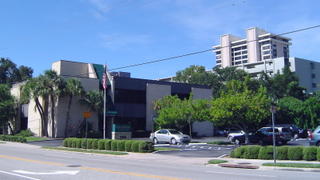
720 S Orange
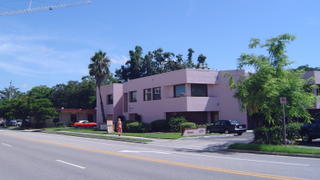
635 S Orange
With the announcement that another property has been sold on S Orange Ave, we thought a comparison of recent sales was warranted - along with the proposed Orange Dolphin parking lot deal.
.jpg)
720 S Orange
2.JPG)
635 S Orange
With the announcement that another property has been sold on S Orange Ave, we thought a comparison of recent sales was warranted - along with the proposed Orange Dolphin parking lot deal.
- The proposed Orange Dolphin deal, 1530 Dolphin, was $4.4M for 21,263 sq ft, or $207 per sq ft.
- The property at 1533 Dolphin (3,995 sq ft) sold in May of 2005 for $640,000 or $160 per sq ft.
- The property at 401 Pineapple (8610 sq ft) sold in Jan. 2005 for $1.6M or $186 per sq ft. This is contiguous to the 1530 Dolphin property.
Two blocks to the south on Orange, two other properties recently changed ownership:
- 720 S Orange (54,994sq ft) sold in August of 2005 for $4.8M or $87 per sq ft.
- 635 S Orange (37,139 sq ft) sold in February of 2005 for $2.75M or $74 per sq ft.
With this kind of price range within a two block area it would seem that if the city continues to pursue land acquisition strategies, part of the process should be to get competent advice (and good appraisals) before signing a contract.
We also wonder if another buyer will surface for the Orange Dolphin property. We were told that several developers were lined up: "We are in competition with, I would say, three or four large scale, pretty deep pocketed development interests for this land and for the other things we’re trying to accomplish downtown." And "All I can tell you is, I believe very firmly that if we don’t lock down this property, it won’t be there in a week."
Tuesday, August 23, 2005
How Are We Doing? - A Continuing Saga
A letter to the editor by Ian Black revives the discussion about Sarasota's form of government. His letter was apparently prompted by recent events concerning some commissioners' criticism of the city manager's performance and other commissioners' reaction as to the appropriateness of the timing for this. The timing of Mr. Black's comments is excellent and his comments are appropriate.
The Tiger Bay Club's next program also targets this and related issues:
Nora Patterson, County Commissioner
Kerry Kirschner, Executive Director Argus
Wayne Poston, Bradenton Mayor
Mary Anne Servian, City Commissioner
Recent events are bringing this discussion back to the forefront. The Tiger Bay discussion should be interesting - we hope they don't hold back. Tell us what you really think!
The Tiger Bay Club's next program also targets this and related issues:
AHOY City Hall !
Sink or swim City of Sarasota !
Who is going to send you a life line?
Sink or swim City of Sarasota !
Who is going to send you a life line?
Would an elected Mayor provide the anchor you need or should the County come to the rescue?
Mayoral form of Government or Consolidation?
Mayoral form of Government or Consolidation?
Nora Patterson, County Commissioner
Kerry Kirschner, Executive Director Argus
Wayne Poston, Bradenton Mayor
Mary Anne Servian, City Commissioner
Recent events are bringing this discussion back to the forefront. The Tiger Bay discussion should be interesting - we hope they don't hold back. Tell us what you really think!
Monday, August 22, 2005
Whose Performance are We Measuring?
The hot discussion surrounding our City Manager’s performance over the two recent issues (sewage spill and Orange Dolphin) seems to have moderated for the time being, while McNees spends a week away from Sarasota scaling peaks in Wyoming (must pay attention to detail and don't gamble while engaging in this activity). We hope that the commissioners take a measured look at his performance. If there were no standards for the manager, then we would like to know why? Our expectation of the commissioners is no less than their expectation of the manager.
As this story continues to its conclusion we hope to see those responsible take a hard look at themselves as well as those working for them. Were the expectations spelled out and were they reviewed for progress? Is the process for doing this open? We believe we have some of the answers to the sewage spill issue at least at the lower levels of the organization, but what was the responsibility at the commission level? How was this handled? Are there procedures, reviews or audits needed at this level?
Similar questions can be posed for the parking lot issue. Is there not an accepted, professional way to acquire property - even in a "hot" real estate market? Do we have the skills and knowledge in house or should we find that expertise outside? What is our policy on property acquisition? Is it working the way it needs to work under today's conditions? To improve, we will need change at all levels of city government, not just the bottom or middle or close to the top.
We have high expectations of our commissioners. They must be competent and work together to find ways to make Sarasota's health, welfare and safety achieve the highest standards. Stumbling like we have seen recently does not inspire confidence. If we can learn from mistakes, change how we operate and communicate with all stakeholders, progress can be made. If not, maybe some new players need to be found for the team.
As this story continues to its conclusion we hope to see those responsible take a hard look at themselves as well as those working for them. Were the expectations spelled out and were they reviewed for progress? Is the process for doing this open? We believe we have some of the answers to the sewage spill issue at least at the lower levels of the organization, but what was the responsibility at the commission level? How was this handled? Are there procedures, reviews or audits needed at this level?
Similar questions can be posed for the parking lot issue. Is there not an accepted, professional way to acquire property - even in a "hot" real estate market? Do we have the skills and knowledge in house or should we find that expertise outside? What is our policy on property acquisition? Is it working the way it needs to work under today's conditions? To improve, we will need change at all levels of city government, not just the bottom or middle or close to the top.
We have high expectations of our commissioners. They must be competent and work together to find ways to make Sarasota's health, welfare and safety achieve the highest standards. Stumbling like we have seen recently does not inspire confidence. If we can learn from mistakes, change how we operate and communicate with all stakeholders, progress can be made. If not, maybe some new players need to be found for the team.
Sunday, August 21, 2005
Hurricanes, Gators and Speculators - Oh My
Larry Evans column Sunday scored a fine point. In discussing the issue of college sport team mascots and the political correctness of the names he said:
Athletic teams at Florida State University might be forced to drop the use of "Seminoles" and become the "Fire Ants," the "Red Tide," the "Raging Armadillos" or some other nickname that reflects Florida's fauna, flora, weather or contemporary culture. "Gators" and "Hurricanes" are already taken, of course, and it's hard to imagine that any fleet-footed wide receiver would want his chest emblazoned with the word "Speculators" or "Developers."
Shows you what are worst fears are coming to be - hurricane, gator, speculator, developer or maybe even "lawyer"? What happy thoughts we have here in paradise.
Athletic teams at Florida State University might be forced to drop the use of "Seminoles" and become the "Fire Ants," the "Red Tide," the "Raging Armadillos" or some other nickname that reflects Florida's fauna, flora, weather or contemporary culture. "Gators" and "Hurricanes" are already taken, of course, and it's hard to imagine that any fleet-footed wide receiver would want his chest emblazoned with the word "Speculators" or "Developers."
Shows you what are worst fears are coming to be - hurricane, gator, speculator, developer or maybe even "lawyer"? What happy thoughts we have here in paradise.
Thursday, August 18, 2005
A Little Humor
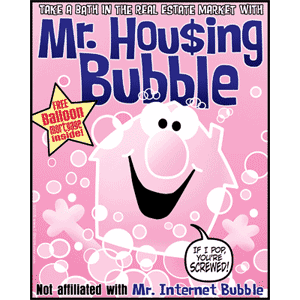
Psst, hey there. You. Yes, you. I'm talking to you.
For all you speculators, T-Shirt Humor may have something for you.
Mr. Housing Bubble gives advice about real estate investing. Things like risk. That kind of stuff.
Be sure you check all reliable sources available before signing up for the next deal. And be sure to remember that risk can be managed. Of course you know that already.
Tuesday, August 16, 2005
Plaza Verdi Swan Song
The city commission allowed the Plaza Verdi plan to slip away last night. The pull out of the Opera made the project too different from the original RFP, resulting in a recommendation from City Attorney Fournier that a new proposal must be considered.
The concept was bold, but in the end there was just too much complexity. All four participants (the city, Ersa Grae, the Opera and the Golden Apple) all had visions of what was needed from their own perspective but not everyone could be accommodated. In the end the Golden Apple and the Opera dropped out.
Like a Verdi opera, the twists and turns of the attempts to turn this property into public parking kept taking unpredictable paths - and ultimately commented on the human condition, our condition and our inability to satisfy everyone.
Commissioner Atkins commented that "We sit down here really dreaming and hoping with great expectations for something major to happen that involves parking, Every time we stick our neck out, somebody chops it off." Andy Dorr, project manager at Ersa Grae said he felt like he was attending his own funeral.
Frustration was apparent all around. Aside from the symbolic death, the real aspects of comedy and tragedy, combined with the frustration of not being able to fulfill dreams provided all the elements of a lively opera. Of course this is real life.
We think that the complexity of the proposal (the physical constraints, construction timing issues, the needs of the Opera and Golden Apple to maximize their income during the relatively short season available) was just too much to get a good grip on.
We wish the Opera and the Golden Apple well as they pursue their future destiny. Both have been (and continue to be) among the great Sarasota institutions that have done so much for our city. We also know that the city will get the needed parking at some point.
We would also like to see the city put more effort into looking at viable ways to reduce the number of cars downtown as this would lessen the parking need and make the downtown more pedestrian friendly and improve the atmosphere (literally and figuratively). We know there is no quick fix, but more attention in this area will pay dividends.
I liked Commissioner Atkins closing statement: "Be prepared for something to happen in downtown Sarasota, for all the nay-sayers out there." Maybe this is a continuing (soap?) opera and we haven’t seen the final act.
More about this in the SHT story.
The concept was bold, but in the end there was just too much complexity. All four participants (the city, Ersa Grae, the Opera and the Golden Apple) all had visions of what was needed from their own perspective but not everyone could be accommodated. In the end the Golden Apple and the Opera dropped out.
Like a Verdi opera, the twists and turns of the attempts to turn this property into public parking kept taking unpredictable paths - and ultimately commented on the human condition, our condition and our inability to satisfy everyone.
Commissioner Atkins commented that "We sit down here really dreaming and hoping with great expectations for something major to happen that involves parking, Every time we stick our neck out, somebody chops it off." Andy Dorr, project manager at Ersa Grae said he felt like he was attending his own funeral.
Frustration was apparent all around. Aside from the symbolic death, the real aspects of comedy and tragedy, combined with the frustration of not being able to fulfill dreams provided all the elements of a lively opera. Of course this is real life.
We think that the complexity of the proposal (the physical constraints, construction timing issues, the needs of the Opera and Golden Apple to maximize their income during the relatively short season available) was just too much to get a good grip on.
We wish the Opera and the Golden Apple well as they pursue their future destiny. Both have been (and continue to be) among the great Sarasota institutions that have done so much for our city. We also know that the city will get the needed parking at some point.
We would also like to see the city put more effort into looking at viable ways to reduce the number of cars downtown as this would lessen the parking need and make the downtown more pedestrian friendly and improve the atmosphere (literally and figuratively). We know there is no quick fix, but more attention in this area will pay dividends.
I liked Commissioner Atkins closing statement: "Be prepared for something to happen in downtown Sarasota, for all the nay-sayers out there." Maybe this is a continuing (soap?) opera and we haven’t seen the final act.
More about this in the SHT story.
Monday, August 15, 2005
Got Shade?
Removing shade trees in downtown Sarasota in favor of arcades may cause some problems even we have not brought to the commissioners attention. Check this story from TBO.com:
LARGO - With two defibrillators and a pacemaker implanted in his wife's chest, Gerry Milot, 70, said he tries to do all he can to keep her out of the heat, including parking his car in the shade when they run errands.
Milot and his wife, June, 66, found such a spot Monday in the Wal-Mart parking lot on Missouri Avenue, where they had gone to buy toothpaste, an air conditioner filter and dishwashing soap.
Henry Gawlik, 81, saw the space, too.
As June Milot stood in the space until Gerry Milot could move their Nissan Maxima from two spots over, Gawlik laid claim to the same spot and pushed his way in.
With his Cadillac, authorities say.
When it was all over, Gawlik was in a different vehicle - a Largo Police Department squad car - on his way to the Pinellas County Jail. He was charged with one count of aggravated battery with a motor vehicle - police say he bumped June Milot to move her out of the space - and a count for punching Gerry Milot repeatedly when he intervened on his wife's behalf.
The rest of the story is at TBO.com. An excellent read indeed.
Let’s keep our shade trees, add new ones and keep the peace!
LARGO - With two defibrillators and a pacemaker implanted in his wife's chest, Gerry Milot, 70, said he tries to do all he can to keep her out of the heat, including parking his car in the shade when they run errands.
Milot and his wife, June, 66, found such a spot Monday in the Wal-Mart parking lot on Missouri Avenue, where they had gone to buy toothpaste, an air conditioner filter and dishwashing soap.
Henry Gawlik, 81, saw the space, too.
As June Milot stood in the space until Gerry Milot could move their Nissan Maxima from two spots over, Gawlik laid claim to the same spot and pushed his way in.
With his Cadillac, authorities say.
When it was all over, Gawlik was in a different vehicle - a Largo Police Department squad car - on his way to the Pinellas County Jail. He was charged with one count of aggravated battery with a motor vehicle - police say he bumped June Milot to move her out of the space - and a count for punching Gerry Milot repeatedly when he intervened on his wife's behalf.
The rest of the story is at TBO.com. An excellent read indeed.
Let’s keep our shade trees, add new ones and keep the peace!
Sunday, August 14, 2005
TIF Summary
The August SRQ Magazine has a good summary of the TIF dollars spent so far. It shows:
Surface Parking $4.141 million
Bayfront Park $3.6589 million
Five Points Park $3.034 million
Total $18.868 million
The article notes that there is a growing advocacy for spending some TIF dollars outside the original CRA, specifically in the Newtown Development area.
The City Commissioners appear to favor this idea, although some objection has been voiced by downtown individuals. At the current time SRQ indicates that the City projects an $80 million surplus over the next 11 years.
North Sarasota does need investment and TIF dollars would be a great source.
Surface Parking $4.141 million
Bayfront Park $3.6589 million
Five Points Park $3.034 million
Whole Foods $2.593 million
Lemon Avenue Streetscape $2.461 million
Lemon Avenue Streetscape $2.461 million
Main Street Streetscape $ 2.386 million
Storefront Rehab $196,549
City Center Improvements $200,000
Downtown Redevelopment $187, 866
City Center Improvements $200,000
Downtown Redevelopment $187, 866
Pineapple Park $75,955
Total $18.868 million
The article notes that there is a growing advocacy for spending some TIF dollars outside the original CRA, specifically in the Newtown Development area.
The City Commissioners appear to favor this idea, although some objection has been voiced by downtown individuals. At the current time SRQ indicates that the City projects an $80 million surplus over the next 11 years.
North Sarasota does need investment and TIF dollars would be a great source.
Saturday, August 13, 2005
A Frustrated Friday
The frustration bubbled over last night at the special City Commission meeting called to review the sewage pump failures last year and this year. The pump station failures left residents angry and frustrated a the slow response from the city.
More recently, a number of issues surrounding the current building boom in downtown Sarasota has resulted in criticism of city leadership from a number of sources concerning a many different issues. The recent major flap over the parking lot acquisition deal added to the frustration level.
Last night’s meeting, reviewing the pump station issue and who was responsible, resulted in answers that were not satisfactory to all. This added more fuel to the frustration level.
The upcoming Monday night regular City Commission meeting could result in further frustration as commissioners tackle the Plaza Verdi agreement (or more accurately non-agreement) issues another time. This particular "public-private partnership" apparently has been rife with the private sector components each trying to maximize their own portion at the expense of the other parties (including the city). This is a poster child for the downside to these "partnerships".
The commissioners have had a string of tough issues to face. They have come up short of their own expectations too many times and are now feeling the pressure of the both issues and the resultant scrutiny. Will they be able to pull together and find good solutions or will the frustrations make leadership even more difficult?
Monday’s meeting should be interesting.
More recently, a number of issues surrounding the current building boom in downtown Sarasota has resulted in criticism of city leadership from a number of sources concerning a many different issues. The recent major flap over the parking lot acquisition deal added to the frustration level.
Last night’s meeting, reviewing the pump station issue and who was responsible, resulted in answers that were not satisfactory to all. This added more fuel to the frustration level.
The upcoming Monday night regular City Commission meeting could result in further frustration as commissioners tackle the Plaza Verdi agreement (or more accurately non-agreement) issues another time. This particular "public-private partnership" apparently has been rife with the private sector components each trying to maximize their own portion at the expense of the other parties (including the city). This is a poster child for the downside to these "partnerships".
The commissioners have had a string of tough issues to face. They have come up short of their own expectations too many times and are now feeling the pressure of the both issues and the resultant scrutiny. Will they be able to pull together and find good solutions or will the frustrations make leadership even more difficult?
Monday’s meeting should be interesting.
Friday, August 12, 2005
Curtain Time at Plaza Verdi?
According to the SHT in an article titled "It's Curtains for Plaza Verde":
The Sarasota Opera has backed out of the Plaza Verdi development, a move that City Attorney Bob Fournier says will "effectively kill" the $141 million project that involved the city, the opera and a private developer.
Apparently the Opera sees the project as too complicated and disruptive of their schedule when construction coincides with their season.
A regular reader of this blog notes: Now that the Commissioners are "back at square one" according to Bob Fournier, they should now get a legitimate, full blown, certified appraisal of the property, preferably by someone who does not have a "horse in the race". The 4.1 million dollar figure they had on it for Ersa Grae is ludicrous.
Seems like the right thing to do.
The Sarasota Opera has backed out of the Plaza Verdi development, a move that City Attorney Bob Fournier says will "effectively kill" the $141 million project that involved the city, the opera and a private developer.
Apparently the Opera sees the project as too complicated and disruptive of their schedule when construction coincides with their season.
A regular reader of this blog notes: Now that the Commissioners are "back at square one" according to Bob Fournier, they should now get a legitimate, full blown, certified appraisal of the property, preferably by someone who does not have a "horse in the race". The 4.1 million dollar figure they had on it for Ersa Grae is ludicrous.
Seems like the right thing to do.
Wednesday, August 10, 2005
Private-Public Partnerships for Open Space
Here's an idea that is catching on around the country - requiring developers to chip in for parks and open space. In Sarasota developers extract every cubic inch of volume possible from the space above their land holdings. The residents and visitors are excluded from viewing through this space - so why not add to the "public-private parnership" concept by requiring a little more from the private part of the equation?
From NYC comes this article :
In an ideal world, government would bear the full responsibility of providing and maintaining parks. But in today's real world of unfunded federal mandates and local-level anti-tax pressure, a patchwork quilt of public-private partnerships has grown up. If developers are making money building housing for new residents, it seems reasonable to ask them to provide some new parkland, too.
Many communities around the country require developers to donate land or pay in-lieu fees to help governments acquire parkland. Known as "developer exactions" or "developer impact fees," the concept is generally thought of as suburban – setting aside parcels for playing fields or stream-valley trails among the new tract houses. But it's also the law in Atlanta, Portland, Oregon and Los Angeles and in very densely populated Chicago, Miami and Long Beach, California.
Miami charges developers $157 for every 1,000 square feet of downtown residential construction and $104 for every 1,000 square feet of downtown commercial construction. The money must be spent in the general vicinity of the new building, it must be spent within six years, and it can only be spent for capital purposes (buying land or constructing a park facility), not ongoing maintenance.
Chicago's Open Space Impact Fee is similar, though somewhat steeper -- about $313 for a small apartment and up to $1,253 for a large one. Affordable (below-market) housing units are assessed a flat fee of $100. The city has seven years to spend the money or it must return it to the developer. In case of larger planned developments, the city prefers to receive not money but a comparable gift of land.
While Sarasota has lots of open space by the beaches, open space near downtown is limited (although Payne Park is a great open space with high expectations). Open space in the neighborhoods is also limited.
A recent editorial in the SHT indicates that Sarasota should somehow find a way to save the historical buildings (on a permanent site) that need to be removed due to a proposed development. Our question is why is this only a responsibility for residents - there is a group of volunteers that is spending a great amount of time and energy trying to fund the moving and preservation of these buildings. Nearly all residents agree this is a good thing to do. Yet the city cannot find funding and the developer apparently has no requirement to help.
Sarasota can do better than this. Many other cities are stepping up and requiring the "private" entity in the "public- private" partnership to do more than just build parking places with tax dollars on land given to the private partner by the public.
From NYC comes this article :
In an ideal world, government would bear the full responsibility of providing and maintaining parks. But in today's real world of unfunded federal mandates and local-level anti-tax pressure, a patchwork quilt of public-private partnerships has grown up. If developers are making money building housing for new residents, it seems reasonable to ask them to provide some new parkland, too.
Many communities around the country require developers to donate land or pay in-lieu fees to help governments acquire parkland. Known as "developer exactions" or "developer impact fees," the concept is generally thought of as suburban – setting aside parcels for playing fields or stream-valley trails among the new tract houses. But it's also the law in Atlanta, Portland, Oregon and Los Angeles and in very densely populated Chicago, Miami and Long Beach, California.
Miami charges developers $157 for every 1,000 square feet of downtown residential construction and $104 for every 1,000 square feet of downtown commercial construction. The money must be spent in the general vicinity of the new building, it must be spent within six years, and it can only be spent for capital purposes (buying land or constructing a park facility), not ongoing maintenance.
Chicago's Open Space Impact Fee is similar, though somewhat steeper -- about $313 for a small apartment and up to $1,253 for a large one. Affordable (below-market) housing units are assessed a flat fee of $100. The city has seven years to spend the money or it must return it to the developer. In case of larger planned developments, the city prefers to receive not money but a comparable gift of land.
While Sarasota has lots of open space by the beaches, open space near downtown is limited (although Payne Park is a great open space with high expectations). Open space in the neighborhoods is also limited.
A recent editorial in the SHT indicates that Sarasota should somehow find a way to save the historical buildings (on a permanent site) that need to be removed due to a proposed development. Our question is why is this only a responsibility for residents - there is a group of volunteers that is spending a great amount of time and energy trying to fund the moving and preservation of these buildings. Nearly all residents agree this is a good thing to do. Yet the city cannot find funding and the developer apparently has no requirement to help.
Sarasota can do better than this. Many other cities are stepping up and requiring the "private" entity in the "public- private" partnership to do more than just build parking places with tax dollars on land given to the private partner by the public.
Tuesday, August 02, 2005
Living in Paradise
In the Tampa Tribune comes this story.
The Sarasota skyline is dotted with construction cranes, with at least 25 condo projects in the works.
Kevin Brown couldn't believe how easy it was to make so much money so fast. The 28-year-old St. Petersburg yacht broker heard his clients' tales about clinching lucrative deals in real estate and decided to give it a try.
He pocketed $50,000 on a three-bedroom, 1,664-square- foot condominium on Harbour Island in 10 months' time. He has since bought 10 more condo units in Tampa, St. Petersburg and Orlando, selling most before the closing date, or ``flipping'' the units.
If he couldn't find buyers and had to go to settlement on every contract, it could spell disaster. The potential gains thrill him, but he can't ignore the nagging fear that one failed deal could send his plans tumbling like dominoes.
Condo flippers such as Brown are snatching up high- rise units throughout the state, fueling price increases that could deflate if interest rates rise or too many condos flood the market. In some projects, investors have purchased as much as 70 percent of the units, hoping to flip.
Such speculation has set off a race. Investors scramble to close deals in case the situation sours. Developers hustle to build complexes before banks halt financing. On the sidelines are venture capitalists with big pockets ready to pounce on the worst-case scenario: The bubble bursts, leaving empty high rises dotting the state and investors wanting to bail out and sell cheap.
The price appreciation in the condo market is forcing real estate brokers to change the way they do business. Many are seizing the opportunity to double-dip on commissions by selling and then helping buyers flip the same units.
Their competition increases daily.
Matt Orr, a Sarasota real estate agent with Michael Saunders & Company, says his buyers are a mixture of investors, baby boomers wanting a second home and locals who want to move from the beaches.
Ah, the good life. Life in the frothy real estate market. Aren't we lucky to live in paradise?
The Sarasota skyline is dotted with construction cranes, with at least 25 condo projects in the works.
Kevin Brown couldn't believe how easy it was to make so much money so fast. The 28-year-old St. Petersburg yacht broker heard his clients' tales about clinching lucrative deals in real estate and decided to give it a try.
He pocketed $50,000 on a three-bedroom, 1,664-square- foot condominium on Harbour Island in 10 months' time. He has since bought 10 more condo units in Tampa, St. Petersburg and Orlando, selling most before the closing date, or ``flipping'' the units.
If he couldn't find buyers and had to go to settlement on every contract, it could spell disaster. The potential gains thrill him, but he can't ignore the nagging fear that one failed deal could send his plans tumbling like dominoes.
Condo flippers such as Brown are snatching up high- rise units throughout the state, fueling price increases that could deflate if interest rates rise or too many condos flood the market. In some projects, investors have purchased as much as 70 percent of the units, hoping to flip.
Such speculation has set off a race. Investors scramble to close deals in case the situation sours. Developers hustle to build complexes before banks halt financing. On the sidelines are venture capitalists with big pockets ready to pounce on the worst-case scenario: The bubble bursts, leaving empty high rises dotting the state and investors wanting to bail out and sell cheap.
The price appreciation in the condo market is forcing real estate brokers to change the way they do business. Many are seizing the opportunity to double-dip on commissions by selling and then helping buyers flip the same units.
Their competition increases daily.
Matt Orr, a Sarasota real estate agent with Michael Saunders & Company, says his buyers are a mixture of investors, baby boomers wanting a second home and locals who want to move from the beaches.
Ah, the good life. Life in the frothy real estate market. Aren't we lucky to live in paradise?
Dolphin Time
We think the commissioners did the right thing by pausing in their pursuit of parking. More thought, and consideration of a measured move (as opposed to a speculative mad dash) is required when the stakes are this high. It is always risky to make decisions in a tight time frame, particularly when options exist but have not been thoroughly explored.
The commissioners did the right thing and we applaud them.
Now let's hope that the parking "need" is for real - public input on the parking master plan will help determine this. At some point the commissioners really need to look at public transportation options as a way to prevent cars from choking downtown as well as making downtown a truly pedestrian friendly environment.
There are excellent trolley systems available that could be utilized in the "downtown - cultural district - St Armands - bayfront" loop. In the long run this might make much better sense for the entire community than more concrete parking garages downtown.
The SHT story covers the details of the Dolphin decision.
The commissioners did the right thing and we applaud them.
Now let's hope that the parking "need" is for real - public input on the parking master plan will help determine this. At some point the commissioners really need to look at public transportation options as a way to prevent cars from choking downtown as well as making downtown a truly pedestrian friendly environment.
There are excellent trolley systems available that could be utilized in the "downtown - cultural district - St Armands - bayfront" loop. In the long run this might make much better sense for the entire community than more concrete parking garages downtown.
The SHT story covers the details of the Dolphin decision.
Monday, August 01, 2005
CRA Advisory Board Meeting Notes - Orange Dolphin Project
These are notes taken at the recent CRA Advisory Board Meeting. In this part of the meeting, City Manager , Mike McNees gave a report on Orange Dolphin Project:
McNees: Am going to speak about 1) the process that led to getting us out of the blue. 2) How acquisition took place. 3) Questions
All are straightforward and simple issues. Downtown Master Plan 2020 called for civic reservations…what land does the city need to set aside for a successful CRA? What are “could be” places for civic parking/buildings/space/public art? One identified parking area was across the street from the Orange Dolphin. It seems contrary to the Duany Plan to institutionalize parking, but municipal parking can save downtowns. This was identified as a place for parking to serve downtown.
When he arrived here he studied the plans and realized that many things the city was doing were dependent upon adequate parking. He asked how parking needs were being addressed and was told nothing was being done. So they did a City Downtown Parking Plan which included: 1) inventory and utilization study and charrette with downtown stakeholders, 2) future needs assessment 8/2004), 3) strategic study on how to operate (4/2005), and 4) plan to tie all together with who pays what and where (goes to Commission next month).
Consultants recommended best places (showed map) for top priority parking. 1) Palm Avenue, 2) State and Lemon for which RFP will go out or not go out on August 15, and 3) S Orange and Pineapple. The Saunders property shows up, but that is not available. However the site across the street is. It has a new façade on an old building.
McNees heard it was for sale and initially thought, “That’s great, but it’s too expensive.” 2-3 months ago he asked the Engineering Department to look at the property and see if it was viable. They found if city used this property and either vacated the alley or narrowed Dolphin Street (which is very wide), they could get 335 spaces at a cost of $23-24,000 each. Although this is high end price, it is not out of range of costs in other areas.
The owner had a falling out with someone she was in negotiations with and eventually McNees got to the attorney for the property owner. At this time the mayor asked why they were waiting for the parking planning study with all the development going on. Why not ratchet up the effort to find spaces rather than waiting for study to be finished? Commission was in unanimous agreement McNees should go out and beat the bushes. One week later he had a call from the owner and had two days to decide. The price was $4.4 million and there were offers for that much and maybe a few hundred thousand more from others. However, the owner was interested in selling for the public benefit. She also did not want to deal with tenant issues from abroad.
Mayor, auditor and clerk agreed this needed to get before the CRA quickly. They were not being played… there were two other parties bidding and he knows of a third. Option was to get to CRA immediately or lose out. CRA needed to decide, not the city manager…it was his job to bring this forward. The Commission voted 4-1 in favor of proceeding.
There is now a contract with two contingencies: A Phase II environmental study will be done (Phase I study was done two years ago). DEP is aware of a plume of chlorinated solvents from dry cleaning company in the vicinity and have drilled a well, will let it set a week, and then pull samples.
Secondly, they will have to take out 5 leases. One expires 6/2005, but between the time McNees got the authority to negotiate and agreement was reached the property owner had extended the lease to 2013. This will be a real issue. [Editor comment: if you are trying to sell property and have three bidders plus the city interested, would you really jeopardize a sale by extending a lease?]
Owners are in a state of shock, have only been there a short time and like the great parking at their strip mall. [Editor comment: how can our city apparently run rough shod over these small business owners?]
City will talk with them about their business needs and about relocating them immediately or in a year.
At the CRA Monday (Aug 1) McNees will present the worse and best cases of costs to take out the leases. [Editor comment:Remember McNees talked with some of the property owners the Saturday of the negotiation weekend. He announced on Monday at the CRA that the owner would have hard copies of the leases in hand the next day. Why is he still unsure of what the leases say, or is he just unsure of what it will cost to “take them out”?]
An owner of property to the west has approached city and wants to aggregate both properties and do parking and liner retail with housing atop. That developer will be at CRA on Monday, probably even with renderings.
Would recover significant land cost this way and put property back on the tax rolls and have a good public/private building project.
[Editors note: Commissioners have been hinting that this deal is much more complex than the public knows and everyone will be very happy when they know the whole story. We may know Monday.]
Why didn’t he bring an appraisal to the CRA? Because he didn’t have time. It would have been his preference.
Robbins: What about the county administrative building parking property where city has air rights?
McNees: The lot to the south intrudes on Laurel Park and we don’t want to slap in 4-5 stories by single family residential. It is also a block further away. We’re in the best position if we have total control of land. Have learned this by hard experience. [Editor comment: How big is the west county lot that doesn’t abut Laurel Park single family residential?]
Meyer: Did you consider an emergency meeting so the CRA Advisory Board would have the opportunity to advise the CRA on this decision?
McNees: No. If he had to do over again would do that. Was a hurricane in the Gulf at the time that were concerned with as well. Hope never to be in that position again.
Meyer: If you go down the same road again, pull us together so we can be of assistance. Could have a joint meeting with CRA.
Ron McCullough: Is $23-24,000 the total cost per space?
McNees: That figure doesn’t factor in taking out tenants and this deal will very much hinge on attractiveness of partnership project and ability to share that cost. Tenant issues could hurt this. Monday will tell the story.
McCullough: It this comparable to other numbers for parking spaces?
McNees: Pineapple Square puts cost at $20-21,000 per space. Ursa Grae costs have risen, which is one of the reasons we are not going to reappraise the land.
This cost is right at the top of the acceptable range. As to why we didn’t do this two years ago…it took too long and the private sector took it from us. [Editor comment: No, McNees decided to back off bringing request to make offer to Verizon of $1,600,000 and go for lease at $40,000 a year with Michael Saunders, who bought the property for $1,500,000. Documents show it was to go on the Commission agenda 3/3/03, but never got there. 3/17/2004 letter from Paula Rees, VP of Operations for Michael Saunders offers a "guaranteed two-year term with two one-year options to renew." ...."However, in the event the Michael Saunders enters into an agreement to develop the property, the renewals will be denied". So now Saunders is going to develop the property and McNees has to scramble for parking.]
I feel comfortable with this investment and feel confident it will not crash in next couple of years. [Editor comment: apparently now our City has become a speculator.]
Marcia Wood: I’m a big supporter of yours, but not on this one. Is no rational reason to pay two times the highest price ever paid for Sarasota property and taking the property off the tax rolls. Why not give Michael Saunders a height bonus and get 300 spaces. You did have an option…the option to say no.
McNees: We are still in conversations with her, but parking is not in her plan. She had the contract before we did and got there first. The neighborhood needs more parking than it has. Retailers and cinema will all benefit. Were no other viable options to provide this parking. Met with Saunders just two days ago. Are 4,000 realtors here. Let someone can bring me a viable property for less money. It is not twice the cost…he challenges that figure.
Wood: Am not talking about the cost of the building, because that will be torn down, just about the land. That is an outrageous price and can’t understand how she got it. Only salvation will be if you get a joint venture and get some return. TIF funds should only be spent if there is some redeeming value.
McNees: Dimensions do not allow much to be done or liner buildings. One of the provisions of the new code, however, is that the City can make exceptions. I keep telling that to developers. [Editor comment: the new code not yet in place and the city is already talking exceptions.] Is important that we be in control of the land. Do not think it is below market value.
Kathy Baylis: Is good to have parking for Burns Court. Carl’s suggestion about joint meeting is good, although do understand the need for expediency. If this is the market cost, the problem is, how do we know that when there was no appraisal. Could that have been in the contract?
McNees: That was not acceptable to the seller. Merchants need parking and it is part of the philosophy of the Master Plan to provide parking to leverage other development. In Naples a downtown parking garage was the catalyst to development.
McNees: Am going to speak about 1) the process that led to getting us out of the blue. 2) How acquisition took place. 3) Questions
All are straightforward and simple issues. Downtown Master Plan 2020 called for civic reservations…what land does the city need to set aside for a successful CRA? What are “could be” places for civic parking/buildings/space/public art? One identified parking area was across the street from the Orange Dolphin. It seems contrary to the Duany Plan to institutionalize parking, but municipal parking can save downtowns. This was identified as a place for parking to serve downtown.
When he arrived here he studied the plans and realized that many things the city was doing were dependent upon adequate parking. He asked how parking needs were being addressed and was told nothing was being done. So they did a City Downtown Parking Plan which included: 1) inventory and utilization study and charrette with downtown stakeholders, 2) future needs assessment 8/2004), 3) strategic study on how to operate (4/2005), and 4) plan to tie all together with who pays what and where (goes to Commission next month).
Consultants recommended best places (showed map) for top priority parking. 1) Palm Avenue, 2) State and Lemon for which RFP will go out or not go out on August 15, and 3) S Orange and Pineapple. The Saunders property shows up, but that is not available. However the site across the street is. It has a new façade on an old building.
McNees heard it was for sale and initially thought, “That’s great, but it’s too expensive.” 2-3 months ago he asked the Engineering Department to look at the property and see if it was viable. They found if city used this property and either vacated the alley or narrowed Dolphin Street (which is very wide), they could get 335 spaces at a cost of $23-24,000 each. Although this is high end price, it is not out of range of costs in other areas.
The owner had a falling out with someone she was in negotiations with and eventually McNees got to the attorney for the property owner. At this time the mayor asked why they were waiting for the parking planning study with all the development going on. Why not ratchet up the effort to find spaces rather than waiting for study to be finished? Commission was in unanimous agreement McNees should go out and beat the bushes. One week later he had a call from the owner and had two days to decide. The price was $4.4 million and there were offers for that much and maybe a few hundred thousand more from others. However, the owner was interested in selling for the public benefit. She also did not want to deal with tenant issues from abroad.
Mayor, auditor and clerk agreed this needed to get before the CRA quickly. They were not being played… there were two other parties bidding and he knows of a third. Option was to get to CRA immediately or lose out. CRA needed to decide, not the city manager…it was his job to bring this forward. The Commission voted 4-1 in favor of proceeding.
There is now a contract with two contingencies: A Phase II environmental study will be done (Phase I study was done two years ago). DEP is aware of a plume of chlorinated solvents from dry cleaning company in the vicinity and have drilled a well, will let it set a week, and then pull samples.
Secondly, they will have to take out 5 leases. One expires 6/2005, but between the time McNees got the authority to negotiate and agreement was reached the property owner had extended the lease to 2013. This will be a real issue. [Editor comment: if you are trying to sell property and have three bidders plus the city interested, would you really jeopardize a sale by extending a lease?]
Owners are in a state of shock, have only been there a short time and like the great parking at their strip mall. [Editor comment: how can our city apparently run rough shod over these small business owners?]
City will talk with them about their business needs and about relocating them immediately or in a year.
At the CRA Monday (Aug 1) McNees will present the worse and best cases of costs to take out the leases. [Editor comment:Remember McNees talked with some of the property owners the Saturday of the negotiation weekend. He announced on Monday at the CRA that the owner would have hard copies of the leases in hand the next day. Why is he still unsure of what the leases say, or is he just unsure of what it will cost to “take them out”?]
An owner of property to the west has approached city and wants to aggregate both properties and do parking and liner retail with housing atop. That developer will be at CRA on Monday, probably even with renderings.
Would recover significant land cost this way and put property back on the tax rolls and have a good public/private building project.
[Editors note: Commissioners have been hinting that this deal is much more complex than the public knows and everyone will be very happy when they know the whole story. We may know Monday.]
Why didn’t he bring an appraisal to the CRA? Because he didn’t have time. It would have been his preference.
Robbins: What about the county administrative building parking property where city has air rights?
McNees: The lot to the south intrudes on Laurel Park and we don’t want to slap in 4-5 stories by single family residential. It is also a block further away. We’re in the best position if we have total control of land. Have learned this by hard experience. [Editor comment: How big is the west county lot that doesn’t abut Laurel Park single family residential?]
Meyer: Did you consider an emergency meeting so the CRA Advisory Board would have the opportunity to advise the CRA on this decision?
McNees: No. If he had to do over again would do that. Was a hurricane in the Gulf at the time that were concerned with as well. Hope never to be in that position again.
Meyer: If you go down the same road again, pull us together so we can be of assistance. Could have a joint meeting with CRA.
Ron McCullough: Is $23-24,000 the total cost per space?
McNees: That figure doesn’t factor in taking out tenants and this deal will very much hinge on attractiveness of partnership project and ability to share that cost. Tenant issues could hurt this. Monday will tell the story.
McCullough: It this comparable to other numbers for parking spaces?
McNees: Pineapple Square puts cost at $20-21,000 per space. Ursa Grae costs have risen, which is one of the reasons we are not going to reappraise the land.
This cost is right at the top of the acceptable range. As to why we didn’t do this two years ago…it took too long and the private sector took it from us. [Editor comment: No, McNees decided to back off bringing request to make offer to Verizon of $1,600,000 and go for lease at $40,000 a year with Michael Saunders, who bought the property for $1,500,000. Documents show it was to go on the Commission agenda 3/3/03, but never got there. 3/17/2004 letter from Paula Rees, VP of Operations for Michael Saunders offers a "guaranteed two-year term with two one-year options to renew." ...."However, in the event the Michael Saunders enters into an agreement to develop the property, the renewals will be denied". So now Saunders is going to develop the property and McNees has to scramble for parking.]
I feel comfortable with this investment and feel confident it will not crash in next couple of years. [Editor comment: apparently now our City has become a speculator.]
Marcia Wood: I’m a big supporter of yours, but not on this one. Is no rational reason to pay two times the highest price ever paid for Sarasota property and taking the property off the tax rolls. Why not give Michael Saunders a height bonus and get 300 spaces. You did have an option…the option to say no.
McNees: We are still in conversations with her, but parking is not in her plan. She had the contract before we did and got there first. The neighborhood needs more parking than it has. Retailers and cinema will all benefit. Were no other viable options to provide this parking. Met with Saunders just two days ago. Are 4,000 realtors here. Let someone can bring me a viable property for less money. It is not twice the cost…he challenges that figure.
Wood: Am not talking about the cost of the building, because that will be torn down, just about the land. That is an outrageous price and can’t understand how she got it. Only salvation will be if you get a joint venture and get some return. TIF funds should only be spent if there is some redeeming value.
McNees: Dimensions do not allow much to be done or liner buildings. One of the provisions of the new code, however, is that the City can make exceptions. I keep telling that to developers. [Editor comment: the new code not yet in place and the city is already talking exceptions.] Is important that we be in control of the land. Do not think it is below market value.
Kathy Baylis: Is good to have parking for Burns Court. Carl’s suggestion about joint meeting is good, although do understand the need for expediency. If this is the market cost, the problem is, how do we know that when there was no appraisal. Could that have been in the contract?
McNees: That was not acceptable to the seller. Merchants need parking and it is part of the philosophy of the Master Plan to provide parking to leverage other development. In Naples a downtown parking garage was the catalyst to development.
Subscribe to:
Posts (Atom)